Excavator
294 models
Excavator
294 models  Backhoe Loader
51 models
Backhoe Loader
51 models  Crane
68 models
Crane
68 models  Concrete Mixer
79 models
Concrete Mixer
79 models  Wheel Loader
54 models
Wheel Loader
54 models  Compactor / Roller
45 models
Compactor / Roller
45 models  Motor Grader
42 models
Motor Grader
42 models  Dozer
41 models
Dozer
41 models  Concrete Pump
66 models
Concrete Pump
66 models  Skid Steer Loader
11 models
Skid Steer Loader
11 models  Telehandler
13 models
Telehandler
13 models 


A JCB tyre puncture is usually repairable if the hole is in the tread and the machine was not driven on it flat. A tube-type tyre needs a tube patch or a new tube; a tubeless tyre needs a patch fitted from the inside after the tyre comes off the rim; a cut needs a vulcanised section repair. Sealant is not a repair, and neither is a tube pushed into a holed tubeless tyre. A tyre driven flat, cut in the sidewall or showing cords or bead wire is a new tyre.
The quickest fix offered at a roadside shop, a squirt of sealant or a tube pushed into a holed tubeless tyre, is the one India’s own tyre repair standard refuses to call a repair. That matters on a backhoe, because the rear tyre carries the loader’s weight and a failure under load ends the shift, and sometimes the tyre.
Which tyres a JCB tyre puncture involves
A JCB 3DX runs 9 x 16 – 16 PR at the front and 16.9 x 28 – 12 PR at the rear, and the JCB 3DX Plus and 4DX use the same sizes. The 16.9 x 28 rear is fitted on 49 of the 51 backhoe loaders we list, so most of what follows applies to any make. Our backhoe loader tyre size table lists every model.
Both tube-type and tubeless tyres are sold in these sizes. The sidewall tells you which you have: TT means tube type, with an inner tube and a flap, and TL means tubeless. Our guide to OTR tyre markings explains the rest of the code. The repair you need depends on that one marking.
The repair routes, and what each one costs you
We do not print a puncture repair price. Rates vary by town, by whether a service van comes to site, and by the size of the damage, and no tyre maker publishes one. What decides your bill is which of these jobs the tyre needs:
| Route | When it fits | What you pay for |
|---|---|---|
| Tube patch | Tube-type tyre, small hole in the tube, tube otherwise sound | The patch and labour. Titan, an OTR tyre maker, says the tube can be taken out and repaired without removing the tyre completely from the wheel |
| New tube | Tube pinched or worn thin, perished, split at the joint, or damaged by heat or oil | The tube and labour. A damaged valve alone does not mean a new tube; valves can be replaced |
| Inside patch on a tubeless tyre | Puncture through the tread of a tubeless tyre | Removing the tyre from the rim, inspecting it inside, and a patch fitted from the inside |
| Vulcanised section repair | A cut or larger injury that is still within repairable limits | Workshop time and materials, plus the days the machine waits for the cure |
| New tyre | Damage outside repairable limits, sidewall damage, or a tyre driven flat | The tyre, and often its partner on the same axle |
Two lines in IS 15780:2007, the Indian standard on repairing tyres and tubes, set the floor. “The tyre (and tube if applicable) shall be removed from its associated wheel and thoroughly inspected for damage. NOTE: There is no substitute for this operation.” And: “All repairs to penetrations through the tyre carcass shall include a suitable patch on the inside of the tyre.” A plug pushed in from outside, with no inspection, is a temporary fix, not a repair. The standard is written for road vehicles, so it has no size table for backhoe tyres, but those principles are the same on any tyre.
For a vulcanised repair, ask whether it is hot or cold cure. IS 15780 gives a hot cure at 130 to 160 °C, and says a cold (chemical) cure needs a minimum room temperature of 15 °C “for an extended period of two to five days”. Two to five days of a backhoe standing idle can cost more than the repair, which is the trade-off our note on what downtime really costs works through.
Sealant and a tube are not repairs
IS 15780 is blunt about sealant: a liquid sealant introduced into a tube or tubeless tyre “shall in no way be considered to be a repair”. It can get a machine off a site to a workshop. It does not close the hole in the casing.
The same goes for a tube pushed into a punctured tubeless tyre. The US tyre makers’ association, in its procedures for agricultural and industrial tyres (August 2023), lists “substitute an inner tube for a permissible or non-permissible repair” among the things never to do. IS 15780 does allow one honest version: a tubeless tyre that has been repaired but cannot meet the tubeless specification is marked “serviceable as a tubed tyre only”, with the word Tubeless removed from its sidewalls. The hole is repaired first; the tube comes after.
When a puncture means a new tyre
Michelin’s page on earthmover tyre repairs says “severe sidewall punctures, deep cuts, excessive tread wear or any structural deformities that compromise the tyre’s integrity, typically cannot be repaired”. It adds that a tyre run under-inflated or flat “may have suffered irreparable damage”, and only an exhaustive check of the inside will tell.
Michelin’s earthmover technical book lists what rules a tyre out: a deformed bead or visible bead wire, separations between components, visible cable cords, damage from petroleum products, and marbling or abrasion of the inner rubber from running at low pressure. IS 15780 adds rubber cracks running through to the carcass, ply separation and oil-perished rubber.
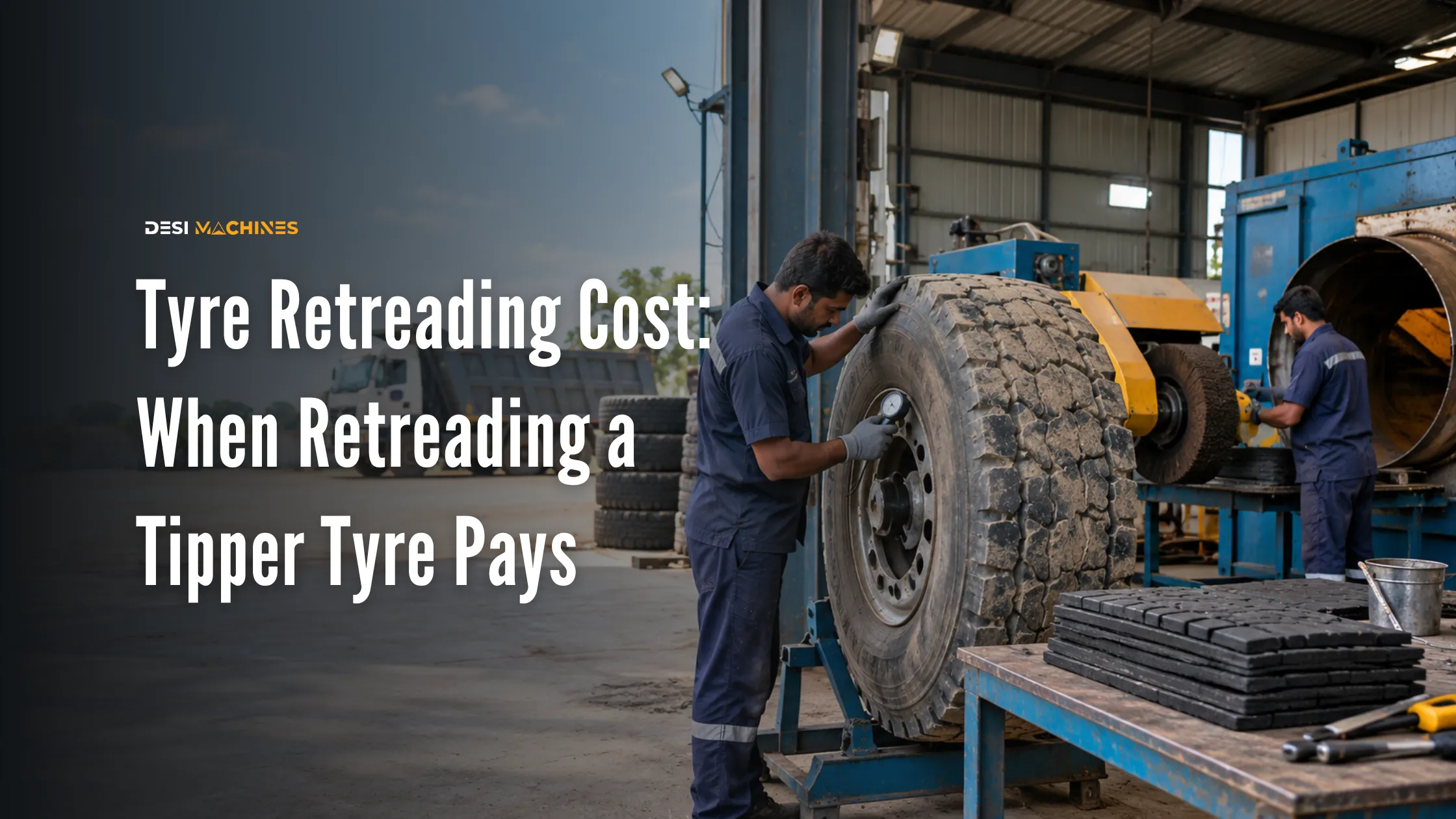
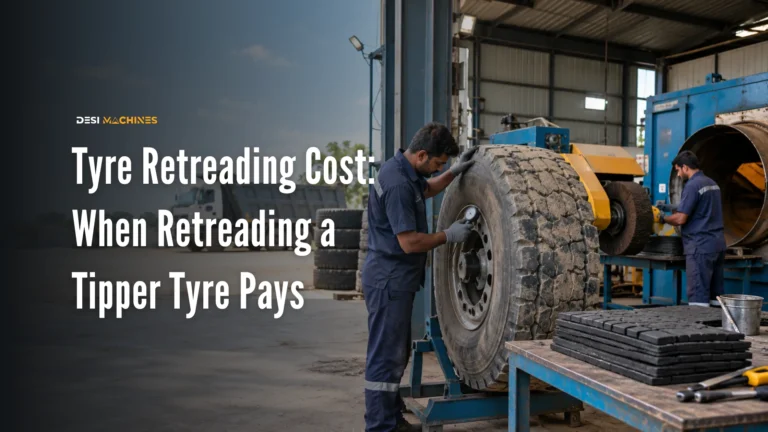
The costly mistake is driving on to finish the trench. A flat tyre under a loaded backhoe grinds its own inner rubber, and a repairable puncture becomes a scrapped casing. On the rear axle, a new tyre beside a worn one makes the machine lean, so the bill can become a pair. Our construction machine tyre price guide explains what drives that cost, and a casing that survives can still be worth retreading, as our piece on tyre retreading cost sets out.
Safety rules for taking a backhoe tyre off
A 16.9 x 28 tyre holds a lot of energy, and the rules from tyre makers and safety regulators all point the same way:
- Deflate completely by removing the valve core before taking the wheel off if the tyre or wheel is damaged, or if it has run at 80% or less of its recommended pressure (USTMA; the US OSHA rule says the same).
- Never let air out of a hot tyre. Michelin notes that pressure rises with temperature.
- Inflate inside a tyre cage or other restraint, never with someone standing beside the wheel.
- When seating the beads, do not exceed 35 psi or the maker’s stated maximum.
- Never weld, heat or braze a rim with the tyre on it. Titan’s instruction is not to rework a rim “under any circumstances”.
Pressure is the cheapest puncture insurance
Run the pressure the tyre maker or machine maker gives for your exact tyre, and check it cold. As one example, Maxam’s data sheet lists its 16.9-28 12-ply tubeless backhoe tyre at 38 psi (260 kPa). Michelin warns that a tyre “operated with insufficient pressure will undergo an abnormal rise in operating temperature, which can lead to irreversible damage of internal components”. Too much pressure has its own cost: the tread grips less and stones are more likely to puncture it.
The bottom line
Most JCB tyre punctures in the tread are repairable, and the right repair is a tube patch or new tube on a tube-type tyre and an inside patch on a tubeless one, with the tyre off the rim and inspected. Sealant and a stray tube only get you to the workshop. Stop as soon as a tyre goes soft, because the casing you save is worth far more than the repair.
If the casing is finished, ask for a backhoe loader tyre price for your exact size and we pass it to dealers near you. You can also compare backhoe loader models and prices when an older machine’s running costs start to add up.
Tyre repair limits, pressures and safety procedures depend on the tyre, the rim and the machine. The rules quoted here are from IS 15780:2007 and the Michelin, Titan, Maxam and USTMA documents named. Confirm the repair and the pressure for your tyre with the tyre maker, your dealer or a qualified tyre repairer.