Excavator
294 models
Excavator
294 models  Backhoe Loader
51 models
Backhoe Loader
51 models  Crane
68 models
Crane
68 models  Concrete Mixer
79 models
Concrete Mixer
79 models  Wheel Loader
54 models
Wheel Loader
54 models  Compactor / Roller
45 models
Compactor / Roller
45 models  Motor Grader
42 models
Motor Grader
42 models  Concrete Pump
66 models
Concrete Pump
66 models  Skid Steer Loader
11 models
Skid Steer Loader
11 models  Telehandler
13 models
Telehandler
13 models  Dozer
Dozer 


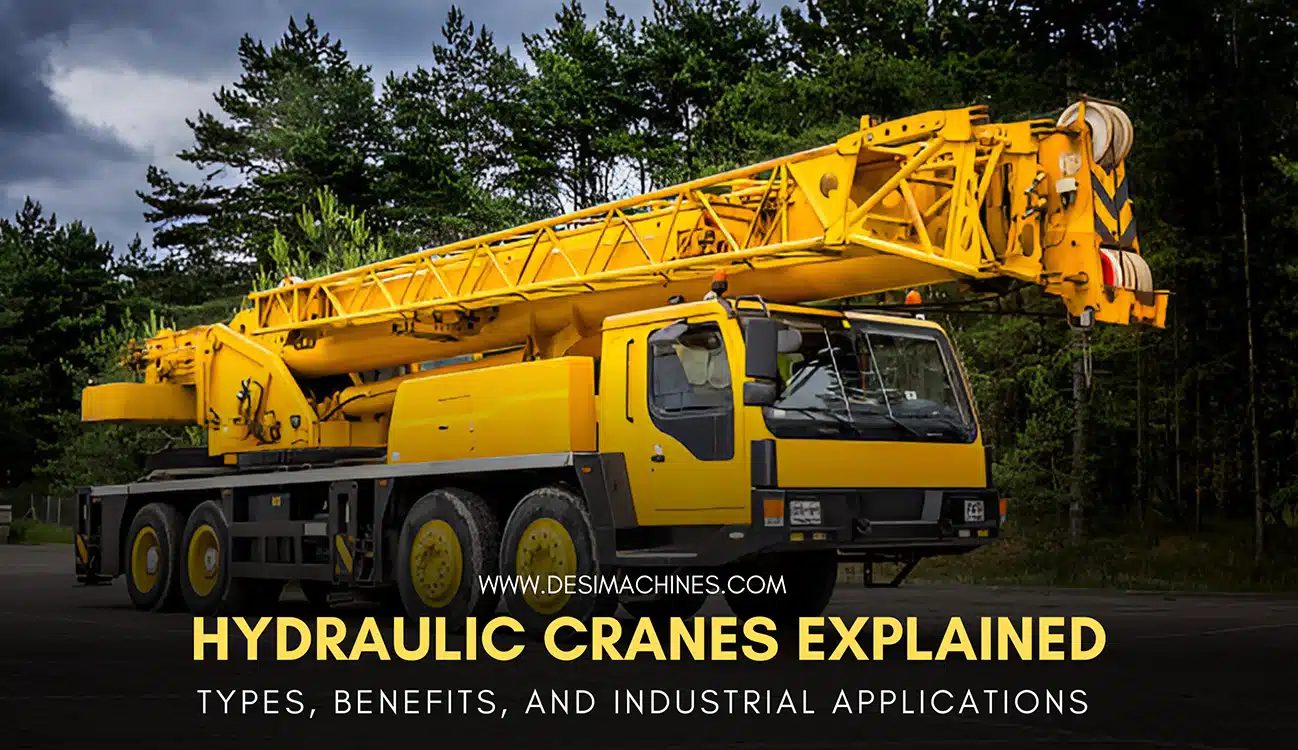
Hydraulic crane — quick answer: A hydraulic crane lifts by pushing pressurised oil through cylinders and a hydraulic motor rather than by winching on a mechanical drum. That gives it smooth, precise, high-force lifting from a compact machine, which is why it has displaced mechanical cranes on most Indian sites. The five types you will actually meet are pick-and-carry (hydra), truck-mounted, telescopic, rough terrain and mini. Choose by access and ground conditions first, then by lifting capacity at the radius you actually need — capacity at maximum reach is always far lower than the headline tonnage.
Five configurations share the name: pick-and-carry (the hydra), truck-mounted, telescopic, rough terrain and mini. They differ in how the machine gets to the load and how it stands while lifting, not in how the lift itself is powered — every one of them works through a pump, cylinders and a hydraulic motor. This guide covers what each type is for, what a pick-and-carry crane actually lifts and costs in India, why rated capacity collapses as the boom extends, and the checks that keep a lift safe on site.
What is a Hydraulic Crane
A hydraulic crane is one of the strongest and most prevalent crane machines applied in construction, infrastructure, and industry. Hydraulic cranes utilize pressurized liquid, most often oil, to lift and move heavy loads with ease. Hydraulic pressure enables the machines to exert improved lifting force with smooth, controlled movement.
Hydraulic cranes have a more straightforward mechanism for balancing efficiency with accuracy. They are, therefore, best suited for work involving accurate control, particularly in confined or high positions. From compact hydraulic cranes to huge and heavy truck-mounted hydraulic cranes, their uses are varied, ranging from routine warehouse operations to massive infrastructure development.
Their reliability, flexibility, and lifting capacity have made them a valuable asset in numerous industries. Hydraulic cranes have only gotten better to address the increasing needs of contemporary construction, logistics, and heavy machinery handling.
Functions of a Hydraulic Crane
A hydraulic crane operates on the principle of fluid mechanics. It consists of chief components such as cylinders, pistons, and hydraulic fluid. When the pressurized fluid is applied to the cylinder, it gives a forward motion to the piston. This mechanical force is then used to lift, extend, or turn the boom or hook of the crane.
This hydraulic-powered equipment enables the drivers to lift extremely heavy objects through smooth and precise movement. Hydraulic cranes, in contrast to mechanical equipment, do not require complex gears or chains; therefore, they are more efficient and easier to operate.
- Simple Lever-Based Controls: Basic lever controls are used by operators to operate advanced lifts.
- Smooth and Controlled Lifting: The Hydraulic system offers smooth, jerk-free motion.
- Efficient Force Multiplication: Small input forces can shift heavy loads due to hydraulic pressure.
It is this combination of simplicity, power, and control that makes hydraulic cranes irreplaceable in the modern-day lifting industry.
Types of Hydraulic Cranes
Hydraulic cranes come in various configurations, each suited for specific tasks and environments. The equipment is powerful in output and smooth in operation, and thus it is appropriate for various lifting purposes. The most common types of hydraulic cranes that you will find in various industries are set out below; for the wider family of lifting machines beyond hydraulics, see crane types and their applications.
Hydra Crane (Pick-and-Carry Crane)
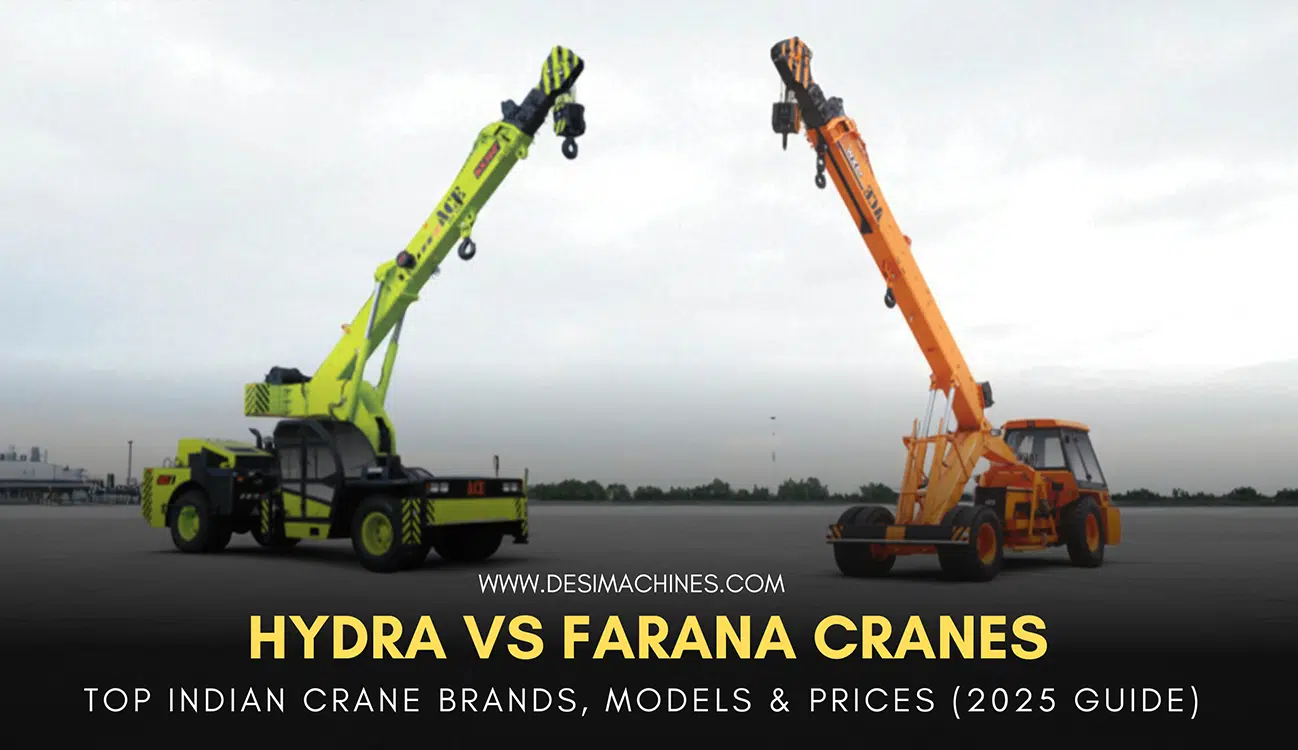
This is the crane most Indian sites actually own — see the current hydra crane listings for tonnage and pricing, or the hydra vs farana comparison if you are choosing between the two.
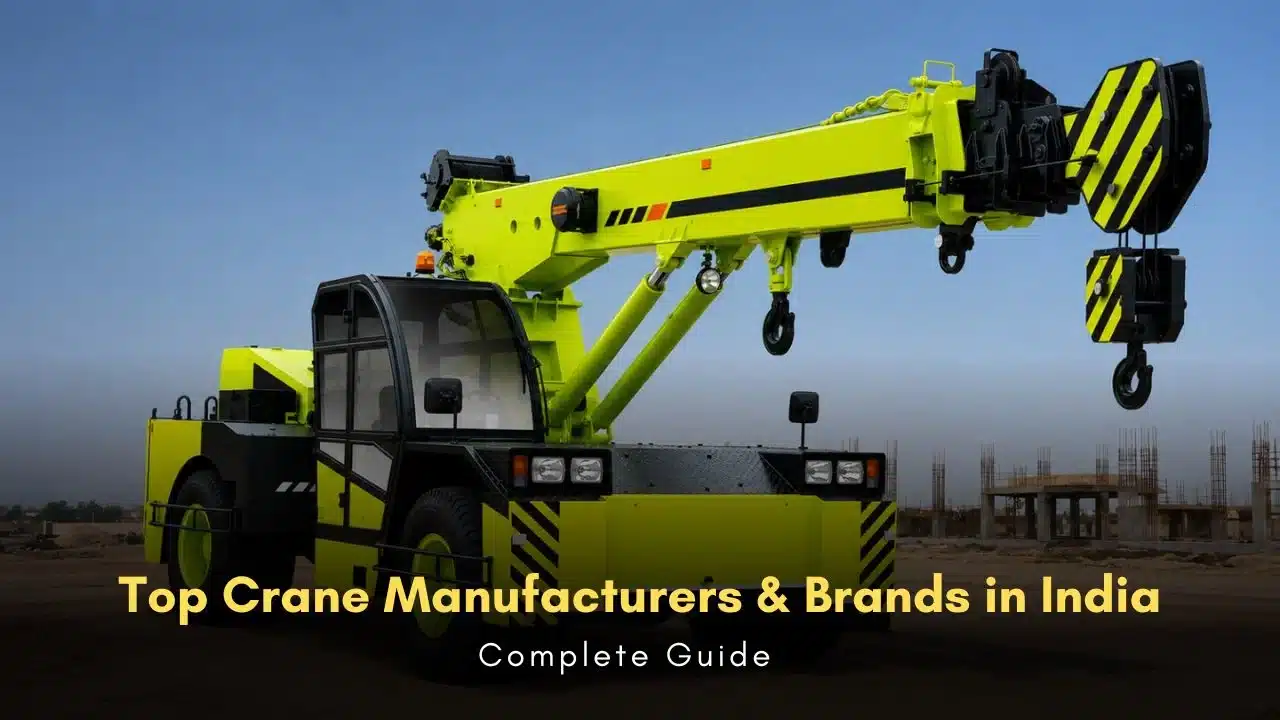
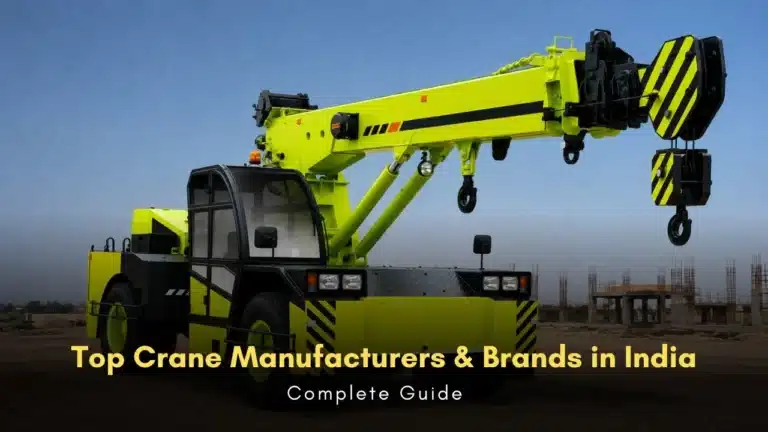
One of India’s most popular hydraulic cranes, the hydra crane is capable of lifting and positioning loads in the same spot. It is compact, affordable, and suitable for small and medium-sized projects in construction, fabrication plants, and infrastructure development.
Truck-Mounted Hydraulic Crane
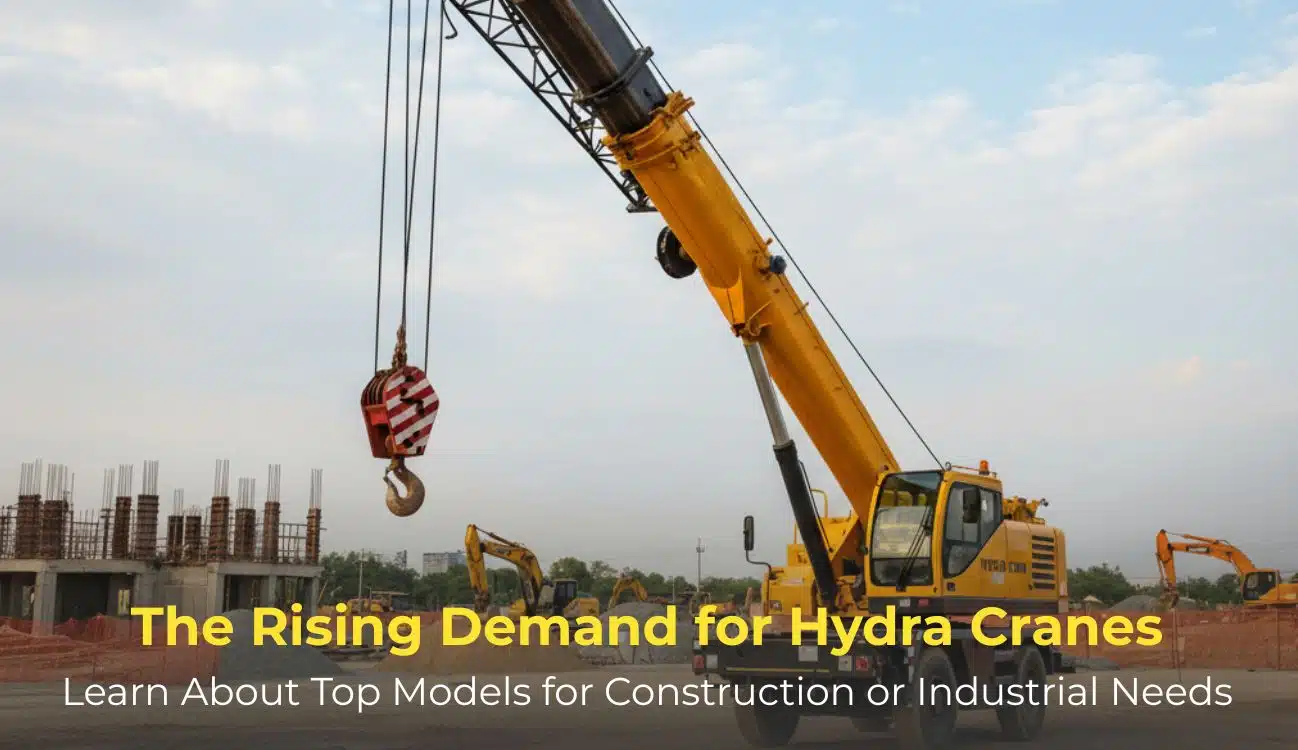
This crane machine, mounted on a truck chassis, is very mobile. It can be commonly employed in roadside lifting, urban construction, and regular maintenance. It is road-authorized, meaning it is perfect for places where there is a necessity to transport lifting equipment on a day-to-day basis.
Telescopic Hydraulic Crane
Equipped with a boom of nested sections that extend hydraulically, a telescopic crane offers variable reach and lift height from a short transport length. It is typically used in high-rise buildings, disaster relief, and narrow urban building construction projects where reach and flexibility are required.
Hydraulic Rough Terrain Crane
Designed for off-road and uneven ground, this crane is equipped with heavy suspension and high ground clearance. It is ideal for oil refineries, mines, and tough construction sites that need strong lifting performance under bad weather conditions.
Mini Hydraulic Crane
Small and maneuverable, the mini hydraulic crane is perfect for cramped spaces such as workshops, warehouses, or factory interiors. Small as it is, it has a strong lifting capacity and is very maneuverable indoors.
Hydraulic Crane Types at a Glance
| Type | How it works | Best suited to |
|---|---|---|
| Hydra (pick-and-carry) | Hydraulic cylinders on a wheeled chassis; lifts and drives with the load | General site lifting and shifting; 15 tonnes is the most common rating in India, with machines from 9 to 35 tonnes on sale |
| Truck-mounted | Boom mounted on a truck bed, stabilised on outriggers | Jobs needing road speed between sites — utilities, erection work |
| Telescopic | Nested boom sections extend hydraulically | Reach without a long transport length; steel erection, tank work |
| Rough terrain | Four-wheel drive and steer on a single cab chassis | Unmade ground — dams, mining, early-stage sites |
| Mini hydraulic | Compact tracked or wheeled crane, often remote-operated | Indoor, basement and confined-access lifts |
Pick-and-Carry Crane Capacity and Price in India
Pick-and-carry cranes — what almost everyone on site calls a hydra — are the configuration Indian buyers actually purchase, and the one type with directly comparable numbers across brands. The bands below are drawn from 68 pick-and-carry models on sale in India from ACE, Escorts, Indo Power, TIL and Terex Franna. Capacity is each machine’s rated maximum; prices are indicative dealer ranges, not quotations.
| Rated capacity | Models on sale | Indicative price range | Where it earns its keep |
|---|---|---|---|
| 9–11 tonnes | 3 | ₹12–14 lakh | Fabrication yards, workshop and light shifting duty |
| 12–14 tonnes | 12 | ₹15–33 lakh | General contracting and small infrastructure sites |
| 15–17 tonnes | 24 | ₹21–50 lakh | The volume segment — most hire fleets sit here |
| 18–35 tonnes | 25 | ₹26–66 lakh | Heavy erection, mining and large infrastructure work |
Prices are indicative ranges as of September 2026 and move with variant, boom option, state levies and the dealer you buy from. Two listed models, the TIL MOBILOAD 315 and TIL PIXEF 215, are quoted on request and carry no published figure.
Rated tonnage is measured at the shortest radius, not at reach
A crane’s headline capacity is its rating at minimum working radius, and it falls away steeply as the boom goes out. The Escorts F23 2WD publishes both ends of its own curve: 23 tonnes at a 1.5 metre radius, and 0.9 tonnes at 16.6 metres — the same machine, rated more than twenty times lower at full reach. That gap is the most expensive misunderstanding in a hire decision. Size the crane against the load at the radius you will actually be working at, and ask the dealer for the load chart rather than accepting the number on the brochure.
Applications of Hydraulic Cranes
| Industry | Hydraulic Crane Type | Common Use Cases |
|---|---|---|
| Construction | Hydra, Truck-Mounted, Telescopic | Lifting materials, beams, and structures |
| Manufacturing | Mini Hydraulic Crane | Moving machinery, indoor lifting |
| Logistics & Ports | Truck-Mounted, Rough Terrain | Loading/unloading cargo and containers |
| Infrastructure | Telescopic, Rough Terrain | Roads, metro stations, bridges |
Safety Tips to be Followed While Operating a Hydraulic Crane
Proper use of a hydraulic crane is essential to prevent accidents and ensure the efficiency of lifting operations. Whether a hydra crane, truck-mounted hydraulic crane, or a mini hydraulic crane, compliance with proper safety guidelines protects workers, equipment, and materials.
- Check Hydraulic Fluid Levels: At the end of each shift, ensure fluid levels are adequate. Dirty or low hydraulic fluid may cause system failure or erratic lifting.
- Certified Operators Only: Hydraulic cranes must only be operated by trained and certified personnel. Operator mistakes are one of the leading causes of on-site crane accidents.
- Stick to Load Limits: Never lift more than the recommended load. Overloading will destabilize the crane and destroy the hydraulic system.
- Inspect Regularly: Look at hoses, joints, control panels, and valves regularly for leaks, wear, or any other abnormal indication.
- Stable Surface Matters: Place the crane on even, compacted ground. Irregular ground surfaces can cause tip-over or loss of load control.
Following these checks keeps the crane working for longer and makes the ground around a lift safer for everyone on it.
Hydraulic Crane Trends in 2026
The year 2026 marks a significant shift in the hydraulic crane industry as sustainability, automation, and space optimization become top priorities. These are the trends that are defining the future of lifting technology in the construction, infrastructure, and manufacturing industries.
- Electric Hydraulic Cranes: With rising environmental concerns, electric-powered hydraulic cranes are gaining popularity. These machines offer zero emissions and minimal noise, making them suitable for indoor use and green building projects.
- Remote-Controlled Systems: To keep operators out of harm’s way in hazardous conditions, many cranes are now fitted with remote-control features, reducing the need for on-cab operation.
- IoT Integration: IoT technology enables real-time monitoring of crane usage, hydraulic pressure, and maintenance schedules to cut downtime and keep the machine earning.
- Compact Urban Models: As traffic congestion increases in cities, there is increasing demand for mini hydraulic cranes with greater maneuverability and its ability to work in tight and confined spaces.
These trends indicate how crane machines are developing to address current challenges while providing maximum safety, reliability, and sustainability.
Conclusion
Whichever type fits the work, the buying decision usually comes down to monthly outflow and risk cover rather than list price — equipment finance and equipment insurance both move that monthly number more than the sticker does, and the full crane range is listed alongside.
Hydraulic cranes are redefining efficiency and safety in lifting operations across industries. Whether it’s the versatile hydra crane, the mobile strength of a truck-mounted crane, or the agility of a mini hydraulic crane, these machines offer unmatched reliability. Their adaptability to diverse terrains, ease of operation, and precision lifting make them central to modern construction and logistics work.
As crane technology evolves with trends like electric models, IoT-enabled systems, and compact urban designs, it’s the perfect time to upgrade your fleet or invest in the right lifting equipment.
Once you are shortlisting, brand differences matter more than headline tonnage — the crane manufacturer profiles cover who builds what in India, and the model listings carry tonnage, boom length and indicative pricing model by model.
Specifications, emission norms and dealer offers change between model years — confirm the current on-road price, variant and compliance status with the dealer or OEM before you buy.