Excavator
294 models
Excavator
294 models  Backhoe Loader
51 models
Backhoe Loader
51 models  Crane
68 models
Crane
68 models  Concrete Mixer
79 models
Concrete Mixer
79 models  Wheel Loader
54 models
Wheel Loader
54 models  Compactor / Roller
45 models
Compactor / Roller
45 models  Motor Grader
42 models
Motor Grader
42 models  Dozer
41 models
Dozer
41 models  Concrete Pump
66 models
Concrete Pump
66 models  Skid Steer Loader
11 models
Skid Steer Loader
11 models  Telehandler
13 models
Telehandler
13 models 


The construction business ideas in India that hold up are the ones built around a machine or the work that machines create: hiring out a backhoe loader, mini excavator or crane, running tippers or transit mixers, crushing stone, supplying ready-mix concrete, selling spare parts, supplying labour, or bidding for public works. They need very different capital, from almost none for a labour licence to Rs 57 to 63 lakh (indicative, as of October 2026) for a single 20-tonne excavator. One number decides most of them: how many days a month the asset actually earns.
“I have about ten lakh. Which construction business should I start?” It is the question behind most searches for business ideas, and the honest answer starts with a different question. Where is the work you can already see, and which asset turns that work into money with the least capital sitting idle?
Below are ten businesses Indian owners actually run, each with what it needs, how it earns, and the number that decides it. Each links to a full working of the economics if you want the detail.
Construction business ideas in India, compared
| Business | Capital you need (indicative) | How it earns | What decides it |
|---|---|---|---|
| Backhoe loader on hire | Rs 28.5 to 31.5 lakh for a 3DX-class machine | Per hour or per month | Days worked a month |
| Mini excavator on hire | Rs 24.7 to 27.3 lakh for a 2.9-tonne machine | Per hour, with a daily minimum | Urban, tight-access demand |
| 20-tonne excavator on hire | Rs 57 to 63 lakh | Per hour or per month, often wet | Project-length contracts |
| Hydra crane rental | Rs 19.5 to 21.5 lakh for a 14-tonne pick-and-carry crane | Per day or shift | Billable days, valid certificates |
| Tipper or dumper | Truck price plus body; varies widely | Per trip | Trips a day and the local trip rate |
| Transit mixer | About Rs 33.5 to 52 lakh a truck, by size | Per trip or per cubic metre | Trips a day within the two-hour limit |
| Ready-mix concrete plant | Plant plus a fleet of mixers | Per cubic metre delivered | Mixers and haul distance |
| Stone crusher | Plant, land, support fleet; set by state rules | Per tonne of aggregate | Raw stone cost and haul distance |
| Spare parts counter | Stock plus credit given to customers | Margin on each sale | How often the stock turns |
| Labour contractor | Working capital for wages | Margin per worker-day | The gap between paying workers and being paid |
Machine prices are bands around current listed prices for the models named below, indicative as of October 2026; hire rates are indicative July 2026 figures from our rate card. Confirm both locally.
1. A backhoe loader on hire
The most common first business in Indian construction, and the best documented. A JCB 3DX-class machine costs around Rs 28.5 to 31.5 lakh (indicative, as of October 2026). On dry hire it earned an indicative Rs 90,000 to Rs 1,40,000 a month in July 2026. After the EMI on a Rs 20 lakh loan, about Rs 44,500 a month over five years at 12 per cent, roughly Rs 35,000 to Rs 90,000 is left before insurance, overheads and idle days.
The whole spread comes from utilisation. Bill 20 days and the machine pays well; bill eight and it loses money, because the EMI never takes a month off. The full working is in JCB business profit: what one machine really earns.
2. A mini excavator for city work
A 2.9-tonne machine such as the JCB 30 Plus is around Rs 24.7 to 27.3 lakh (indicative, as of October 2026), and mini excavators of 2 to 3 tonnes hired for an indicative Rs 500 to Rs 900 an hour in July 2026. Its market is the work a backhoe cannot turn into: lanes, basements, pipe and cable trenches in built-up areas. If your town is growing inwards rather than outwards, look here first. The equipment rental rate card sets its rates against every other common machine.
3. A 20-tonne excavator
A bigger step. A Tata Hitachi EX 210 Infra is around Rs 57 to 63 lakh (indicative, as of October 2026), and a 20-tonne machine earned an indicative Rs 1,400 to Rs 2,200 an hour on wet hire in July 2026. Wet hire means you supply the operator and often the diesel. This machine lives on roads, canals, mining and large building sites, usually on monthly or project terms, so the business depends on contracts, not walk-in customers. How to start an equipment rental business covers the first-machine decision between these three.
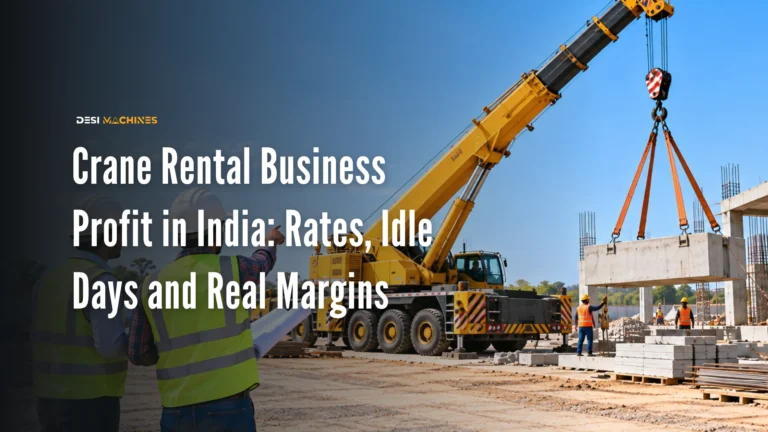
4. Hydra crane rental
A 14-tonne pick-and-carry crane such as the Escorts Hydra 14 is around Rs 19.5 to 21.5 lakh (indicative, as of October 2026), and hydras of that size hired at an indicative Rs 18,000 to Rs 35,000 a day in July 2026. The business is about billable days. A lapsed annual examination certificate or an operator not licensed for the road will keep a crane in the yard as surely as a lack of work. See crane rental business profit.
5. Tippers and dumpers
A tipper earns per trip, at a rate the local market for sand, aggregate, soil or debris sets, so no national profit figure exists. The useful comparison is monthly net divided by the capital you put in, set against what a backhoe would return on the same money. Tipper, dumper or backhoe: which earns more runs that sum.
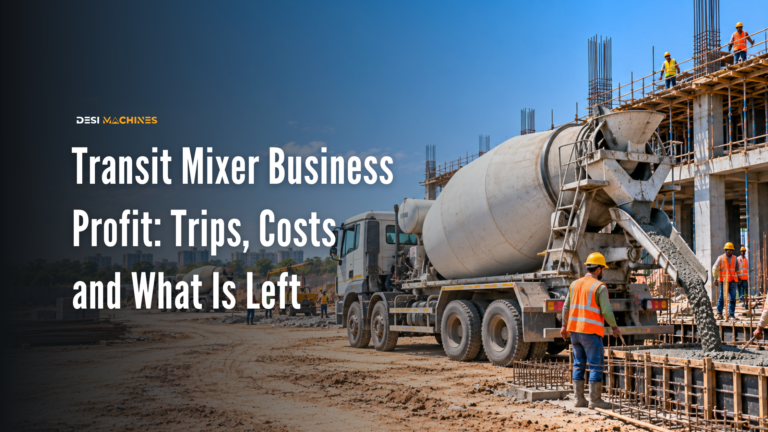
6. Transit mixers
A transit mixer is paid by the load, and the number of loads is capped by concrete itself. IS 4926:2003 requires ready-mixed concrete to be discharged from the truck mixer within two hours of loading, so distance from the batching plant decides how many trips a day the truck can make. Truck mixers sell for about Rs 33.5 to 37.5 lakh at the smaller end and Rs 48 to 52 lakh at the larger, by size (indicative, as of October 2026). Read transit mixer business profit before you price one.
7. A ready-mix concrete plant
The plant is the part everyone prices first and the part that matters least. Earnings come from cubic metres actually delivered, which are capped by how many mixers you run and how far you haul. Budget the delivery fleet before the plant. The full case is in RMC plant business: investment and margin, and you can compare concrete mixer models and prices while you plan the fleet.
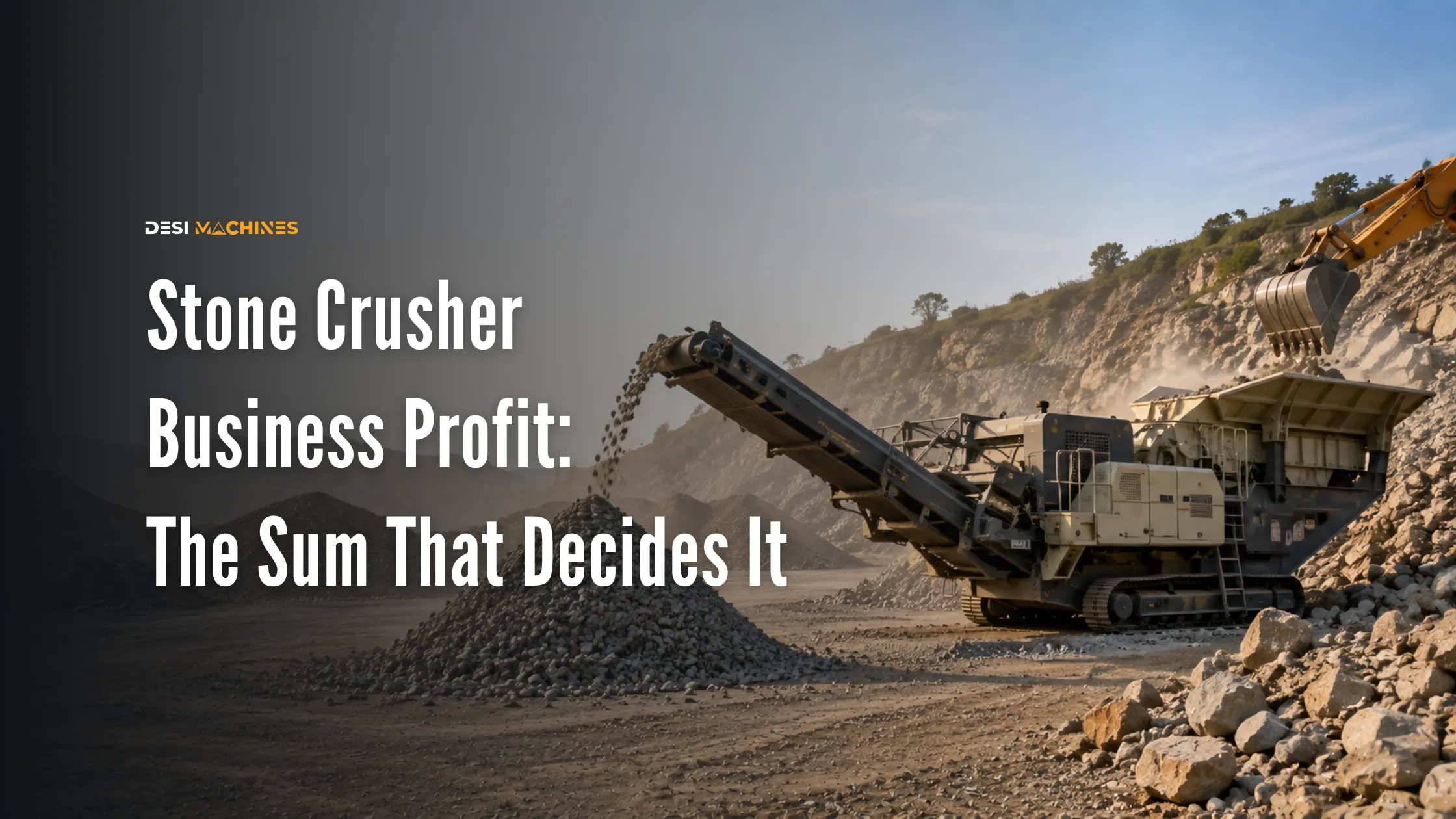
8. A stone crusher
A crusher earns per tonne, and the two lines that move profit most are what you pay for raw stone and how far the aggregate travels. Royalty on stone is set by your state, because stone for aggregate is a minor mineral, and siting and pollution clearances come before anything else. Start with stone crusher business profit and the state licensing rules in stone crusher licence.
9. A spare parts counter
No machine to buy, but the money goes into stock and into credit. Margin is set less by mark-up than by how often the stock turns: a cheap filter that sells every week out-earns an expensive pump that sits on the shelf. The working is in JCB spare parts business: investment, stock and margin.
10. Labour contracting
The quiet business that runs alongside every machine. Under the Contract Labour (Regulation and Abolition) Act, 1970, once you employ 20 or more workers through contract labour you need a licence, and the site you supply registers as the principal employer. Capital is small but the cash gap is wide: workers are paid weekly or monthly, while sites can take 45 to 90 days to pay you. See how to become a labour contractor.
Where the work comes from: public works
Most of these businesses eventually sell to contractors on government jobs, and many owners take the next step and bid themselves. That needs registration with the department, such as a state PWD contractor registration or the railways’ e-procurement system, and an understanding of bid capacity, earnest money and how payments flow. Live work is listed on the tenders and work opportunities desk.
How to choose between them
Start with the work, not the machine. Count the jobs within an hour of you that you could win next month, then pick the asset that serves them. A machine bought ahead of demand costs its EMI from the first month whether it works or not.
Compare on return on your own money. Monthly net divided by the capital you put in lets you compare a backhoe, a tipper and a parts counter on one scale. A business with a bigger monthly figure can still be the worse use of ten lakh.
Plan the cash gap. Nearly every business here is paid late: hire charges by contractors, contractors by departments. Keep a reserve that carries the EMI and wages through two slow months.
Check what credit you can raise. Under the Credit Guarantee Fund Trust for Micro and Small Enterprises, banks lend to eligible micro and small units without collateral against a guarantee, and CGTMSE has raised its ceiling of guarantee coverage to Rs 10 crore. Our note on a machinery loan without collateral explains what the scheme covers.
The bottom line
The construction business ideas in India that pay are rarely about finding a clever new niche. They are about matching one asset to work you can already see and keeping it earning: days worked for a machine, trips for a mixer or tipper, tonnes for a crusher, stock turns for a parts counter, and the payment gap for a labour contractor. Work out that one number for your district before you spend anything.
When you are ready to price the machine, compare backhoe loader models and prices or the full range of excavators, and check equipment finance options before you sign for the first quote.
Rates, schemes, specifications and prices change. Confirm current terms with the OEM, dealer, bank or insurer before deciding. Machine prices are indicative bands around listed prices as of October 2026 and hire rates are indicative July 2026 figures; local rates, taxes and state rules vary.