Excavator
294 models
Excavator
294 models  Backhoe Loader
51 models
Backhoe Loader
51 models  Crane
68 models
Crane
68 models  Concrete Mixer
79 models
Concrete Mixer
79 models  Wheel Loader
54 models
Wheel Loader
54 models  Compactor / Roller
45 models
Compactor / Roller
45 models  Motor Grader
42 models
Motor Grader
42 models  Dozer
41 models
Dozer
41 models  Concrete Pump
66 models
Concrete Pump
66 models  Skid Steer Loader
11 models
Skid Steer Loader
11 models  Telehandler
13 models
Telehandler
13 models 


The excavator final drive repair cost depends on how early you act. A leaking seal is a reseal; noise and metal in the oil mean bearings, and possibly gears; large pieces of metal on the magnetic plug mean a full overhaul after failure. Caterpillar’s own final drive guide says a repair before failure “can cost half or less” of one after it. In India you can repair your own unit, take a unit exchange or buy new, and Tata Hitachi offers all three for its travel motors. Check your warranty before you pay.
A thin line of oil on the inside of the track frame, near the sprocket. The operator says the machine has started pulling to one side on the haul road. Most owners see one of these first, and the decision made in the following week decides whether the bill is a set of seals or a whole travel device.
Why we do not print an excavator final drive repair cost
We list no final drive or travel motor as a part, so we have no price we can stand behind. The bigger reason is that the same complaint can be four different jobs. A reseal replaces seals and gaskets. A rebuild may need new bearings, gears and shafts. An exchange unit is a different price from a repair of your own unit, and a new travel device is another figure again. Any single number would be wrong for most readers.
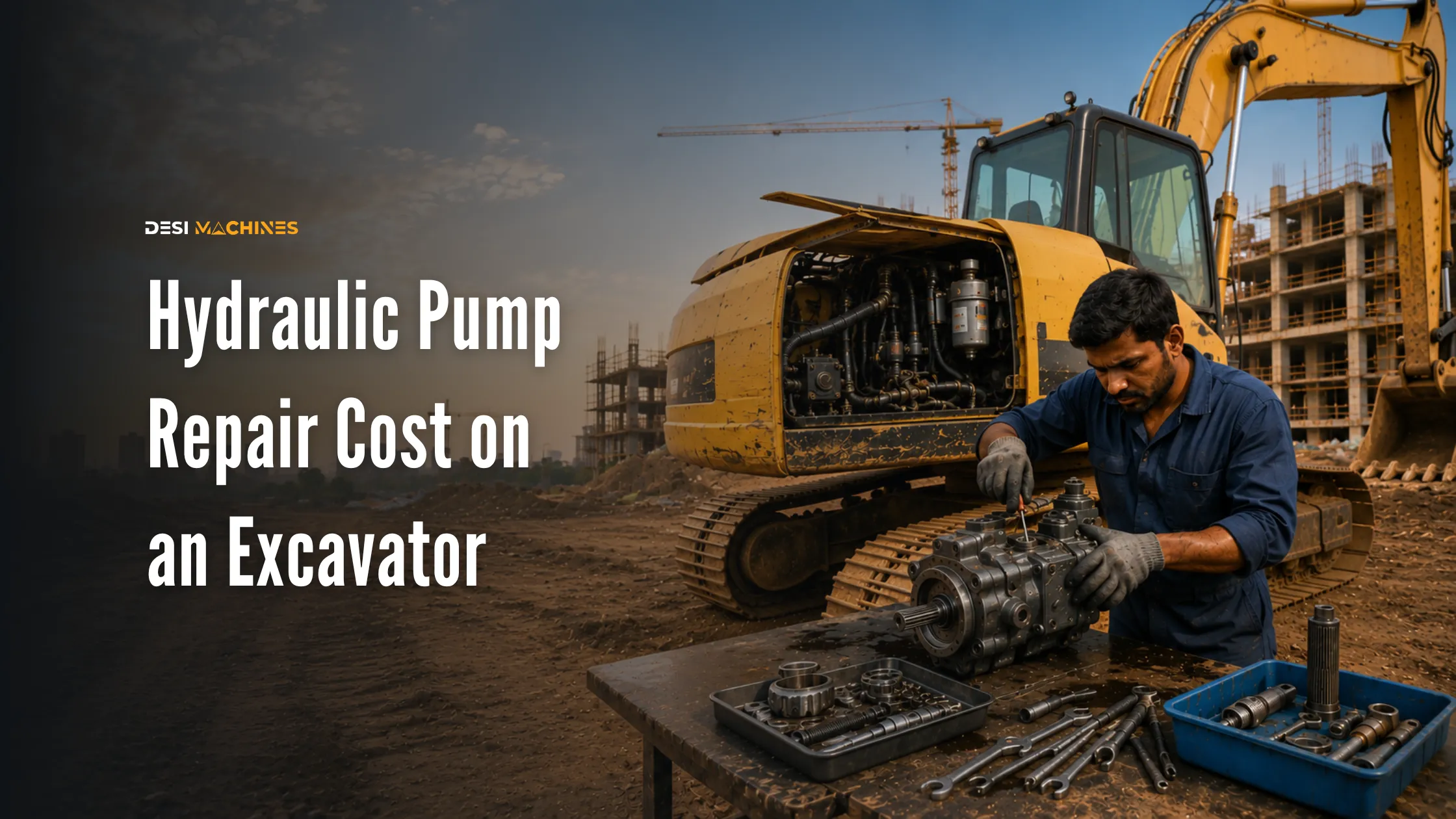
What we can give you is what the bill is made of, the routes you can choose between, and the questions that keep a quotation honest. Our breakdown of hydraulic pump repair cost on an excavator takes the same approach for the pump.
What a final drive repair bill is made of
Caterpillar’s Final Drive Maintenance Management Guide sorts final drive parts into three levels by how fast they wear. That grouping is the most useful way to read any quotation, whatever the make of your machine.
| Part group | What is in it | What it means for the bill |
|---|---|---|
| Level I: fastest wearing, not reusable | Anti-friction bearings, seals and gaskets, Duo-Cone (floating) seals | Replaced on almost every job, including a simple reseal |
| Level II: slower wearing, possibly reusable | Plates, discs, gears, shafts | Where the bill grows. Ask which are being reused and which replaced, and why |
| Level III: longest life, not designed to be replaced | Housings, hubs, carriers | Should normally be reused. A quote that replaces these needs a clear reason |
On top of the parts come the labour to remove and refit the unit, the oil, transport if it goes to a workshop, and the cost of the machine standing still. That last head is often larger than the invoice, as our piece on what machine downtime really costs sets out. For a sense of scale, Hitachi’s ZX210-7G brochure gives 6.8 litres of oil per travel device, per side, for a 20-tonne machine.
Reseal, rebuild or replace: the routes
Caterpillar describes the repair options as a ladder, and each rung is set off by what you find:
| Route | What triggers it | What you are paying for |
|---|---|---|
| Reseal | Oil leaks found during inspection | Level I seals and gaskets, plus removal and refitting |
| Rebearing and reseal | Heavy leaks, a bad oil-analysis result, or the unit reaching its target hours | Level I parts, with Level II parts reused where they pass inspection |
| Overhaul before failure | A planned rebuild of the whole final drive | Level I and worn Level II parts, done while the gears are still reusable |
| Overhaul after failure | Large pieces of metal on the magnetic plug, a failure, or broken parts found during a planned job | Most of Level II as well, and possibly damage to related parts |
In India the choice is also about whose unit goes back on the machine. Tata Hitachi’s page on hydraulic pumps and motors offers three options for a travel motor: a brand new unit, “a unit exchange pump or motor in exchange for an old unit”, or repair of your old unit at its hydraulic workshops, “based on the actual problem on the unit”. The same page warns that a poorly repaired pump or motor “can lead to other problems on the machines such as overheating, high fuel consumption and poor productivity”.
Repairing your own unit is usually the lowest invoice, but the machine waits for the work. A unit exchange puts a rebuilt unit on the machine straight away against your old one, so you trade some invoice for days. Hitachi’s global brochure for remanufactured travel devices says they “have the same warranty as new travel devices” and reduce downtime because “there is no need to spend time in repairing them”, and its reman leaflet adds that you must return the used part. Exchange and reman terms differ by dealer and by country, so get the warranty in writing.
Why the timing changes the bill
“Repairing before failure gets your machine back to work sooner and can cost half or less of the cost of after-failure repairs,” says Caterpillar’s guide. The reason is the Level II parts. A unit opened because of a leak or a bad oil sample usually still has reusable gears and shafts. A unit that has failed has sent broken metal through its own gear set, and those parts go in the scrap bin.
The same guide calls contaminated oil “by far, the most common and preventable cause of component failure”, and its oil-analysis table links iron with silicon and sodium to muddy ground water getting in. On Indian sites that is the monsoon, wet clay and paddy work. A leaking floating seal lets that water and dirt in, so a leak left alone is how a reseal becomes an overhaul. The warning signs and the daily checks are covered in our guide to how the swing and travel motors work and what fails.
How to read a final drive quotation
- Is this a reseal, a rebearing, or an overhaul? Ask what was found on the magnetic plug and in the oil to justify it.
- Which Level I parts are being replaced? Bearings, seals and both halves of every floating seal should be new.
- Which gears, plates and shafts are reused, and which replaced? Ask to see the replaced parts.
- Is any housing, hub or carrier being replaced? If so, why?
- Is it your own unit repaired, an exchange unit, or new? For an exchange, what condition must your old unit be in?
- What oil grade and quantity goes back in, and is the travel speed checked after fitting?
- What is the warranty on the repair, in months or hours, and who honours it?
- How many days will the machine be down for each option?
Check warranty and insurance before you pay
On a newer machine, look at the warranty first. Tata Hitachi’s standard warranty is “1 Year / 2000 Hours whichever is earlier”. Its extended warranty for 20-tonne models such as the EX 200LC and EX 215LC runs to “3 Years / 7500 Hours whichever is earlier”, and its powertrain list names the travel device and the travel motor. The conditions matter: maintenance by Tata Hitachi’s authorised service engineer to its schedule, and genuine parts bought from an authorised dealer for any earlier maintenance or repair. A final drive serviced outside that network can lose the cover.
Past the warranty, a standard contractor’s plant and machinery policy is not built for internal breakdowns. Our explainer on machinery breakdown insurance lists the final drive among the breakdowns that separate cover is meant for.
Keeping the next bill smaller
Tata Hitachi lists “Travel device oil change: 2000 hrs” for its 20-tonne excavators, including the EX 200LC and the Tata Hitachi EX 210 Infra. Other makers’ schedules add a level check at the 250-hour service; follow the manual for your own machine. Our construction equipment service schedule lays out the hour marks. Keep the records too. Caterpillar notes that gears and shafts on well-kept final drives “can last through multiple rebuilds”, and service records raise resale value.
On a used machine, ask for the final drive oil history and look for oil at the sprocket hub before you agree a price. A failed travel device on the machine you just bought is a bill you could have priced in.
The bottom line
An excavator final drive repair is cheapest when it is a reseal and most expensive when it is an overhaul after failure, and Caterpillar puts the gap at half or more. Act on the first leak, make every quotation list its parts by level, compare repair, exchange and new against the days the machine will stand, and check the warranty before anyone opens the unit.
When a repair bill starts to approach what an older machine is worth, compare it against a newer one. The Hyundai R210 Smart Plus and JCB NXT 215 LC Fuel Master are two of the most asked-about 20-tonne models, and you can browse all excavator models and prices, ask for excavator spare parts through authorised dealers, or check equipment finance for a replacement.
Service intervals, warranty terms and repair options differ by make, model and dealer, and change over time. The intervals and terms quoted here are from the Tata Hitachi, Hitachi and Caterpillar documents named. Confirm them for your own machine with the OEM or your dealer before you decide on a repair.