Excavator
294 models
 Backhoe Loader
51 models
 Crane
68 models
 Concrete Mixer
79 models
 Wheel Loader
54 models
 Compactor / Roller
45 models
 Motor Grader
42 models

 Concrete Pump
66 models
 Skid Steer Loader
11 models


JK PWD contractor registration still runs on the Jammu and Kashmir Registration of Contractors Rules 1991, issued under SRO-122 of 26 May 1992 and amended since. There are five classes. Class A can be given works above Rs 25 lakh, class B Rs 10 to 50 lakh, class C Rs 5 to 25 lakh and class D up to Rs 15 lakh, while the Special Class sits above class A. Registration fees run from Rs 1,000 to Rs 20,000. Since May 2022 a card is renewed every three financial years, online only, through the PW(R&B) Department’s JKPWDOMS portal. The Special Class and classes A to C must own a set list of plant.
A card that ran out on 31 March can cost you a tender you have already won. In May 2026 the High Court of Jammu and Kashmir and Ladakh kept an L1 result in abeyance because the lowest bidder’s card had expired, though the tender asked for one renewed for 2026-27. The court would not rely on a department circular deeming old cards valid until 31 May, saying it was not in line with the 1991 Rules.
Jammu and Kashmir contractor registration comes from the Registration of Contractors Act, 1956. The 1991 Rules cover Roads and Buildings and other works departments such as irrigation and public health engineering. This guide covers civil works under PW(R&B). Ladakh, now a separate Union Territory, is outside it.
JK PWD contractor registration classes and work limits
Chapter 19 of the J&K PWD Engineering Manual 2020, published on the department’s JKPWDOMS portal, reprints the 1991 Rules. Its class table comes from SRO-196 of 28 June 2011.
| Class | Works it can be given | Area | Registration fee | Renewal fee (2022) | Card issued by |
|---|---|---|---|---|---|
| Special | Not stated in the table | Not stated | Rs 20,000 | Rs 12,000 | Chief Engineer |
| A | Any amount above Rs 25 lakh | All regions | Rs 10,000 | Rs 7,500 | Chief Engineer |
| B | Above Rs 10 lakh up to Rs 50 lakh | All regions | Rs 5,000 | Rs 3,750 | Superintending Engineer |
| C | Above Rs 5 lakh up to Rs 25 lakh | One region | Rs 2,500 | Rs 1,950 | Superintending Engineer |
| D | Up to Rs 15 lakh | One region | Rs 1,000 | Rs 750 | Superintending Engineer |
The bands overlap, so a Rs 12 lakh job is open to classes B, C and D. Class C and D applicants pick one region and must register afresh to move. The issuing officers come from SRO-277 of 26 July 2010. A 2024 High Court judgment read the class C ceiling as Rs 20 lakh, against Rs 25 lakh in the department’s table, so check each tender’s wording. Some J&K cards and notices also show an “AAY” class, which the 1991 Rules text does not define; ask the issuing office what it accepts.
What each class must show: experience, staff and money
Rule 4 sets the entry test for each class, and most contractors climb from class D.
| Class | Experience | Technical staff | Liquid funds | Property |
|---|---|---|---|---|
| Special | Four works totalling Rs 100 lakh, five years in class A | Permanent set-up with a civil degree holder and a diploma holder, plus a consulting firm | Rs 5 lakh | Rs 15 lakh |
| A | Three works totalling Rs 20 lakh as class B, three years in class B | One civil degree holder and one diploma holder at award of work | Rs 3 lakh | Rs 7.5 lakh |
| B | Three works totalling Rs 10 lakh as class C, three years in class C | One civil diploma holder at award of work | Rs 1.5 lakh | Rs 2.5 lakh |
| C | Three works totalling Rs 2 lakh, two years in class D | Not listed | Rs 50,000 | Rs 1.5 lakh |
| D | One year working with a registered class D contractor | Not listed | Rs 20,000 | Rs 50,000 |
Engineers get a shortcut. Civil degree or diploma holders need no field experience for classes C and D. For class A they need 7 years in the field with a degree or 15 with a diploma, and for class B 3 or 10, and government service counts. They also get a 50% cut in the money test, which is proved by a revenue officer’s certificate and a bank certificate of the last three months’ balance.
The machinery each class must own
This is where J&K differs from most state PWDs. Rule 4 says the contractor must “possess” the plant below, and the rules make no provision for hired plant.
| Plant | Special | A | B | C |
|---|---|---|---|---|
| Dozer or shovel | 1 | – | – | – |
| Truck or tipper | 2 | 1 | 1 | – |
| Concrete mixer | 2 | 2 | 1 | 1 |
| Concrete vibrator | 2 | 2 | 2 | 1 |
| Compressor | 4 | 1 | – | – |
| Diesel generator with welding plant | 1 | 1 | – | – |
| Concrete compression testing machine | 1 | 1 | – | – |
| Theodolite and surveying level | 1 each | Level 1 | – | – |
Class D has no plant list. Every class files a plant certificate that includes enough shuttering, and a legal bond that the declared machinery is free of charges except a mortgage to a bank or public-sector lender, and will not be sold without the registering authority’s permission. A financed machine is therefore acceptable.
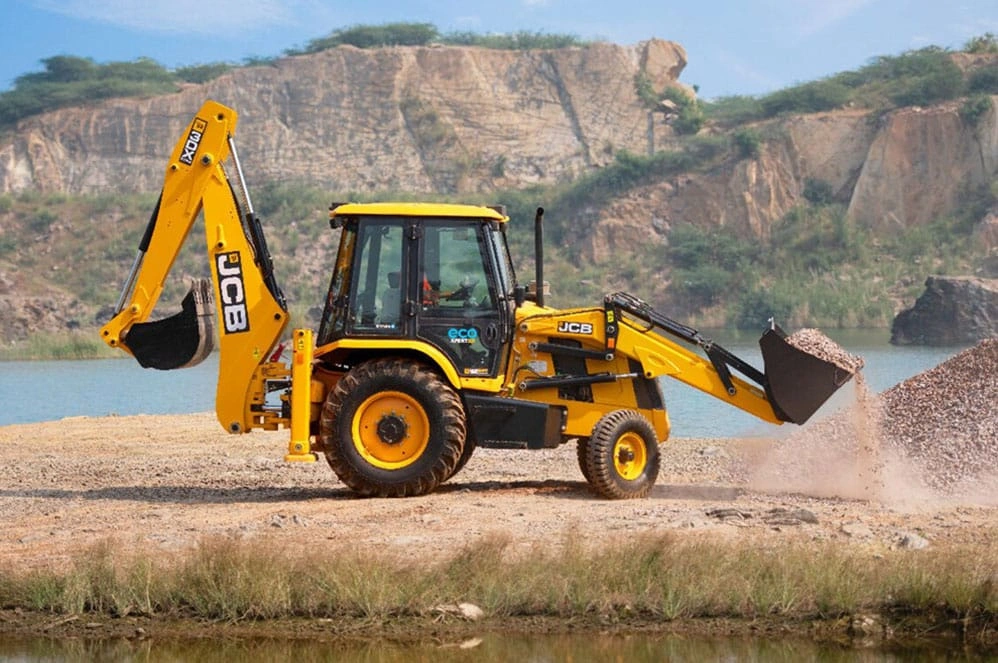
The rule book stops at tippers and mixers, yet hill-road work in Jammu and Kashmir, from slip clearance to drain cutting, runs on earthmovers. A class B or A contractor who owns a backhoe loader such as the JCB 3DX, or a 20-tonne excavator like the Tata Hitachi EX 210 Infra, can take on that work without waiting for a hired machine. The 2022 notification even deemed the class A cards of 68 hot mix plant holders valid as a one-time exception. If a machine is what stands between you and the next class, compare construction equipment loans before you apply to upgrade.
Documents for J&K contractor registration
Rule 5 and the portal’s upload list ask for:
- A bank solvency certificate and an income tax clearance (both waived for class D), a Tehsildar’s property certificate and a bank balance certificate.
- A character certificate from an officer not below Superintendent of Police after CID verification.
- Certificates from Chief Engineers or Superintending Engineers that you have not backed out of any contract and your work was satisfactory.
- Two legal bonds, one on the declared machinery and property and one letting the department recover dues by sale of your property.
- An affidavit that you are not blacklisted, in government service, insolvent or convicted of a listed offence, plus the plant certificate and a photo.
District offices also ask for PAN and a newspaper notice inviting objections. Upgrades need the same set again.
How to apply for JK PWD contractor registration online
A Development Commissioner (Works) circular of 28 October 2021 moved new cards, renewals and upgrades to JKPWDOMS and ended offline cards. For JK contractor registration online, the portal’s user manual gives these steps:
- Click Contractor Sign up, enter a user name, email and password, verify your mobile number by OTP and upload your character certificate as a PDF of up to 200 KB.
- Log in, open Contractor Management and choose Apply, then New Contractor.
- Fill in the basic details and select the issuing authority and district. The registration number is generated automatically.
- Add your bank account with IFSC and MICR codes.
- Upload the photo, solvency and tax certificates, legal bond, character certificate, clearance certificate and affidavit, each as a PDF of up to 500 KB.
Renewals and upgrades sit in the same Apply menu. The portal also lists active, barred and blacklisted contractors by class.
Validity, renewal and late fees
The 1991 Rules made cards valid for one financial year. Notification S.O. 261 of 28 May 2022 changed this to renewal after every three financial years and made all licences online-only, and an Engineer-in-Chief circular of 21 April 2025 confirmed three-year renewals. Cards renewed only on a High Court direction get one provisional year.
For renewal, the 2025 circular asks for your latest income tax return and two affidavits attested by a First Class Magistrate, on blacklisting, labour dues and work quality, and on criminal cases. Government Order No. 97-PW(R&B) of 2022, dated 15 March 2022, added a certificate from each executing division listing works allotted, completed on time, delayed and unfinished, so a slow track record shows up at renewal.
Renew before the year ends. A late renewal costs a penalty equal to the renewal fee, and if you miss two consecutive terms the card lapses and you must register afresh.
JK panchayat contractor registration for small works
Finance Department Government Order No. 238-F of 2021, dated 7 September 2021, restricts tenders for works up to Rs 3 lakh to residents of the panchayat, or adjoining panchayats if response is poor. It set up a simple registration kept by the Deputy Commissioner, based on Aadhaar, PAN and a domicile certificate, verified through the panchayat and local police. The Rural Development and Panchayati Raj portal takes these applications.
The bottom line
Apply for the class your certified work and owned plant can prove, since J&K asks you to possess the plant before it registers you. Keep the three-year renewal date in your diary and file before 31 March. For how other states grade contractors, read the PWD contractor registration guide and the HP PWD contractor registration rules. Once your card is live, track government tenders in your band and bid regularly.
Sources: the J&K Registration of Contractors Rules 1991 as reprinted in the J&K PWD Engineering Manual 2020, notification S.O. 261 of 28 May 2022, and the circulars and orders dated above. Rates, schemes, specifications and prices change; confirm current terms with the OEM, dealer, bank or insurer, or the issuing department, before deciding. DesiMachines is not liable for decisions a contractor takes on information that may have changed after publication.