Excavator
294 models
Excavator
294 models  Backhoe Loader
51 models
Backhoe Loader
51 models  Crane
68 models
Crane
68 models  Concrete Mixer
79 models
Concrete Mixer
79 models  Wheel Loader
54 models
Wheel Loader
54 models  Compactor / Roller
45 models
Compactor / Roller
45 models  Motor Grader
42 models
Motor Grader
42 models  Dozer
41 models
Dozer
41 models  Concrete Pump
66 models
Concrete Pump
66 models  Skid Steer Loader
11 models
Skid Steer Loader
11 models  Telehandler
13 models
Telehandler
13 models 


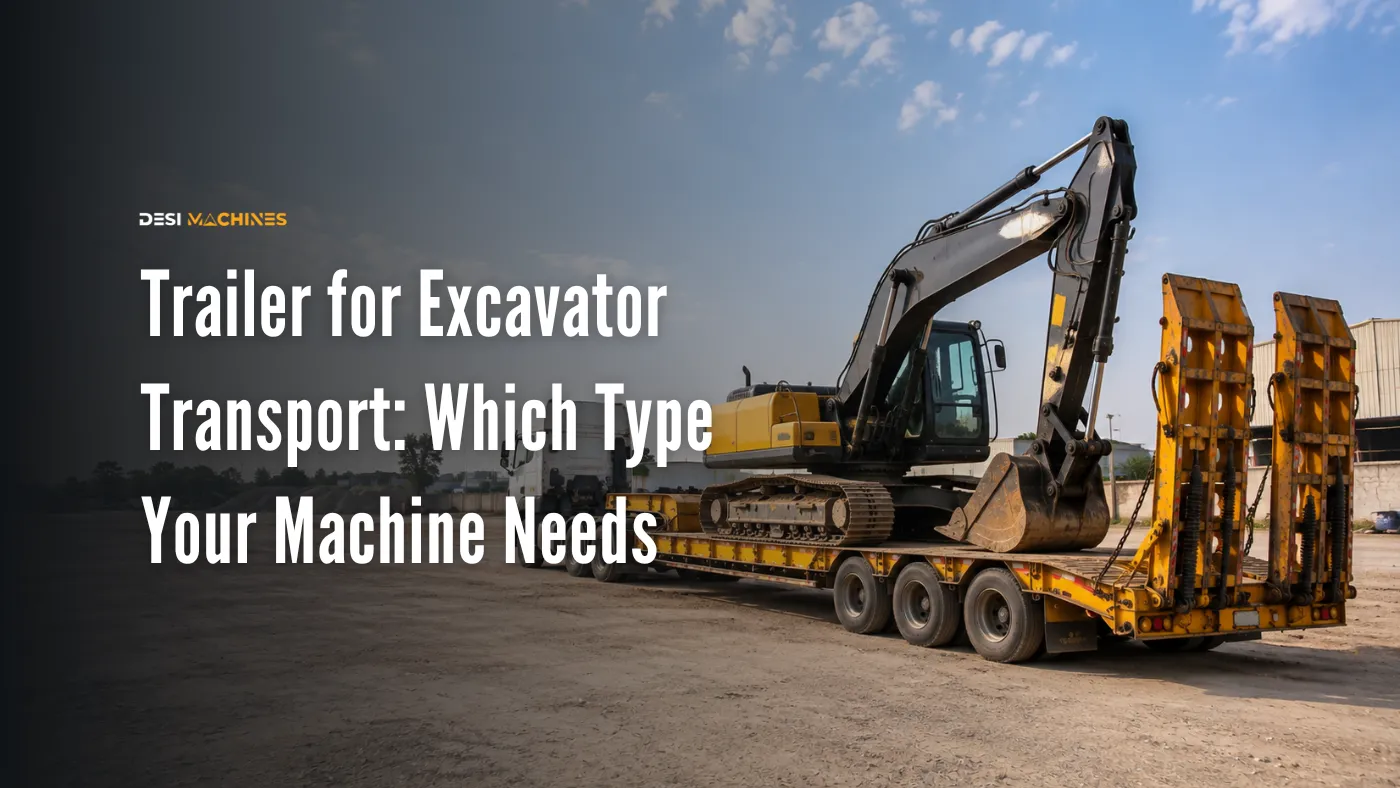
The right trailer for excavator movement is decided by two numbers — your machine’s operating weight with the attachment fitted, and its height once loaded. Small machines travel on a tractor trolley, a tipper body or a flatbed; the 20 tonne class usually goes on a semi low bed; heavy and tall machines need a full low bed, and the largest go on hydraulic axles. The number that binds is not on your machine, it is the registered gross vehicle weight on the trailer’s RC — ask to see it before you agree the rate.
Picking a trailer for excavator movement starts with two numbers
Owners tend to start by asking which trailer to book. The order is backwards. Two numbers decide it, and once you have them, the trailer picks itself.
The first is operating weight with the attachment fitted. A machine’s quoted weight and the weight that rolls onto the trailer are different once you add a breaker, a heavier bucket or a quick coupler. Use the number for the machine as it will actually travel.
The second is height once loaded. Deck height plus machine height is what has to clear every structure on the route. This is why the deck matters at all: a low bed exists to buy back height, and if you do not need the height, you are paying for a heavier, more expensive vehicle than the job requires.
The trailer types you will actually be offered
| Trailer type | Typical machine class | Why it gets used |
|---|---|---|
| Tractor trolley / tipper body | Mini excavators, small machines | Cheapest and widely available for short local moves |
| Flatbed truck or trailer | Light machines, attachments, spares | Simple deck, easy to load where there is a bund |
| Semi low bed | Backhoe loaders, 20 tonne class excavators | The workhorse of Indian machine movement — deck drops behind the gooseneck |
| Full low bed | Heavier and taller machines | Lowest practical deck, used when loaded height is the constraint |
| Hydraulic modular axle | The largest machines | Axles spread the load and the deck can be adjusted; a specialist job |
Treat that as a starting map, not a rule book. Fleets build and rebuild bodies, and the same words mean slightly different vehicles in different states. What does not vary is the paperwork.
The number that binds is on the trailer’s RC
Your machine’s weight is a fact about your machine. What decides whether the movement is legal is a fact about the vehicle carrying it — the registered gross vehicle weight on the trailer’s registration certificate, against the actual laden weight of trailer plus machine.
That is why the useful question at booking is not “can you carry a 20 tonne machine” but “what does the RC say”. A transporter who can answer that quickly is telling you something about how the rest of the movement will go. One who cannot is telling you something too. Your own machine’s paperwork sits on the same footing — what has to be on the register, and when, is set out in our guide to construction equipment registration.
The weight limits themselves, and what an overload actually costs the person who caused or allowed it, are set out in what it costs to transport an excavator. Read that alongside this piece — it carries the cost heads and the owner-liability position, and this one is about matching the vehicle to the machine.
We are deliberately not printing deck dimensions or maximum permitted heights here. Those sit in the vehicle rules rather than in the Act, they vary by state and by route, and a number quoted confidently on a blog is exactly the wrong basis for a movement. Get the route confirmed by the transporter who will run it.
Loading is where machines get damaged
Most transport damage does not happen at speed on a highway. It happens in a yard, on ramps, at walking pace.
The straightforward method is driving the machine up the trailer’s ramps under its own power with someone spotting from the ground. It needs level, firm standing, ramps rated for the machine, and one person giving signals. Where ramps will not work, yards cut a bund — an earth ramp built up to deck level so the machine tracks straight on. That takes time and sometimes a second machine, which is a cost head, so agree it in advance rather than discovering it on the day.
Once loaded, the machine is chained down and the boom is positioned and secured. Ask who supplies the chains and lashings. It is a small question that decides who is arguing on the day something moves.
What to check before the machine goes up
Ask to see the trailer’s RC and read the gross vehicle weight. Confirm who loads, who unloads, and who provides the lashings. Establish who arranges route permissions where the load needs them. And settle the insurance position before the machine leaves your control — the transporter’s liability is capped by law rather than by what your machine is worth, which is why transit insurance belongs in the booking conversation.
If you are moving a machine because you have bought it in another state, the tax and registration side is worth reading first in buying heavy machinery across states.
Move it, or hire locally?
There is a distance beyond which moving your own machine stops making sense. Freight both ways, the days lost at each end, and the risk of the movement all sit against the alternative of hiring a machine near the job. Work it against local hire rates — the indicative numbers by machine class are in our equipment rental rate card — before you commit to a long haul for a short job.
Pick the trailer by loaded weight and height
Weight with the attachment on, and height once loaded. Those two numbers pick the trailer, and the trailer’s RC decides whether the movement is legal. Everything else in the booking — ramps, chains, permissions, insurance — is a line you either settle in the order or argue about later.
Planning a purchase rather than a movement? Browse live excavator models and prices and backhoe loaders to see what each class weighs before you commit.
Vehicle rules, permitted weights and rates change, and the correct vehicle depends on your machine, your route and the state you are moving through. Confirm the position with your transporter, the vehicle’s registration certificate and the dealer or OEM before deciding.