Excavator
294 models
Excavator
294 models  Backhoe Loader
51 models
Backhoe Loader
51 models  Crane
68 models
Crane
68 models  Concrete Mixer
79 models
Concrete Mixer
79 models  Wheel Loader
54 models
Wheel Loader
54 models  Compactor / Roller
45 models
Compactor / Roller
45 models  Motor Grader
42 models
Motor Grader
42 models  Concrete Pump
66 models
Concrete Pump
66 models  Skid Steer Loader
11 models
Skid Steer Loader
11 models  Telehandler
13 models
Telehandler
13 models  Dozer
Dozer 


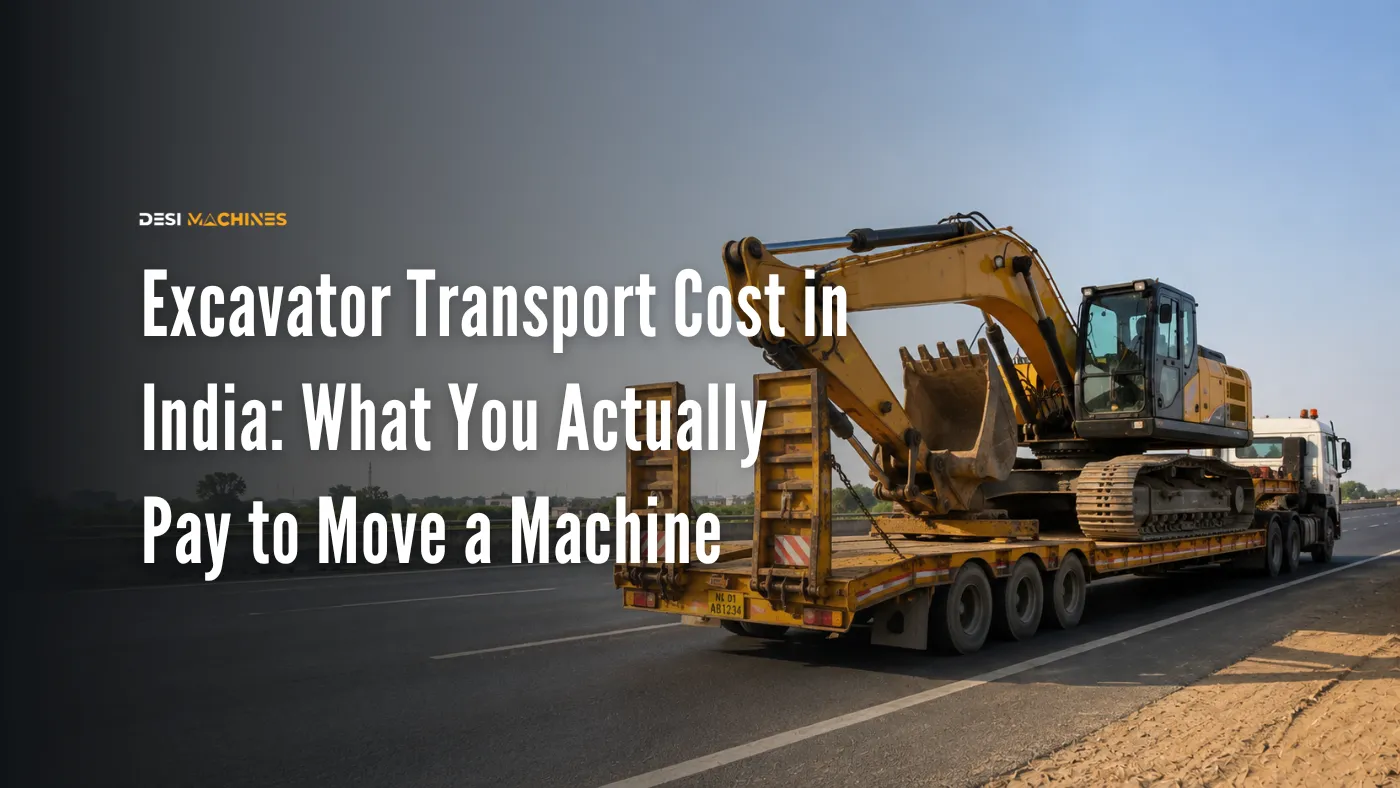
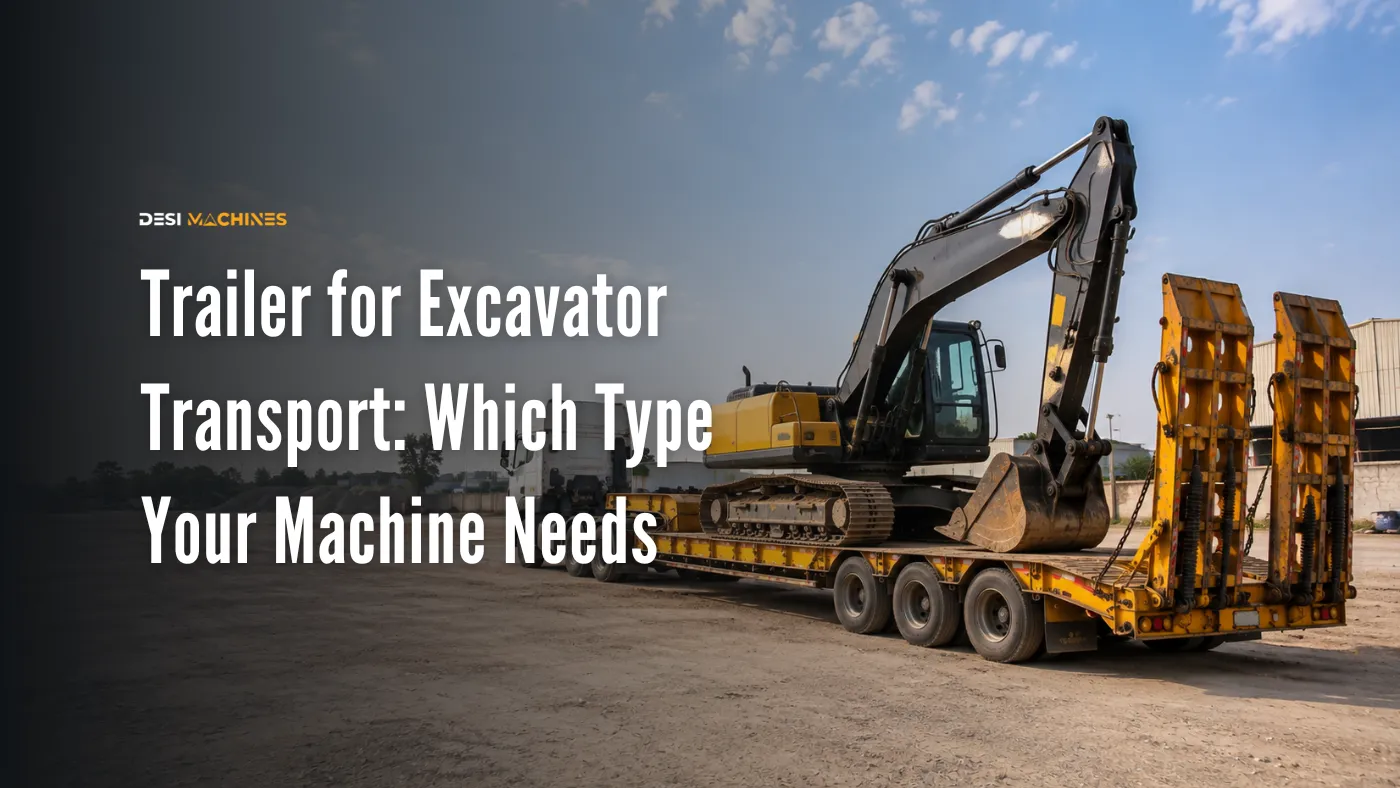
In short: The excavator transport cost is not really a distance charge — it is a trailer charge. Weight decides which trailer your machine needs, and the trailer decides almost everything you pay. A 1,800 kg mini rides on an ordinary truck; a 7,200 kg backhoe loader needs a light trailer; a 20-tonne class excavator needs a low-bed and a heavier prime mover. Get the trailer’s registered weight in writing before loading: under section 194 of the Motor Vehicles Act, 1988, an overloaded movement carries a minimum fine of ₹2,000 plus ₹1,000 per tonne of excess, plus the cost of off-loading.
What the excavator transport cost is actually built from
Owners ask for a rate per kilometre. Transporters price a trip. That mismatch is where most of the arguments start.
The trip is priced against the trailer that can legally and physically carry your machine, and the trailer is chosen by weight and by width. Once the trailer class is fixed, distance is close to a multiplier. Get the class wrong at the enquiry stage and every number after it is wrong too.
Here is the weight ladder, using operating weights from the current August 2026 catalogue so you can place your own machine on it.
| Machine class | Catalogue example | Operating weight | What it usually travels on |
|---|---|---|---|
| Mini excavator | Kubota U17-3 | 1,800 kg | Ordinary truck or a small tilt trailer |
| Mini excavator | Tata Hitachi ZAXIS 23U | 2,356 kg | Ordinary truck or a small tilt trailer |
| Backhoe loader | JCB 3DX | 7,200 kg | Light trailer; often driven short distances instead |
| Backhoe loader | JCB 4DX | 8,450 kg | Light trailer |
| 20-tonne excavator | Tata Hitachi EX 200 Infra | 20,000 kg | Low-bed trailer with a heavy prime mover |
| 20-tonne excavator | Case CX220C | 21,600 kg | Low-bed trailer with a heavy prime mover |
| Mining excavator | BEML BE1800E | 175,000 kg | Dismantled and moved in parts |
Weights are as per the current August 2026 catalogue specification and vary with bucket, track shoe width and counterweight. Confirm the figure for your exact variant before you book a trailer, because a heavier undercarriage or a wider shoe can push a machine into the next bracket.
The jump that costs money is the one from a light trailer to a low-bed. Below it, plenty of transporters can take the job. Above it, the pool of suitable trailers narrows, the prime mover is bigger, and the route needs thinking about.
The weight that binds is on the trailer’s RC, not on your machine
This is the part owners get wrong most often. Your excavator’s operating weight is a specification. The number that decides whether the movement is legal is the gross vehicle weight of the trailer carrying it.
The Motor Vehicles Act, 1988 defines gross vehicle weight in section 2(15) as the total weight of the vehicle and load certified and registered by the registering authority as permissible for that vehicle. Section 58 requires the registering authority to enter the unladen weight, the tyre details and the gross vehicle weight in the registration certificate of a transport vehicle. So the ceiling is a number already written on a document the transporter is carrying.
What happens if the loaded trailer goes past it is set out in section 194 of the Act: whoever drives the vehicle, or causes or allows it to be driven, in contravention of the weight provisions is punishable with a minimum fine of ₹2,000 and an additional ₹1,000 per tonne of excess load, together with the liability to pay the charges for off-loading the excess. Section 194(2) adds a fine of up to ₹3,000 for refusing to stop for weighing, or for removing part of the load before the weighing happens.
Read the “causes or allows” wording twice. It is the reason a consignor cannot treat overloading as purely the driver’s problem. Asking to see the trailer’s registration certificate before your machine goes up the ramp costs nothing and settles the question.
Driving the machine itself on a public road under its own power is a separate matter with its own paperwork — that is where registration and road tax on a JCB come in, and where the registration certificate for construction equipment matters.
The cost heads that are missing from the cheaper quote
When two quotes are far apart, the gap is almost never the freight. It is what has been left out of one of them.
| Cost head | What to ask |
|---|---|
| Loading and unloading | Is a ramp, crane or excavator at either end included, or arranged by you? |
| Detention or waiting | How many free hours at each end, and what is charged after that? |
| Route permissions | Who applies, who pays, and whose account carries a chalan on the way? |
| Escort or pilot vehicle | Required on some routes and widths — included or extra? |
| Transit cover | Whose policy covers the machine while it is on the trailer? |
| Return leg | Is the quote one way, and what does bringing the machine back cost? |
Detention is the head that quietly ruins a job. A machine that sits loaded for two days because the site is not ready is earning nothing at both ends, and the same delay usually costs you on the hire side as well. Price your standing time the way you would price the machine’s cost per hour — the capital does not stop costing you because the machine is on a trailer.
Why we are not publishing a rate per kilometre
Plenty of pages will give you one. We are deliberately not going to, and the reason is worth knowing.
Machine freight in India is not a notified rate. Unlike road tax or registration fees, no department publishes it. It is negotiated per trip against the trailer, the route, the season, whether the transporter has a return load from your destination, and how much diesel costs that month. A single national figure would be wrong for most readers on most days, and quoting one would only make your negotiation worse by anchoring you to a number that came from nowhere.
What you can do instead is control the things that move the price. Book with notice rather than in a panic. Ask whether the transporter has a back-load. Combine movements if you are shifting more than one machine. And place your machine on the weight ladder above before you make the first call, so the quote you get is for the right trailer.
If the movement is part of an interstate purchase, the freight sits alongside the tax and paperwork questions covered in buying heavy machinery across states — price the landed cost, not the sticker.
Move it or hire locally?
For a short job the honest answer is often that you should not move the machine at all.
Work the round trip against what the machine will earn. If a two-week job needs the machine moved in and out, and the freight both ways eats a meaningful share of the contract, hiring a machine near the site is the cheaper answer even at a poor hourly rate. The rental rate card gives you the comparison figure for that sum.
Where the machine is going out for months, the freight is spread thin and the maths reverses. The break-even is worth doing on paper each time rather than by habit — most owners move machines more often than the numbers justify, because the machine is theirs and moving it feels free.
Weight also decides where the machine can work once it lands, which is a separate question covered in the guide to excavator operating weight.
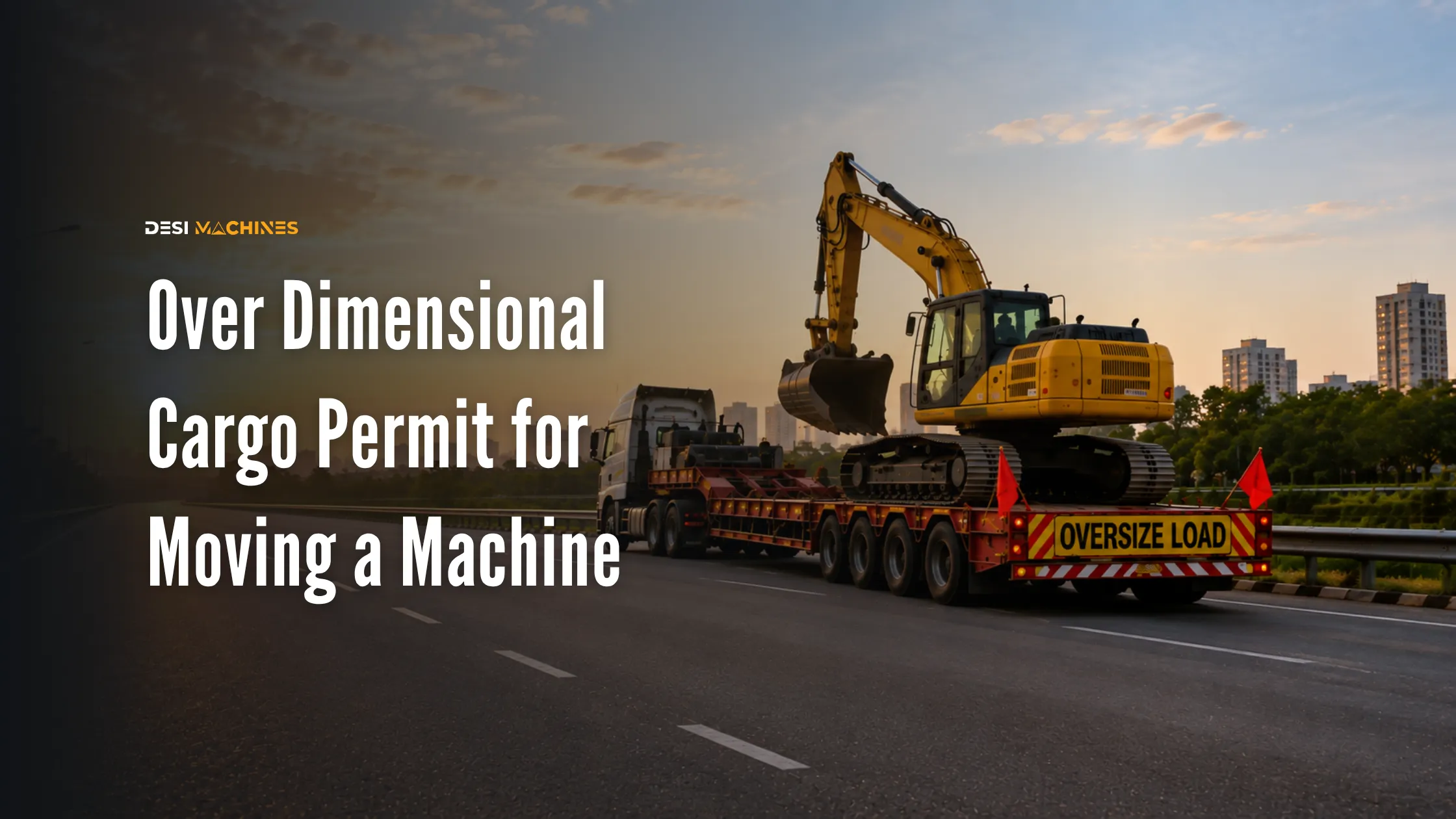
If the loaded combination crosses the dimensions the Central Motor Vehicles Rules allow, the movement also needs route approval — see our note on the over dimensional cargo permit for the width, height and length limits and who is expected to arrange it.
What to put in the transporter’s order
Keep it to one page and insist on these six lines: the machine make, model and operating weight; the trailer’s registration number and its registered gross vehicle weight; who loads and who unloads; free waiting hours at each end and the rate after that; who arranges and pays for route permissions; and who carries the insurance risk from yard to site. That last line deserves its own decision rather than a tick: the transporter’s liability is capped by law rather than by what your machine is worth, which is the case for transit insurance for the movement. Matching the right trailer to the machine is the other half of the booking.
An order with those six lines settled in advance is what separates a movement that costs what you were quoted from one that arrives with a bill you did not expect.
The bottom line
Price the trailer, not the kilometres. Put your machine on the weight ladder, get the trailer’s registered gross vehicle weight in writing before it is loaded, and pin down loading, detention, permits and transit cover in the order rather than after the machine has moved. On short jobs, run the round-trip cost against a local hire before you book anything at all.
If you are still choosing the machine, compare the live range of excavators and backhoe loaders on operating weight as well as on price — the class you buy sets what every future movement will cost you. Where the machine is being financed, price the freight into the first month’s outgoings alongside the equipment finance and the insurance cover.
Freight rates, permit requirements and statutory fines change, and figures here are indicative and vary by route, season, variant and date. Machine weights are taken from our listings at the time of writing. Confirm the current position with your transporter, the dealer and your insurer, and check statutory provisions against the official text, before you rely on any of it.