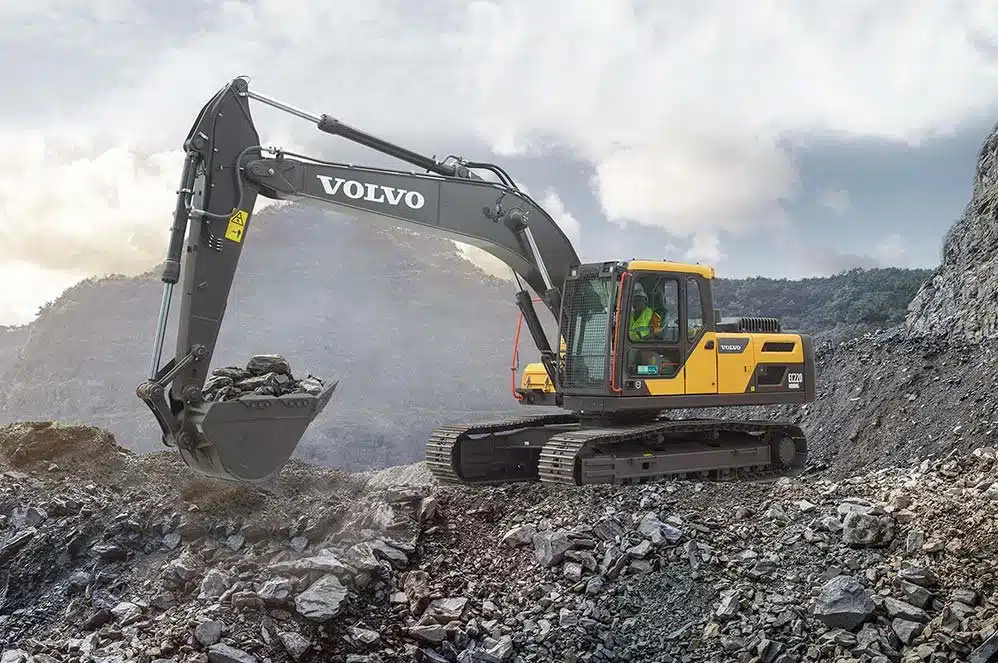
Excavator
294 models
 Backhoe Loader
51 models
 Crane
68 models
 Concrete Mixer
79 models
 Wheel Loader
54 models
 Compactor / Roller
45 models
 Motor Grader
42 models
 Dozer
41 models
 Concrete Pump
66 models
 Skid Steer Loader
11 models
 Telehandler
13 models


GAIL vendor registration, for a works contractor, is not a list you join once and then wait for orders. GAIL runs its e-tenders on the government portal etenders.gov.in, so the one sign-up every bidder needs is a user ID there with a Class 3 or Class 3b digital signature. The “Vendor Empanelment” link on GAIL’s tender site opened an error page on 25 October 2026, and no empanelment notice was open. Each pipeline, civil or service tender then tests you on its own bid evaluation criteria: past work, average turnover, working capital and, for pipeline laying, machines you own, such as side booms and 20-tonne excavators.
GAIL’s tender website has a button marked Vendor Empanelment. On 25 October 2026 it led to a page that said “Error 404”. The same day, the site listed 14 open works contracts, including the laying of the Jamnagar-Loni pipeline capacity expansion in seven sections. Any firm that met the criteria could bid on them.
So the useful question is what GAIL checks, and when. The answers below come from GAIL’s own tender papers of October 2026.
Is there a GAIL vendor registration at all?
There are three separate things, and contractors often mix them up.
| Layer | Where it happens | Who needs it | Status on 25 Oct 2026 |
|---|---|---|---|
| E-tender portal enrolment with DSC | etenders.gov.in (NIC’s Central Public Procurement Portal) | Every bidder in a GAIL e-tender | Required; done once, used for all GAIL e-tenders |
| Standing empanelment list | “Vendor Empanelment” link on gailtenders.in | Not stated | Link returned an error page; Empanelment tender class showed “No record found” |
| Bid evaluation criteria (BEC) | Inside each tender document | Every bidder, every tender | Experience, turnover, working capital and, where stated, owned equipment |
This is where GAIL differs from its peers. ONGC now enlists vendors category by category and sends limited tenders only to approved firms, as set out in this guide to ONGC vendor registration. NTPC keeps a group-wise contractor list with enlistment windows, covered under NTPC vendor registration. We found no such GAIL list for works open in October 2026. Watch the Empanelment tab on gailtenders.in in case one opens.
GAIL vendor registration online: the e-tender portal sign-up
GAIL’s addendum to instructions to bidders for e-tenders says GAIL has tied up with NIC’s government e-procurement system, and that bids are filed only on etenders.gov.in. The October 2026 tenders can also be downloaded from gailtenders.in, the CPP Portal and GeM, but the bid itself goes in on the NIC portal. The steps it lays down:
- Open etenders.gov.in and click “Online bidder Enrollment”. Fill in the corporate or bidder form, with every field marked * filled.
- Give a working email ID and mobile number. Use the firm’s common email, since every system message goes there.
- Register one valid DSC against your user ID. A certificate mapped to one account cannot be used for another.
- Log in with your user ID, password and DSC password, and download the Bidders Manual Kit for the rest of the process.
- Upload standard papers such as PAN, annual reports and auditor certificates once in “My Space”. GAIL warns that a file sitting there is not part of your technical bid until you attach it.
GAIL takes no responsibility for delays in issuing user IDs, so enrol before you need one. On bid day you pay EMD in “offline” mode and must click “Freeze Bid Submission”. GAIL treats a bid that is not frozen as incomplete. If you upload only a scan of the EMD, the original must reach GAIL within seven days of the un-priced bid opening, or the bid is rejected.
Which digital signature GAIL accepts
For a proprietorship or partnership, the addendum accepts either a Class 3 certificate issued on the individual’s KYC or a Class 3b certificate issued with the organisation’s KYC. For a firm or company, only Class 3b is accepted, in the name of the authorised signatory who signs the bid. The certificate must come straight from a licensed certifying authority. One from a sub-CA is not accepted, and GAIL may check it after bid opening and reject the bid.
What a pipeline contractor proves in each GAIL tender
The real test is the BEC. Three works tenders open on 25 October 2026 show the range, from a resource rate contract a small fleet owner can bid for to a mainline job sized for large spreads.
| Criterion | Resource rate contract, Part-A (26-60, 8 Oct 2026) | Burnpur LMC laying (26-64, 9 Oct 2026) | Jamnagar-Loni laying, per section (26-58, 17 Oct 2026) |
|---|---|---|---|
| EMD | Rs 6,58,700 | Rs 20 lakh | Rs 55.64 lakh to Rs 186.35 lakh |
| Experience, last 7 years | One contract of Rs 1.55 crore, two of Rs 0.97 crore or three of Rs 0.78 crore | One contract of 13.92 km, two of 8.70 km or three of 6.96 km, or one HDD crossing of 575 m | One contract of 46.72 km to 159.78 km, by section |
| Average annual turnover, 3 years | Rs 97.16 lakh | Rs 7.67 crore | Rs 23.17 crore to Rs 77.61 crore |
| Working capital | Rs 19.43 lakh | Rs 1.53 crore | Rs 4.63 crore to Rs 15.52 crore |
| Owned equipment | No ownership test; machines are hired by the day | 2 welding sets, 2 Hydra or Farana cranes of 12 tonnes and above | Side booms, excavators, dozers and cranes (see below) |
Net worth must be positive in all three. In the two laying tenders, experience means pipeline that is ready for use: hydrotested, then pigged, dried, purged or commissioned. Work done as a subcontractor counts if the end user certifies it. Work on your own plant does not count.
The machine list for mainline laying
Annexure-E of the Jamnagar-Loni tender lists the minimum equipment the bidder must own. For Sections 2 to 7 it is three pipe layers or side booms of 40 MT and above, three hydraulic excavators of Ex-200 class and above (0.7 m³ bucket), two dozers and three hydraulic cranes of 10 to 18 MT. Section 1 needs two of each.
You can own all of it, or own half of each type (rounded up) and show a purchase order for the rest, with delivery in time for the deployment schedule. Owned machines need a chartered accountant’s certificate on Form F-1 and a chartered engineer’s certificate on Form F-2 that they are in working condition. The purchase order must be accepted by the supplier, signed and stamped by a CA or statutory auditor, and dated before the bid due date. A 20-tonne machine such as the Tata Hitachi EX 210 Infra sits in that Ex-200 class. If the purchase-order route is your way in, line up construction equipment finance before the bid date, not after the award.
Renting machines to GAIL’s pipeline spreads
The two-year resource rate contract runs the other way. GAIL pays by the day for an Ex-100X or Ex-200X excavator for trenching, lowering and backfilling, and for a 12-tonne Hydra or Farana crane. The rate covers the operator, one helper, fuel and upkeep, and a day means up to 12 working hours. A machine that breaks down must be repaired or replaced within two days. If not, GAIL recovers money at the rates in Annexure-8, plus 20 percent. Those rates include Rs 8,000 a day for a 40-60 T side boom and Rs 7,000 a day for an Ex-200/260 excavator. Every machine needs a valid registration certificate, a fit-for-purpose certificate and an experienced operator with a valid driving licence. If you mostly hire out machines, browse excavators by size and brand against these classes.
Working capital, bank letters and certified papers
If your working capital is negative or short, all three tenders accept a line-of-credit letter on GAIL’s Form F-9 from one bank with a net worth of at least Rs 100 crore. A syndicate of banks also counts, but letters from several separate banks do not. The Burnpur tender adds that the letter must cover the whole working capital requirement, not just the gap. This is where a working capital loan for contractors helps you qualify.
The paperwork is certified, not just uploaded. The financial figures go on Form F-10, signed by a practising CA with a UDIN, and audited statements must be attested by a notary. For the big Jamnagar-Loni tender, technical documents must be verified by one of 14 third-party inspection agencies on GAIL’s list, at your cost. For the smaller Burnpur job, a chartered engineer and a notary attest them.
MSEs, suppliers and GeM
Do not count on an EMD waiver. All three works tenders say EMD exemption does not apply to MSE bidders. Even so, GAIL buys widely from small firms. Its Annual Procurement Plan for 2025-26 expects Rs 1,766 crore of Rs 3,497 crore of eligible buying to go to MSEs. Its list of services includes laying and terminal works, HDD works, civil jobs and hiring of vehicles. GAIL is also on four TReDS platforms for invoice discounting.
Suppliers of goods follow the same open-tender route. GAIL’s Vendor Zone lists GeM next to its own tender site, and all three October 2026 tenders above name GeM as one of the places the document is posted. If you sell or rent through GeM, finish your GeM registration for contractors. The GeM home page itself showed only a maintenance notice when read from here, so check GAIL bids there directly.
The holiday list: how a GAIL contractor gets shut out
GAIL keeps score after the award. Its performance evaluation procedure (Rev 1, issued 31 October 2022) rates every order of Rs 50 lakh and above, with 60 percent as the minimum. Poor quality, with no good reply from you, brings a one-year holiday (“Red Card”) the first time and two years after that. Poor performance on other counts brings a “Yellow Card” and two years on a watch list first. GAIL publishes its banning list. The copy dated 23 June 2026 includes construction firms.
The bottom line
For GAIL works, registration is the easy part. Enrol on etenders.gov.in, register the right Class 3 or 3b DSC, and keep audited accounts, completion certificates and machine papers ready for CA, engineer or inspection-agency sign-off. Then match each tender’s BEC to your fleet honestly: a resource contract for an excavator owner, or a laying section for a firm with side booms. Track live GAIL, ONGC and other pipeline government tenders and opportunities with closing dates and EMD, and bid where your machines and turnover already qualify.
Rules and figures here are taken from GAIL’s addendum to instructions to bidders for e-tenders, its tenders GAIL/NOIDA/C&P/PROJ/26-60 (8 October 2026), GAIL/NOIDA/C&P/PROJ/LMC/SAIL-ISP/26-64 (9 October 2026) and GAIL/NOIDA/CNP/PROJ/JLPL/26-58 (17 October 2026), its Annual Procurement Plan 2025-26, its performance evaluation procedure of 31 October 2022 and its Vendor Zone pages, as seen on 25 October 2026. Each tender’s criteria apply only to that tender. Rates, rules and fees change; confirm current terms in the tender document or with GAIL before you bid. DesiMachines is not liable for decisions taken on information that may have changed after publication, and a contractor should take professional advice where needed.