Excavator
294 models
 Backhoe Loader
51 models
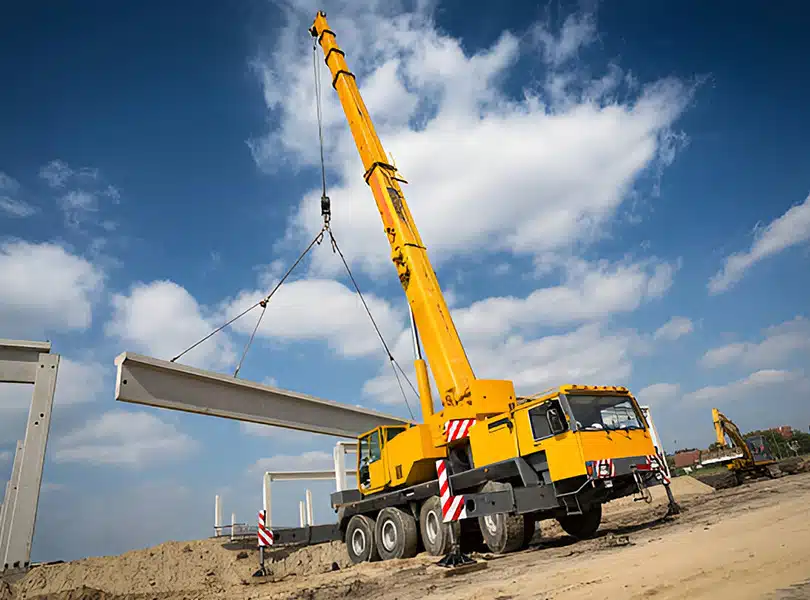
 Crane
68 models
 Concrete Mixer
79 models
 Wheel Loader
54 models
 Compactor / Roller
45 models
 Motor Grader
42 models

 Concrete Pump
66 models
 Skid Steer Loader
11 models


West Bengal PWD contractor registration in the old sense, with Class I to Class IV enlistment and tendering limits, ended in 2014. Finance Department memorandum No. 1177-F(Y) dated 28 February 2014 abolished enlistment in every state works department, and PWD tender notices issued in October 2026 still say so. To bid today you enrol on the state e-procurement portal with a digital signature certificate, then qualify tender by tender: a similar-work credential worth 40% of the estimated amount on a first call, positive net worth, enough bid capacity, engineers on staff and proof that you own or have leased the machinery the notice lists.
Page 2 of a Rs 23.24 crore road strengthening tender, issued by the Superintending Engineer of the PWD’s Northern Circle on 29 October 2026, carries one line that settles the question: “Enlistment of Contractors has been abolished as per Govt. order no. 71/SPW/2014 dated 03.03.2014 and G.O. no. 1177-F(Y) Dated:- 28.02.2014.”
So there is no class table, fee or application form. What exists is a qualifying test that every notice inviting tender (NIT) repeats. This guide is built from those notices, the 2014 orders and the High Court judgments that tested them.
What happened to West Bengal PWD contractor registration
The Finance Department memorandum of 28 February 2014 told the PWD, Irrigation and Waterways, Public Health Engineering, Panchayats and Rural Development and the other works departments to abolish enlistment “with immediate effect, until further order.” Every work of Rs 5 lakh or more, where e-tendering is mandatory, was to be awarded through open e-tender “without any reservation for any particular class of contractors.”
Its reason was plain: enlistment limited each tender to firms already on a stale list and kept new contractors out. The PWD passed the order down on 3 March 2014, and on 24 April 2014 rule 177 of the West Bengal Financial Rules and rule 217 of the PWD Code were rewritten to match.
An enlisted Class II contractor challenged the change. On 11 May 2017 the Calcutta High Court dismissed his petition, calling it a policy decision in public interest that gave him no vested right to enlistment. In January 2019 the same court stopped a municipality from limiting an e-tender to its own enlisted contractors.
The old classes, for the record
For the record, the PWD enlisted contractors under rule 215 of its Code, and its notification No. 46-CRC of 19 May 2009, as recorded by the High Court in 2017, set these bands. None of them decides who can bid now.
| Old class | Works it could tender for (2009) | Status in 2026 |
|---|---|---|
| Class I | Rs 25 lakh to Rs 62.5 lakh | Abolished |
| Class II | Rs 12.5 lakh to Rs 25 lakh | Abolished |
| Class III | Rs 5 lakh to Rs 12.5 lakh | Abolished |
| Class IV | Up to Rs 5 lakh | Abolished |
A statute is still on the books: the West Bengal Public Works Contractors (Regulation and Control) Act, 2006 provides for a PWD register, an Advisory Board, an Approval Committee and a five-year certificate. But in 2013 the State told the High Court that no rules had been framed under it, and we found no rules, fees or form in the official sources we checked.
That makes West Bengal unusual among its neighbours. Next door, Jharkhand contractor registration still works through classes and a fee, and the wider picture across departments is in the PWD contractor registration guide.
What you register for instead
The only registration a West Bengal PWD bidder needs is on the state’s e-procurement system. The eProcurement System of the Government of West Bengal has an Online Bidder Enrollment link; recent PWD notices also give the address as tenders.wb.gov.in. One enrolment serves every department that tenders there.
You also need a Class II or Class III digital signature certificate. Without one you cannot download documents or upload a bid. Under PWD notification No. 199-CRC/2M-10/2012 of 21 December 2012 you pay nothing for tender documents to take part; only the lowest bidder pays the document price before signing the agreement.
Earnest money was 2% of the estimate in the tenders we read, paid online through the ICICI Bank gateway or by NEFT/RTGS. Labour co-operative societies are exempt from earnest money under Finance Department order No. 815-F(Y) of 23 February 2023, though they must furnish security deposit if they win.
The credential test in every tender
Since there is no class, your past work decides which jobs you can bid for. PWD order No. 04-A/PW/O/10C-02/14 of 18 March 2015 sets the rule, and current NITs copy it. The credential must be for similar work, issued by an Executive Engineer or equivalent of a government, PSU, statutory or autonomous body, and backed by the work order, BOQ and completion certificate. A payment certificate does not count.
| Call | One completed work | Or two completed works, each | Or one running work |
|---|---|---|---|
| First call | 40% of estimate | 30% of estimate | 80% done, worth 40% |
| Second call | 30% of estimate | 25% of estimate | 75% done, worth 30% |
| Third and later calls | 20% of estimate | Not offered | 70% done, worth 20% |
The look-back is five years before the NIT date. A Chief Engineer’s memo of 29 November 2023 lets that window stretch by two years to cover 2020-21 and 2021-22, the Covid years. For a running work you also need the Executive Engineer’s certificate that it is progressing well and no penal action has been started. Our note on the work experience certificate for tender eligibility covers what that certificate should carry.
On a Rs 1 crore road job, a first call needs one Rs 40 lakh road completed in five years. If the work is retendered, Rs 30 lakh will do.
Money, engineers and the document file
Net worth for the last year must be positive, calculated from capital, profit and free reserves and authenticated by your auditor. Your available bid capacity must exceed the estimate, worked out as A x N x 2 minus B, where A is your best year of civil engineering work in the last five, N the completion period in years and B your existing commitments. The bid capacity formula walks through the arithmetic.
Staffing scales with the job. The Rs 23.24 crore road NIT asks for at least one civil engineering degree holder and two diploma holders on full-time engagement for the first call. A Rs 61.2 lakh hospital repair NIT from the same week asks for one diploma civil engineer.
The technical bid also needs PAN, a trade licence, professional tax, GST, EPF and ESI registrations with current challans, and five years of income tax returns, balance sheets and tax audit reports (Form 3CB and 3CD, with UDIN). Firms add a registered or notarised partnership deed. If the DSC holder is not the bidder, a registered power of attorney is required under PWD order No. 09-W(C)/1M-286/15 of 23 September 2015. Joint ventures are barred on works up to Rs 25 crore.
Want to see what this looks like at your size? Browse live government tenders and opportunities and match the estimate against your best completed work.
What the machinery clause means for your fleet
The road NITs we read say the bidder “should own or arrange through lease hold agreement” the listed plant. Proof of a new machine is the tax invoice, delivery challan and e-way bill in your name. A used machine needs those papers in the seller’s name plus a registered sale deed and the RTO registration in yours. A lease must be notarised and must name this NIT; an old lease written for another work is rejected.
The Dakshin Dinajpur division adds a cap: two works anywhere per set of prescribed machinery. One roller set, two live bids, which is what pushes growing contractors to buy.
Ownership also changes what a low bid costs you. Under a PWD order of 18 April 2017 and the Engineer-in-Chief’s 2023 memos, a winner who owns the prime road machinery gives an additional performance security of 10% of the tendered amount only if the bid is more than 20% below the estimate. A winner who owns none of it pays the same security once the bid is more than 10% below.
| Item of work | Prime machinery the NIT lists |
|---|---|
| DBM, BC and similar bituminous layers | Batch type hot mix plant 100-120 TPH, sensor paver finisher, 12-15 tonne pneumatic tyre roller, 6-8 tonne tandem roller |
| Bituminous macadam with drum mix plant | Drum mix plant 40-60 or 60-90 TPH, paver finisher, 8-10 tonne roller |
| Wet mix macadam | Wet mix plant, paver finisher, vibratory roller of 8-10 tonne static weight |
| Cement concrete pavement | Computer-controlled concrete batch mix plant, fixed form or slip form paver |
The rollers are where a mid-sized contractor usually starts. The 14-tonne Dynapac CP275 pneumatic tyred roller sits inside the 12-15 tonne band and lists around Rs 23.8-26.3 lakh (indicative, as of Oct 2026). For the 8-10 tonne roller on drum mix work, the 8.7-tonne Volvo DD90 tandem roller lists around Rs 39.9-44.1 lakh (indicative, as of Oct 2026). If a bid hinges on owning one, line up construction equipment finance early, since the invoice must be in your name before you upload.
What bars you from a PWD bid
You cannot bid if you or a partner abandoned more than one work, had more than one contract rescinded in the last three years, or were debarred by the PWD in the last five; each needs a declaration. PWD order No. 547-W(C)/1M-387/15 of 16 November 2015 allows suspension or debarment for false declarations, forged records or failure to perform, and the PWD publishes its debarred list.
Before your first West Bengal PWD bid: a checklist
- Enrol as a bidder on the West Bengal e-procurement system and get a Class II or Class III DSC.
- Collect Executive Engineer credential certificates, with work orders, BOQs and completion certificates, for similar works from the last five years.
- Have your auditor prepare net worth, five years of turnover and the bid capacity sheet with UDIN.
- Put a civil degree or diploma engineer on full-time engagement, with appointment papers.
- Keep invoices, challans and e-way bills for every machine you own, and a fresh lease naming the NIT for any you rent.
- Read each PWD tender notice for its own machinery list and staff count before you pay the earnest money.
When the file is ready, track West Bengal tenders and opportunities that match your credentials, and price any machine you need through equipment finance before the bid date.
Sources: Finance Department memorandum No. 1177-F(Y) of 28 February 2014, PWD memorandum No. 71/SPW/2014 of 3 March 2014, PWD notices inviting tender of 27 and 29 October 2026, and Calcutta High Court judgments of 2013, 2017 and 2019. Rates, schemes, specifications and prices change; confirm current terms with the OEM, dealer, bank, insurer or the issuing department before deciding. DesiMachines is not liable for decisions taken on information that may have changed after publication.