Excavator
294 models
Excavator
294 models  Backhoe Loader
51 models
Backhoe Loader
51 models  Crane
68 models
Crane
68 models  Concrete Mixer
79 models
Concrete Mixer
79 models  Wheel Loader
54 models
Wheel Loader
54 models  Compactor / Roller
45 models
Compactor / Roller
45 models  Motor Grader
42 models
Motor Grader
42 models  Dozer
41 models
Dozer
41 models  Concrete Pump
66 models
Concrete Pump
66 models  Skid Steer Loader
11 models
Skid Steer Loader
11 models  Telehandler
13 models
Telehandler
13 models 


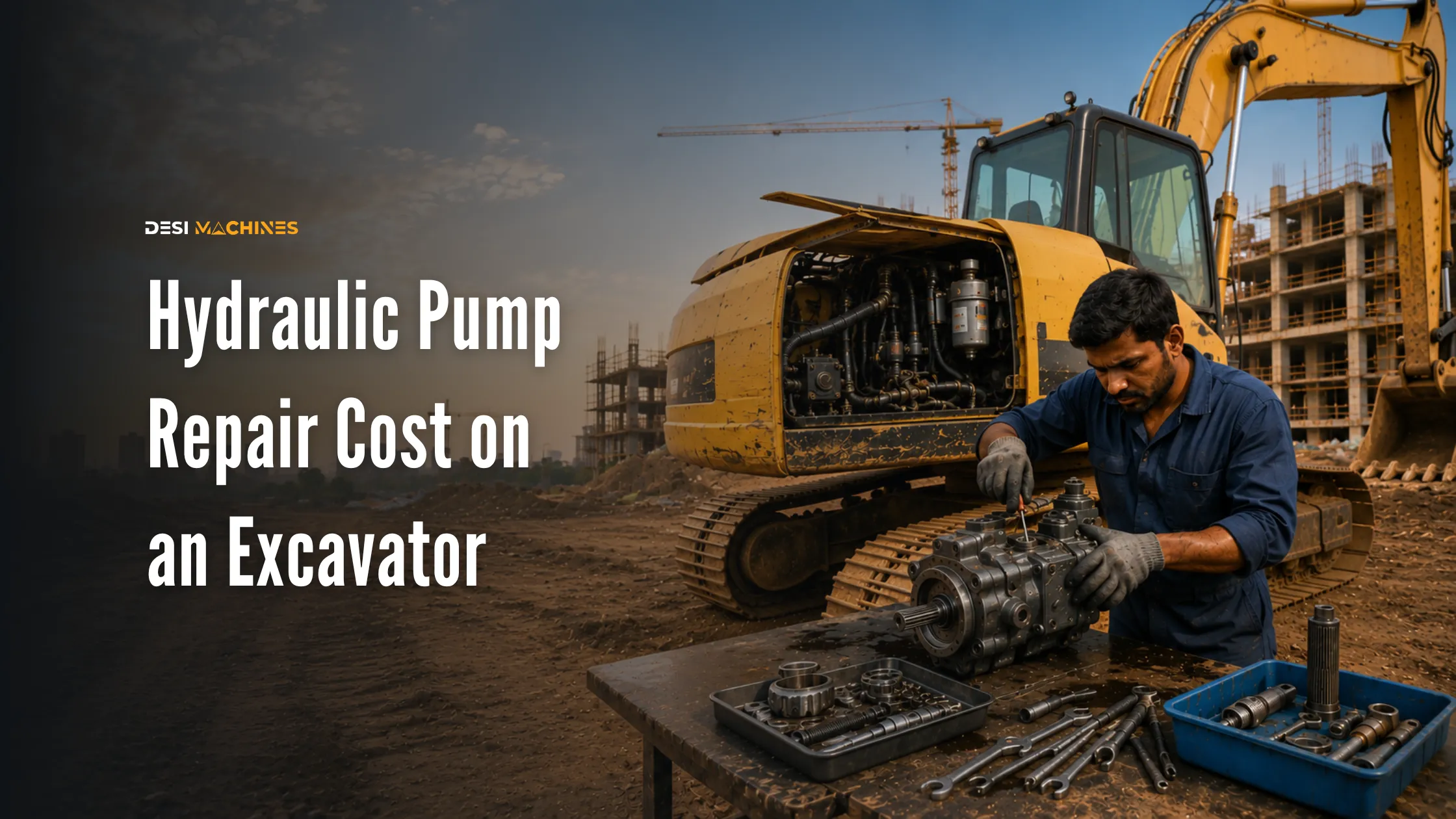
Hydraulic pump repair cost on an excavator is the biggest single repair bill most owners meet, and there is no standard figure — it moves with the machine class, with whether you repair, recondition or replace, and with how far the debris travelled. The pump is often not the whole job, because a failing pump pushes metal through the circuit into valves and motors. Get the quotation split into the unit, the labour, the system flush, and the collateral parts, and fix the cause or you will buy the pump twice.
Every owner remembers the first one. The machine gets slow, then it gets noisy, then the boom takes its time coming up under load, and somebody says the pump is going. What follows is a quotation with a number on it large enough to change the month.
It is also the repair where owners are most exposed, because almost nobody can independently judge whether the diagnosis is right, whether the price is fair, or whether the job being quoted is the job the machine needs.
Why we are not printing a hydraulic pump repair cost
You will find figures elsewhere. We are not adding one, and the reason is worth stating plainly rather than hiding.
A pump price is not a market rate the way a diesel price is. It moves with the machine class, with the brand and the specific model, with whether the unit is a genuine new part, a reconditioned exchange unit or a repair of your own pump, with whether the hydraulic circuit needs flushing and what else the debris damaged, and with where in the country the work is done. A single number covering that range would be a guess dressed as advice, and it is a large enough bill that a wrong assumption changes whether you repair the machine or sell it.
What is useful is knowing what the quotation is made of, so you can read one and compare two.
| Cost head | What sits inside it |
|---|---|
| The unit | A new pump, a reconditioned exchange unit, or repair of your existing pump |
| Labour | Removal, refitting, commissioning and pressure setting |
| System flush | Draining, flushing, new hydraulic oil and all filters |
| Collateral parts | Control valve, travel or swing motors, cylinders, hoses affected by debris |
| Downtime | The days the machine earns nothing, which no quotation shows you |
Ask for a quotation split this way. A workshop that will not break it down is telling you something.
The pump is often not the whole job
This is the part that turns a planned repair into an argument.
When a pump fails internally, it makes metal. Those particles do not stay in the pump — the oil carries them around the circuit, into the control valve, into the travel and swing motors, into the cylinders. Fit a new pump into that system without cleaning it properly and the debris that killed the first pump goes to work on the second.
So a job that starts as a pump replacement can legitimately grow once the oil is drained and inspected. That is not automatically an upsell. The way to tell the difference is to ask for evidence rather than an opinion: what came out of the filters, what the drained oil looked like, and whether the workshop cut open the filter to inspect it. An honest workshop will show you. Understanding what the circuit contains helps you follow the answer, and the excavator components guide covers what the parts do.
Repair, recondition or replace
Three routes, and the right one depends more on the machine’s remaining life than on the price gap.
Repairing your own pump can make sense where the failure is contained and a competent hydraulics workshop can show you what it found inside. Turnaround is the risk, because your machine waits while the unit is opened, assessed and rebuilt.
A reconditioned or exchange unit gets the machine back to work fastest and costs less than new. It suits an older machine, a second machine in the fleet, or a situation where cash matters more than warranty. The question to ask is what the warranty covers and for how long, because that is the real difference between a good exchange unit and a cheap one.
A new genuine unit costs the most and is easiest to justify on a machine with years of earning ahead of it, or one that is on a contract where a second failure is unaffordable. The parts-quality logic is the same one that applies further down the machine, set out in the note on choosing replacement parts and the warning about fake excavator parts, which is a live problem in exactly this category of component.
Whichever route you take, the cause has to be fixed in the same visit. A new pump in a dirty system is a deferred bill, not a repair.
The travel motors and final drives at the bottom of the machine follow the same three routes, with their own ladder from a reseal to a full overhaul, set out in our guide to excavator final drive repair cost.
The cost the quotation does not show
The machine stops earning while this is happening, and the delay is rarely the fitting. It is diagnosis, then sourcing the right unit for that model, then waiting on an exchange pump, then flushing the system properly rather than quickly.
On a machine sitting on a running contract or out on hire, those days can approach the repair bill on their own. Work it out before you choose between a faster exchange unit and a cheaper rebuild, because the cheaper option is not cheaper if it costs a week. The arithmetic for putting a number on an idle machine is in the note on equipment downtime cost, and what a machine needs to earn across a year is covered in equipment utilisation rate.
Putting the two routes side by side
That comparison is short enough to do on the back of the quotation, and it needs three numbers you already have: the turnaround each workshop is promising, and what one idle day of this machine is worth to you.
Say the exchange unit puts the machine back to work in four working days and rebuilding your own pump takes eleven. Those two numbers are placeholders for whatever your own two quotations say — the arithmetic is the point, not the days, and this page still does not print a rupee figure for the repair itself. The gap is seven working days. So the rebuild is the cheaper route only if it saves more than seven days of what this machine earns.
Written as a rule: extra idle days × your own day rate is the number the cheaper quotation has to beat before it is actually cheaper. Build the day rate from the machine in front of you rather than a fleet average — on a machine on hire or on a contract carrying a delay penalty, it is usually higher than owners expect, which is why the smaller invoice so often loses.
The rule runs both ways, and that matters. If the rebuild saves a great deal and the machine has no work booked until the season turns, the idle days cost you very little and the cheaper route wins comfortably. The same three numbers answer it either way; what changes is the day rate, which is exactly why a single national figure for this repair would be useless to you.
How to keep the bill away
Most pumps that fail early were not worn out. They were poisoned.
Hydraulic oil and filters on schedule, at the right grade, is the whole of it in one line. Beyond that: fix weeping hoses and cylinder seals before they draw dirt in, keep the breather and the fill point clean when topping up on site, do not let the machine run hot or low on oil, and on a machine you intend to keep, sample the oil so a rising particle count warns you months before the pump does. The routine spend that prevents this is small next to the repair, and it is already in the yearly budget set out in excavator maintenance cost.
A hose that has already burst is a different bill from a pump, and usually a smaller one, but the idle hours and the lost oil add up the same way; the breakdown of hydraulic hose replacement cost shows which lines you control and when a spare-hose kit pays for itself.
The other lever is the operator. Running under-oiled, running hot, and working the machine hard the moment it starts on a cold morning all shorten pump life, and none of it shows up until the bill does.
How to read a hydraulic pump quotation line by line
Treat a pump quotation as a document to be read rather than a number to be accepted. Split it into the unit, the labour, the flush and the collateral parts. Ask what came out of the filters. Get a second quotation on the same basis, and compare the warranty on any exchange unit rather than the headline price.
Then decide on the machine, not on the pump: a reconditioned unit on an older machine that owes you nothing, a new one on a machine with years of contracts ahead of it. And spend the small money on oil, filters and sampling afterwards, because the second pump is the one you can actually prevent.
If the repair is large enough that replacing the machine is on the table, compare what the money buys across the live excavator models and prices, and check the equipment finance options before you decide between a big repair bill and a newer machine.
Repair costs, part prices and workshop rates vary by model, region and parts availability, and change over time — confirm current figures with your OEM dealer or an authorised workshop before you commit to a repair.