Excavator
316 models
 Backhoe Loader
54 models
 Crane
68 models
 Concrete Mixer
79 models
 Wheel Loader
71 models
 Compactor / Roller
45 models
 Motor Grader
42 models

 Concrete Pump
66 models
 Skid Steer Loader
11 models


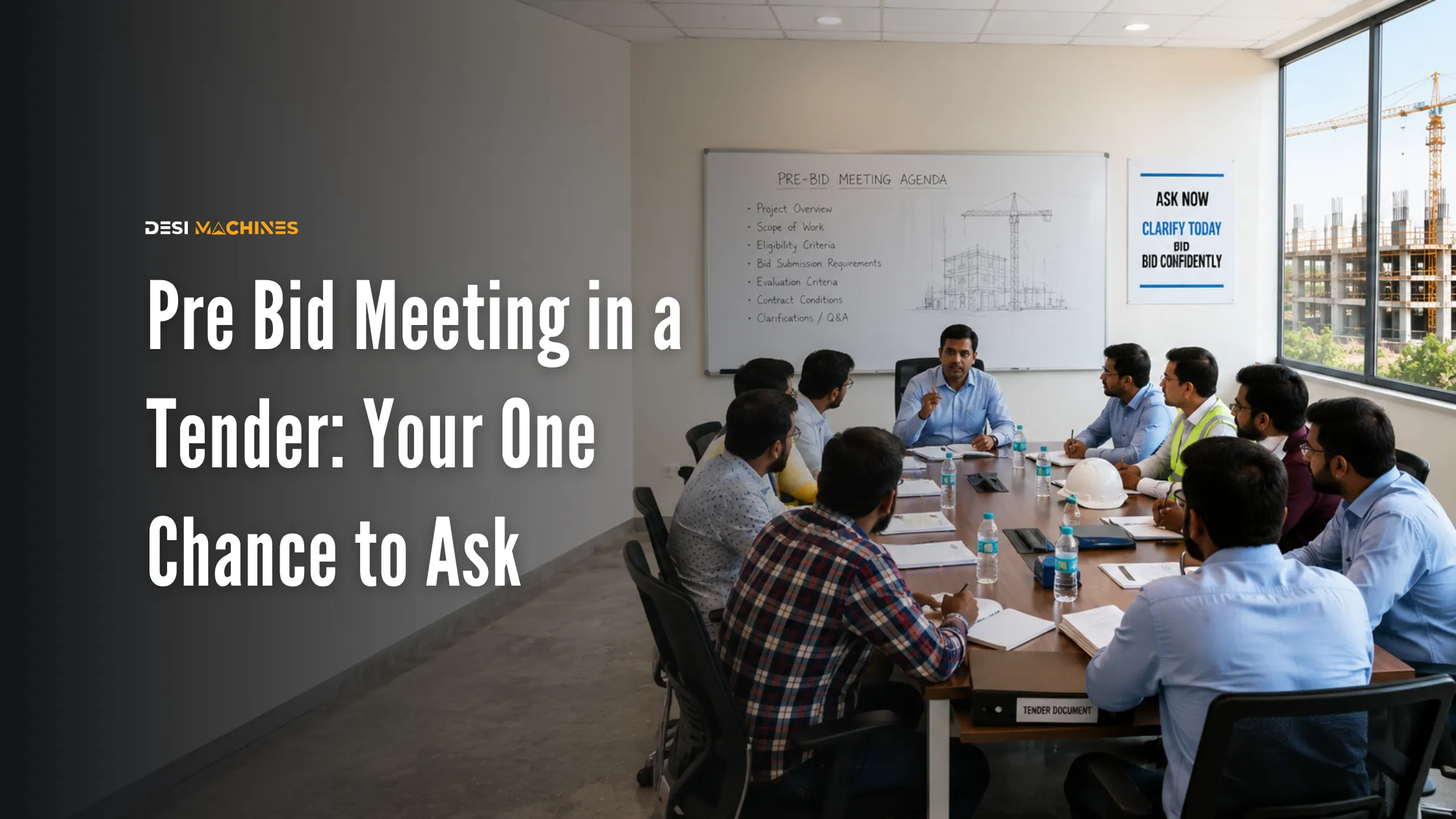
A pre bid meeting is the scheduled point between publication and the bid deadline at which you can question the tender’s conditions. It is the only stage where an unworkable clause can still be changed. What makes the change real is not the discussion in the room but the corrigendum issued afterwards. Anything not carried into a written corrigendum did not change, and bids are evaluated against the amended document, so re-check the portal before you submit.
Owners read a tender, find a condition that makes the job unattractive (an age limit on machines, a payment cycle that runs to ninety days, a deployment schedule with no allowance for idle time) and quietly decide not to bid.
Sometimes that is the right call. Often the condition was drafted from a template, nobody has questioned it, and a written query from one bidder is all it would take.
What a pre bid meeting is for
The buyer publishes the tender. Somewhere between that date and the deadline, a meeting is scheduled at which prospective bidders raise queries about the conditions, specifications, quantities and schedules.
Most tenders ask for queries in writing by a date ahead of the meeting, often in a prescribed format that lists the clause number, the existing text and the change you are seeking. Send them in that shape. A query that does not identify the clause is easy to answer without answering.
Central rules give the usual shape. Para 4.7 of the Department of Expenditure’s Manual for Procurement of Works 2025 says a pre-bid conference should normally be held 15 to 21 days after the tender document is issued, with the last date for written queries and for registering to attend stated in the tender, or seven days before the conference if it names none. Delegates need photo identity and an authorisation letter from their firm, and the department may hold the meeting online. Para 2.9 of the same manual explains why many now are: a room full of competing bidders can help a cartel form, so such conferences may be avoided as far as feasible or held only virtually, while a physical one may suit turnkey contracts, sophisticated and costly equipment, large works and complex service assignments.
NHAI’s EPC tender for an underpass near Kaithal on old NH-65, issued on 7 October 2026, shows the rhythm in practice: queries by 15 October, the pre-bid meeting on 16 October, replies promised by 23 October and bids due on 28 October, with no more than two representatives per bidder. On GeM the buyer sets a pre-bid interaction while creating the bid, and GeM’s services FAQ says the facility is now available in all services, with any changes made through a corrigendum to the bid based on the minutes of the meeting.
The meeting itself is not a negotiation, and it is not where you find out whether you will win. It is where the buyer decides which of its own conditions it is prepared to reconsider.
Skipping it has a cost even where attendance is optional. The Works Manual 2025 says participation is not mandatory, but a bidder who neither attends nor sends a written query is assumed to have no issues with the technical and commercial conditions. PMGSY’s Standard Bidding Document 2020 (ITB clause 9.5) likewise says that not attending is no ground for disqualification. A complaint after the deadline about a condition you could have queried is a weak one.
The corrigendum is the only thing that binds
This is the part that costs bidders money, so it is worth being blunt about.
What binds is the tender document as amended by written corrigenda. Nothing else. A helpful reply across the table, a nod from an officer, a note somebody made in the minutes: none of these amend the tender.
If an answer matters to your bid, it must appear in a published corrigendum. If it does not appear, work on the assumption that the original condition stands, and price it or walk away accordingly.
The rule books say the same in as many words, with one refinement. Para 4.7 of the Works Manual 2025 has the minutes of a pre-bid conference published on the department’s portal within seven days, and a clarification letter and corrigendum issued where needed, containing the amendments, which “shall form part of the Tender Document”. Rule 173(x) of the General Financial Rules 2017 requires the record of the conference to be sent to all bidders and shown on the website where the tender was published. PMGSY’s Standard Bidding Document 2020 is blunter: any change needed after the pre-bid meeting is made through an addendum and “not through the minutes” (ITB clause 9.4). NHAI’s Kaithal underpass tender, on the other hand, deems the written clarifications it issues part of the bidding documents, and says verbal clarifications from its officers “shall not in any way or manner be binding”. So a written reply can carry weight where your tender says it does; a spoken assurance never does.
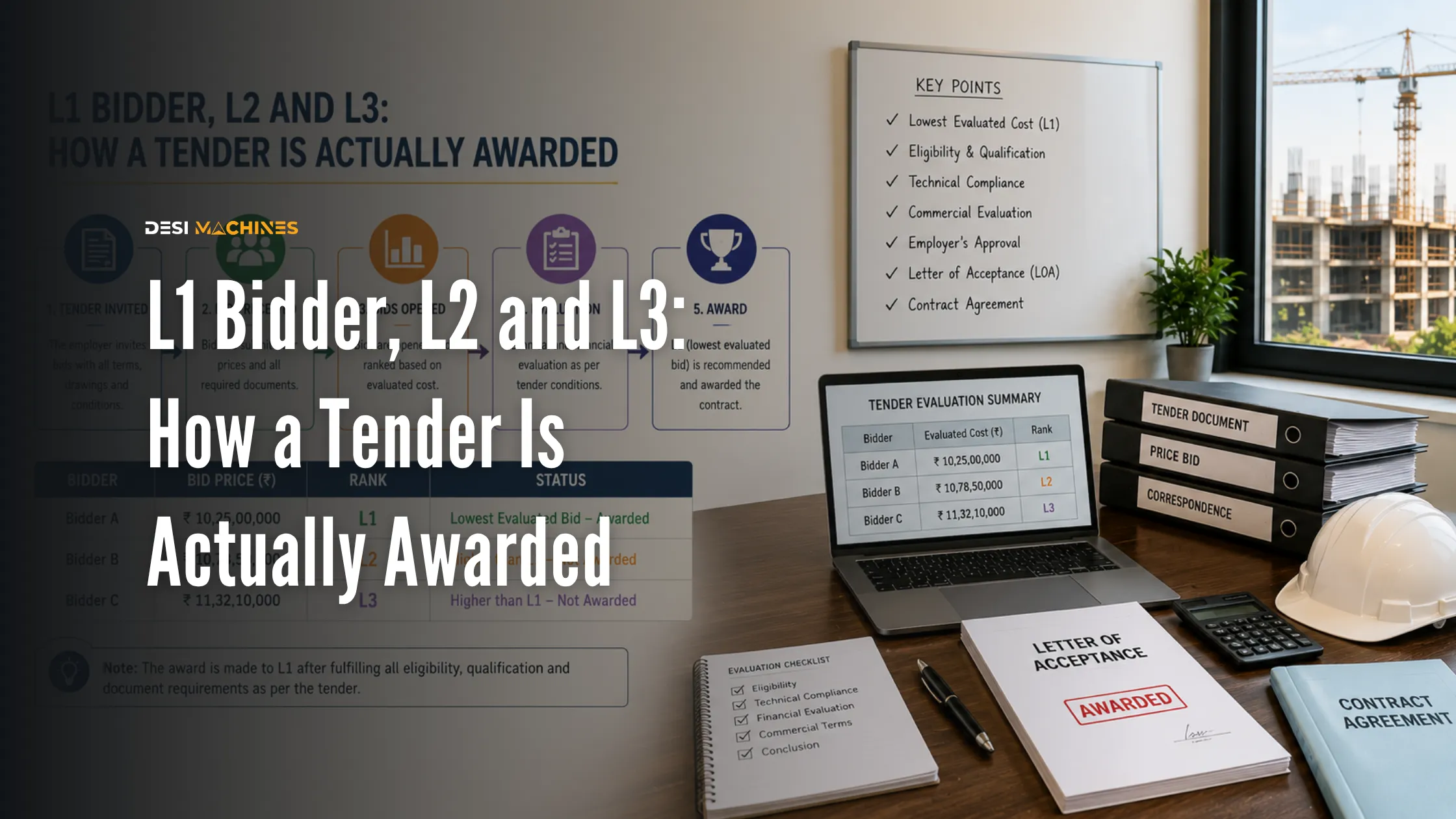
A corrigendum can change the eligibility conditions, the specifications, the bill of quantities, a format, or the deadline. Once issued it becomes part of the document, and evaluation runs against the amended version, which is then ranked the way L1, L2 and L3 describes.
Which produces the practical rule that catches out even experienced bidders: re-check the portal before you upload. A bid prepared on the original bill of quantities, submitted after a corrigendum revised it, is a bid prepared on a superseded document.
A corrigendum that moves the deadline moves other dates too. Para 4.5 of the Works Manual 2025 says an extension of the submission date, of not less than three days, comes with matching changes to the bid validity period and to the validity of the EMD or bid security, and para 4.4 says that where an amendment substantially changes the requirement, the extension should normally be 21 days or in line with the original bid window. Make sure the bank guarantee you upload follows the new dates, not the ones you first noted.
What a machine owner should actually ask
The questions worth asking are the ones that decide whether the work pays, not the ones that display how much you know.
| Ask about | Why it decides the bid |
|---|---|
| Deployment schedule and idle time | Machines held on site between fronts earn nothing while the EMI runs. Ask who bears standing time. |
| Owned versus hired machines | A condition requiring ownership can rule out a bidder who would otherwise hire in capacity for the peak. |
| Age limit on equipment | A limit drafted for one class of work can quietly exclude a perfectly capable fleet. |
| Payment cycle and running bills | Decides your working capital need for the whole job, not just the first month. |
| Mobilisation advance | Whether it is available at all, against what security, and how it is recovered. |
| Delay and defect clauses | The rate, the ceiling and the extension route — these price the risk you are taking. |
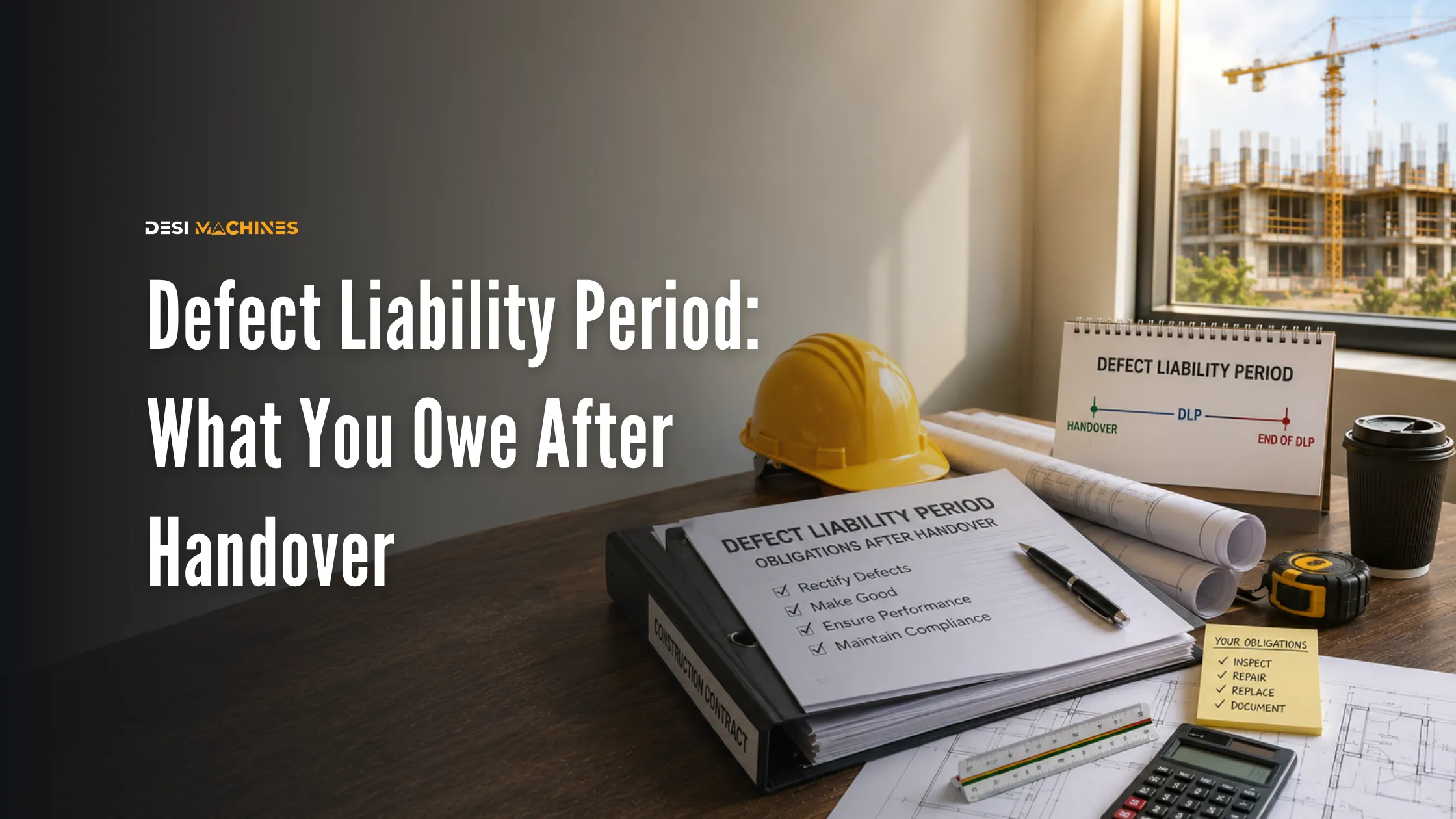
Two of those deserve a closer look before you attend. The guide to liquidated damages and extension of time covers what to look for in the delay clause, and the guide to the defect liability period covers how long your money stays with the client after the work is done.
Machine conditions: the queries that most often pay
For a machine owner the conditions most worth a written query are the machinery ones, and the central rule book is on your side. Para 3.9.1 of the Works Manual 2025 says a bidder should own, or have assured access through hire, lease or a purchase agreement to, the key items of equipment, and that pass-or-fail tests should be limited to bulky or specialised items critical to the project, such as heavy lift cranes, piling barges, dredgers and asphalt mixing plants; contractors may rely on specialist subcontractors or equipment-hire firms. Para 2.9 adds that insisting on costly machinery may reduce competition and encourage cartels. So where a notice inviting tender demands that you own a long list of ordinary machines, a query asking for hired or leased equipment to be accepted, quoting the clause number and those paragraphs, is a reasonable request and not a plea for relaxation.
On works that follow CPWD’s forms, read clause 18 of the General Conditions of Contract 2023 before the query deadline. It makes you provide at your own cost the machinery, tools and plant listed in Schedule F, which has a slot for the mandatory machines on the job, and if you do not, the Engineer-in-Charge may provide them at your expense and deduct the cost from money due to you. That list is a cost you carry for the whole job, so query any item that does not fit the work before you price it, and get a hire quote for anything you would bring in (machines on rent are quoted job by job) so the rate in your bid is real.
What not to raise
Queries are usually circulated to all bidders along with the replies. So treat the meeting as public, because it is.
Para 4.8 of the Works Manual 2025 has only material queries and their responses uploaded, without revealing the identity of the bidder who asked, and PMGSY’s bidding document publishes the text of the questions the same way. Your name is protected; your question is not, and neither is anything you say in a room of competitors. The same paragraph sets the timing for written questions outside the meeting: before the clarification end date in the tender, or seven days before the bid deadline if it names none, with replies due at least five days before the tenders are opened.
Do not signal your pricing approach: a question about how a particular item will be measured tells competitors where you think the money is. Do not ask for a relaxation that advertises you cannot meet the eligibility bar as it stands; if you cannot qualify, the honest routes are the ones built into the rules, which the guides to the bid capacity formula and the solvency certificate both cover.
And do not ask a question the tender already answers. It uses up the goodwill you may need for the query that matters.
Between the meeting and the deadline
Three habits are worth building, and none of them takes long.
Read the published replies against your own queries, one by one. An answer that restates the clause without changing it is a refusal, and should be read as one.
Diarise a portal check for the day before submission, and again on the morning of it. Corrigenda arrive late more often than they arrive early.
Rebuild the bid on the amended documents if anything substantive moved: the formats, the bill of quantities, the declarations. Editing yesterday’s file is how a superseded annexure survives into a submitted bid.
Put every pre bid query in writing against a clause
The pre bid meeting is the one stage where a tender is still capable of changing shape. Use it on the commercial conditions that decide whether the machines earn, put every query in writing against a clause number, and treat only a published corrigendum as an amendment.
Then check the portal again before you upload. If you are choosing which tenders to take to this stage, the guide to bidding for government construction tenders covers the groundwork, and current work is listed on the tender opportunities page.
Rates, schemes, specifications and prices change, so confirm current terms with the OEM, dealer, bank or insurer before deciding. Query formats, meeting procedure and corrigendum practice differ between buyers and portals; confirm them in the tender document that applies to you.