
 Excavator
294 models
Excavator
294 models  Backhoe Loader
51 models
Backhoe Loader
51 models  Crane
68 models
Crane
68 models  Concrete Mixer
79 models
Concrete Mixer
79 models  Wheel Loader
54 models
Wheel Loader
54 models  Compactor / Roller
45 models
Compactor / Roller
45 models  Motor Grader
42 models
Motor Grader
42 models  Concrete Pump
66 models
Concrete Pump
66 models  Skid Steer Loader
11 models
Skid Steer Loader
11 models  Telehandler
13 models
Telehandler
13 models  Dozer
Dozer 


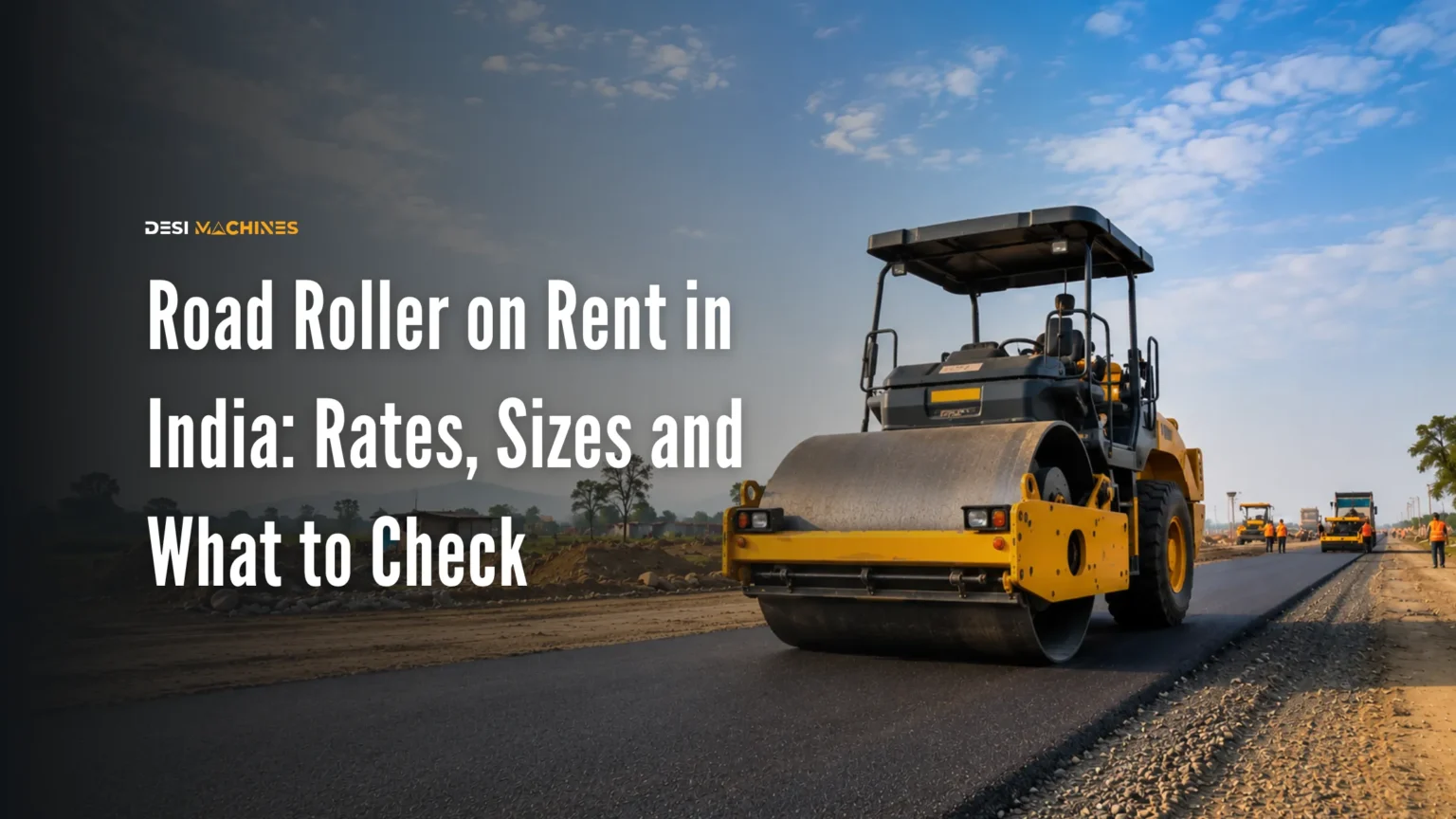
A road roller on rent means hiring a compaction machine by the hour, the day or the month instead of buying one. In India a standard road roller or single-drum soil compactor hires for roughly ₹800–1,500 an hour, or about ₹15,000–25,000 for a working day (indicative, as of Aug 2026). A smaller baby roller costs well below that band, and a large pneumatic tyre roller sits at the top of it.
Renting is the normal choice for compaction work, more so than for any other machine on an Indian site. A roller is needed in bursts. You lay the earth, you compact it, and then the machine has nothing to do until the next layer is ready. A contractor building one approach road or one factory floor may need a roller for nine days in a year, which is a poor reason to park ₹35 Lakh in a machine.
What follows is what the rate covers, which size to ask for, and what to check before you sign for the machine. The hire figures here follow the equipment rental rate card, which tracks what machines earn per day across India.
What does it cost to rent a road roller in India?
A road roller hires for about ₹800–1,500 an hour, or ₹15,000–25,000 for an eight-hour day, as of Aug 2026. That is a wide band because it covers a wide set of machines and situations, and the spread inside it is not random.
| Hire period | Indicative charge | What usually decides the number |
|---|---|---|
| Per hour | ₹800–1,500 | Machine size, and whether the hour is billed idle or working |
| Per day (8 hours) | ₹15,000–25,000 | The common basis for road and site work |
| Per month | Negotiated | Almost always cheaper per hour than day-by-day hire |
All figures indicative, as of Aug 2026. They move with the city, the season, the age of the machine and how long you commit for.
Four things move a roller quote more than anything else.
- The size of the drum. An 11 tonne (11,000 kg) soil compactor and a 3 tonne (3,000 kg) mini roller are different machines doing different work, and they are not quoted alike.
- How long you commit. A month-long hire is cheaper per hour than nine separate day hires, because the owner is not hunting for the next job every week.
- The season. Earthwork stops in heavy monsoon and restarts everywhere at once. Rates in the dry building season are firmer.
- Distance to your site. A roller does not drive itself across a district. Somebody has to pay for the trailer, and that cost lands in your quote one way or another.
One warning about the hourly figure. Compaction is measured in passes, not hours, so an hourly rate rewards a slow operator. For anything larger than a small patch, ask for a day rate and agree the area to be covered.
Which roller size should you ask for?
Ask for the roller by its weight class and its drum, not by brand name. Compaction is done by weight and vibration, so a machine two classes too small will run over your fill all day and still leave it soft.
Across the road rollers and soil compactors listed on DesiMachines, the sizes group into four honest classes. The weights below are taken from those machines’ own specifications.
| Class | Operating weight | Drum width | Typical Indian job |
|---|---|---|---|
| Mini / baby tandem roller | 2,800–3,450 kg (2.8–3.45 tonne) | 1,000–1,250 mm | Village roads, colony lanes, patch repair, footpaths, tight compound work |
| Full-size tandem roller | 8,700–10,060 kg (8.7–10.1 tonne) | 1,675–1,750 mm | Bitumen and asphalt finishing on roads and highways |
| Single-drum soil compactor | 9,700–22,000 kg (9.7–22 tonne) | 2,100–2,150 mm | Earth, subgrade and embankment layers; the standard highway roller |
| Pneumatic tyre roller (PTR) | Tyre-based, no drum | Tyre set | Sealing and knitting the bitumen surface after the tandem roller |
Specifications as listed, Aug 2026.
The class that most first-time hirers actually want is the single-drum soil compactor in the 10 to 12 tonne range. It is the machine you see on every highway job, its drum is over two metres wide, and it does the heavy earth compaction that everything else is built on. Most of the single-drum machines on the market cluster around 11 tonne (11,000 kg) for exactly that reason.
For a bitumen surface you want a tandem roller instead, and often a pneumatic tyre roller behind it. The difference between the two families is explained in more detail in the guide to road roller types. If you are unsure whether your soil even needs vibration, the guide to static and vibratory rollers covers when each one is the right call.
What is a baby roller on rent, and when is it enough?
A baby roller, also called a mini roller, is a small tandem roller of roughly 2.8 to 3.45 tonne with a drum about a metre to a metre and a quarter wide. It is hired constantly in Indian towns, because a great deal of Indian road work happens on lanes where a full-size roller cannot turn.
A baby roller is the right machine for a colony road, a village link road, a footpath, a patch repair, a compound floor, or compaction inside a building line where the walls are already up. It is the wrong machine for a highway embankment. The weight simply is not there to reach density on a thick earth layer, and no number of extra passes will fix that.
Because these machines are small and the market for them is local, hire rates for a baby roller vary far more from town to town than rates for a full-size roller. They are quoted below the ₹800–1,500 an hour band above, but ask for a written per-day figure rather than working off an hourly rate you were told on the phone. The mini roller guide covers the sizes and what they can realistically compact.
What does the rental rate include, and what is extra?
This is where most hire arguments start. Two quotes ₹6,000 a day apart can both be honest, because they cover different things.
Settle these five points before the machine moves, and settle them in writing.
- Operator. Dry hire means you get the machine and arrange your own operator. Wet hire means the owner sends his operator with it. A roller operator matters more than people expect, because pass counts and overlap are a matter of judgement.
- Diesel. Who fills it, and at whose rate. If the owner supplies diesel, the rate per hour will be higher and it should be.
- What counts as an hour. Engine hours from the meter, or hours on site including the wait for the tipper? These are very different bills at the end of a week.
- Minimum hire. Most owners have a minimum, often a full day or a set number of hours, even if your job takes three hours.
- Breakdown. If the roller stops working at eleven in the morning, does the day still get billed? Agree that before it happens, not after.
The broader process of hiring, including the deposit, the documents and the billing basis, is set out in the guide to renting construction equipment in India.
How does the roller reach your site?
On a trailer, in almost every case. A road roller has a working speed of a few kilometres an hour and is not meant to travel between sites on its own drums, and a soil compactor cannot legally or sensibly be driven down a highway to a job forty kilometres away.
So there is a transport charge, both ways, and it is a real number. Ask three questions: who arranges the trailer, who pays for it, and is it billed once or once each way. On a short hire of two or three days, transport can be a serious share of the total bill, which is one reason a longer hire is better value than the day rate alone suggests.
Check the access to your site while you are at it. A trailer carrying an 11 tonne machine needs somewhere to turn and somewhere firm to unload. A site the trailer cannot enter turns into a much bigger problem on the morning the roller arrives.
What should you check before you accept the roller?
Check the machine before you sign the challan, not after. Once you have signed, its condition becomes your argument to win.
- The drum surface. Look for dents and flat spots. A damaged drum leaves marks on a finished bitumen surface and you will be blamed for them.
- Vibration. Ask the operator to run the vibration on the spot. A roller whose vibration system is not working is a very expensive static roller, and on earth it will not reach density.
- The water sprinkler system. On a tandem roller this stops bitumen sticking to the drum. Check the tank fills, the nozzles are not blocked and the pump runs. Blocked nozzles ruin a bitumen job.
- Scrapers. The blades that keep material off the drum should be present and adjusted.
- Leaks. Look under the machine after it has stood for a few minutes. Fresh oil under a roller is the owner’s problem today and yours tomorrow.
- Hour meter reading. Photograph it at arrival and at return. If billing is by engine hours, this is your only evidence.
- ROPS and seat. The rollover protection structure should be in place and undamaged.
Photograph the whole machine from four sides on arrival, with the date on. It takes two minutes and it settles nearly every damage dispute that follows.
Do you pay GST on road roller rent?
Yes. Hiring out a machine is a supply of service, so a roller hire attracts GST and your invoice should show it separately, along with the code the supplier files it under. A quote given over the phone very often leaves it out.
The practical step is simple: ask whether the quoted rate is inclusive or exclusive of GST before you compare two quotes. A rate that looks ₹1,500 a day cheaper can be the dearer one once tax is added. Ask for a proper tax invoice rather than a hand-written slip, because without it you cannot claim input credit if you are registered. Confirm the applicable rate and code with your supplier or your accountant, since these change from time to time and the invoice has to match what is actually current.
Is it cheaper to rent a road roller or to buy one?
For most contractors, renting wins on a roller, and it is not a close call. The reason is the pattern of the work rather than the price of the machine.
A new single-drum soil compactor is listed at roughly ₹30–40 Lakh, a full-size tandem roller at roughly ₹32–44 Lakh, and a mini roller at roughly ₹12–20 Lakh (indicative, as of Aug 2026, taken from our listings at the time of writing). Against a day rate of ₹15,000–25,000, the arithmetic looks tempting: a few hundred days of hire and you could have bought the machine.
There is a middle path worth pricing before you settle the question: a second-hand machine. What to check on the drum, how to read the hours honestly and how to anchor an offer to the new price for that class are set out in the used road roller buying guide.
The catch is that almost nobody uses a roller for a few hundred days. Compaction is intermittent by nature, and an owned roller that works thirty days a year still costs you interest, insurance, a parking space and a mechanic for the other three hundred and thirty-five. A backhoe or an excavator earns its keep by being useful every day; a roller does not.
Buying starts to make sense when you have continuous road work, more than one site running at a time, or a contract long enough to keep the drum turning most months. At that point read the compactor buying guide for how to choose the class and specification, compare live road rollers and soil compactors, and work through the ownership maths in the guide to renting versus buying construction equipment.
Renting a road roller: the short version
A road roller on rent costs roughly ₹800–1,500 an hour or ₹15,000–25,000 a day (indicative, as of Aug 2026), with a baby roller below that band and a large pneumatic tyre roller at the top of it. Ask for the machine by weight class: a mini roller of about 3 tonne for lanes and patch work, a single-drum soil compactor of 10 to 12 tonne for earth and subgrade, a tandem roller for bitumen. Pin down the operator, the diesel, the minimum hours and the transport in writing before it leaves the yard, and check the drum, the vibration and the sprinklers before you sign for it.
If your job needs digging as well as compaction, the same questions apply to backhoe loader rental and excavator rental. And if you want to understand what the roller is actually doing to the ground beneath it, the guide to soil compaction explains why the pass count matters as much as the machine.
Compare live single-drum soil compactors and connect with a dealer for a hire or purchase quote in your state.
The same hire questions come up on a loading machine. For payloader rates, bucket sizing and handover checks, see the wheel loader on rent guide.
On a road job the grader normally works the stretch before the roller arrives, and it is hired the same way. For its hire terms, blade sizing and how many days a stretch of road really needs, see our guide to motor grader on rent.
Prices, specifications and features are indicative, vary by variant, location and date, and should always be confirmed with the official OEM or authorised dealer before any purchase decision. DesiMachines is not liable for decisions taken on the basis of information that may have changed after publication.