Excavator
294 models
 Backhoe Loader
51 models
 Crane
68 models
 Concrete Mixer
79 models
 Wheel Loader
54 models
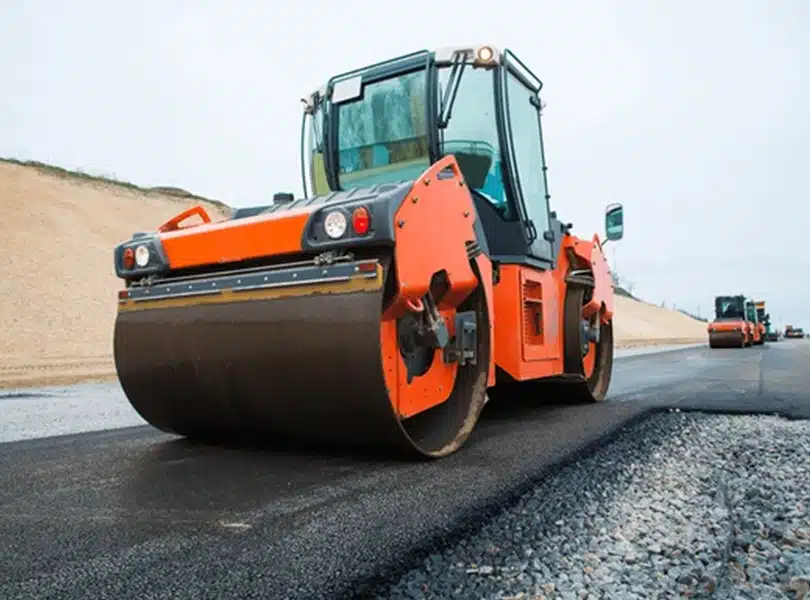
 Compactor / Roller
45 models
 Motor Grader
42 models
 Dozer
41 models
 Concrete Pump
66 models
 Skid Steer Loader
11 models
 Telehandler
13 models


UP PWD contractor registration still runs under the Contractors Registration and Classification Rules, 1982, as amended, and the application is made online on the department’s Chanakya portal. Since autumn 2024, class A and class B certificates are issued by the zonal Chief Engineers, are valid in every district, and can be applied for at any zone, including by firms from outside Uttar Pradesh. The online form asks for your class and category, a District Magistrate’s character and solvency certificate, technical staff and a machinery list. Fees and class limits are not in any public order we could find, so confirm them with the zonal office before you pay.
1982 is the year printed on the rule book behind every Uttar Pradesh Public Works Department registration certificate. It has been amended since, and the most recent change you can read in full is a one-page office memorandum of 8 November 2024 that changed where you apply. It carries a line worth remembering: the remaining provisions of the 1982 rules, as amended, continue as they are.
This guide sets out what the published government orders say, with dates, and flags what they leave out. A fee or class limit copied from a forum is a risk the department will not share with you.
Is the UP PWD contractor register still running?
Yes. States do rework their registers, and some have folded several classes into one, but Uttar Pradesh has kept its register. A government order of 8 June 2017 from the Public Works department says that only contractors registered with the department may take contracts for its roads, bridges, buildings and electrical or mechanical works, and that this arrangement continues. The same order directed that registration, renewal and cancellation be done online, following an Allahabad High Court judgment of 28 August 2014, and that the lists of registered and of blacklisted or debarred contractors be published on the department’s website. That is the official basis for the UP PWD contractor list.
UP PWD contractor registration classes and who issues them
Two memoranda of 2024 changed the authority for the top classes, and both confirm the register still grades contractors by class. An office memorandum of 6 September 2024, issued on a letter from the state government of 3 September 2024, said that class A and class B certificates issued by the zonal Chief Engineers are valid in all districts of Uttar Pradesh. The Engineer-in-Chief’s memorandum of 8 November 2024 then let contractors pick any zonal Chief Engineer office for this state-level registration, and moved registration and renewal for contractors from other states and union territories to the zonal offices too.
| Who is applying | Registering office | Where the certificate is valid | Order and date |
|---|---|---|---|
| UP firm, class A or class B | Any zonal Chief Engineer office of your choice | All districts of Uttar Pradesh | Memoranda of 6 Sep 2024 and 8 Nov 2024 |
| Firm from another state or union territory | Any zonal Chief Engineer office of your choice | As per the class granted | Memorandum of 8 Nov 2024 |
| Any other class | Not stated in the published orders | Not stated | 1982 rules, as amended |
Each registration also carries a category, meaning the type of work. The department’s own Appendix F user manual shows a sample record with class A and category “Civil-Road”, and the form asks you to pick both from drop-down lists. The orders call A and B the state-level classes and do not list any other class or its limits. Division offices also act on registrations: in a case decided on 15 October 2025, an Executive Engineer of the Pilibhit division had cancelled a firm’s PWD registration.
Fees, tender limits and validity: what the orders leave out
The published orders do not state the registration fee, the tendering limit for each class, or how long a certificate runs. The Chanakya form has a section for the total fee paid, the date, the payment mode and an uploaded challan, so the fee is paid before you submit. The portal’s help notes add that after submission the head clerk generates a security deposit pledge, which then appears in your login. Neither amount appears in the orders, and no current schedule was on any official page we could reach in October 2026.
Ask the zonal Chief Engineer’s office for the current fee, the class limits and the validity period, in writing if you can.
Documents for UP PWD contractor registration
The certificates below come from orders still cited in later ones. Two of them have had their validity lengthened.
| Document | Who issues it | Validity | Source |
|---|---|---|---|
| Character certificate, form PWD-T-4 | District Magistrate, signed personally | 3 years | Orders of 5 Jan 2007 and 20 May 2013, restated 8 Jun 2017 |
| Solvency certificate, form PWD-T-5 | District Magistrate, signed personally | 3 years from issue | Revenue order of 28 Mar 2022, sent to PWD on 18 Apr 2022 |
| Self-declaration, form PWD-T-6 | You, on a Rs 100 stamp paper, notarised | Part of each contract | Order of 8 Jun 2017 |
A partnership or company must produce a solvency certificate in the firm’s own name, not the partners’. A sole proprietorship registered for GST may use a certificate in either its trade name or the proprietor’s legal name, under a clarification of 13 December 2017. Certificates issued by District Magistrates or Deputy Commissioners in other states are accepted in the same formats, but PWD officers must verify them before registration. Our guide to the solvency certificate for a tender explains how the amount is assessed.
The online form adds more: PAN and GST number at sign-up, a proof of nationality such as Aadhaar, an identity card, a driving licence or a ration card, bank details, details of each partner or director with a character certificate, past works, and a caste certificate if you claim a reserved category. The upload screen lists affidavits, including one on machinery details and one that you are not blacklisted, and notes that all affidavits must be submitted in original at the registering office within three working days.
How to apply for UP PWD contractor registration online
The route runs through the department’s Chanakya portal, and the steps below follow its own Appendix F user manual.
- Open Contractor Management and sign up with your firm name, address, phone, email, PAN, GST number and a password. If you are already registered anywhere in UP PWD, use Forgot Password with your PAN instead and set a password through an email OTP.
- Log in and fill in Personal Details. The photo must be a JPG of 200 x 230 pixels, up to 100 KB; the signature a JPG of 140 x 60 pixels, up to 50 KB. Every other document goes in as a PDF.
- Choose New Application to open Appendix F. Pick your class and category, then fill in firm details, partners, bank account, immovable property with the Collector’s solvency certificate, the area you want to work in, experience, technical staff, machinery and workshop.
- In section 15, choose All UP or a single zone, enter your caste type, the fee paid, the date and payment mode, and upload the challan.
- Upload the remaining documents, mark the file as a fresh application or a renewal, review the four stages, and submit. Nothing can be edited after that.
The submitted form goes to the head clerk of the State, Zone, Circle or Division office concerned for verification. Track the status from your login.
Machinery, engineers and where they are checked
Appendix F asks whether you hold tools and plant, machinery and transport. For each machine you record the type, an identity number, the estimated cost in rupees and the approximate age. Section 10(a) asks for technical staff, with each person’s qualification and an attested copy of the diploma or degree, and section 11 asks whether you yourself are a diploma holder or a qualified civil or electrical engineer. None of the orders we read sets a minimum fleet or a minimum number of engineers for a class; if the 1982 rules do, the zonal office will tell you.
The tender stage is where machines matter more. Contractors upload machinery, manpower, experience and bank details once on Prahari and get them approved by showing originals at any PWD division or circle; for each tender the department enters the machinery, manpower and lab equipment it needs. A government order of 5 December 2023 adds that machinery and technical staff records are examined when the contract is signed with the lowest bidder, and that rival bidders cannot complain about them.
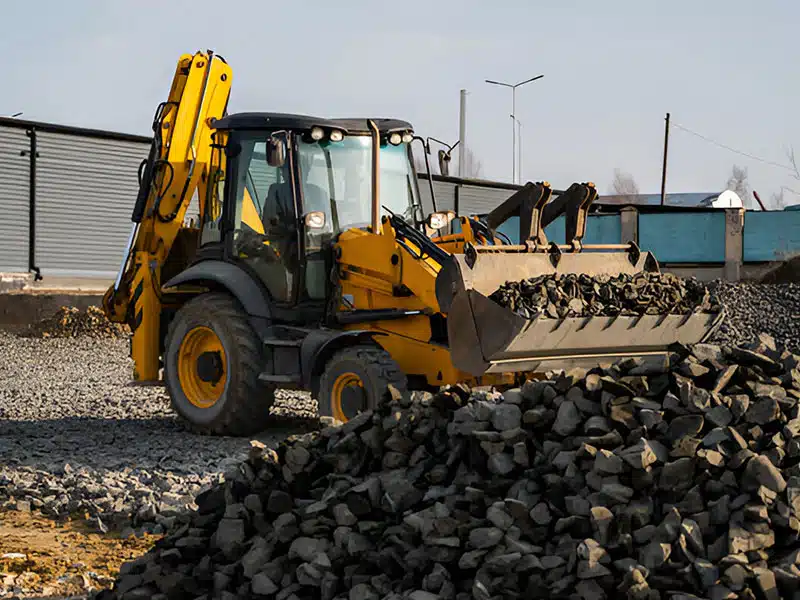
For road and building work, a backhoe such as the JCB 3DX, at roughly Rs 30 to 32 lakh as of October 2026, and a 20-tonne excavator such as the Tata Hitachi EX 210 Infra, at roughly Rs 60 to 65 lakh, are the kind of entries the list expects. If buying one decides whether you can bid, compare construction equipment loans before the tender season.
After registration: Prahari, bid capacity and the Rs 5 crore line
Registration gets you onto the portal; the Prahari application decides whether your bid survives. Since a government order of 25 August 2020, technical bids are evaluated by the software itself, using your ongoing works to work out the bid capacity you have left, and bidders get three working days to object.
A government order of 23 May 2026 splits tenders at Rs 5 crore. Works above it use the standard bidding document; works below it use the T-1 and T-2 documents. The 2023 order lists registration as a ground for complaint in T-1 and T-2 tenders, so for smaller works your class is checked. Under the 2026 order, a bid above Rs 5 crore that is more than 10 percent below the estimate must carry an additional performance security: 50 percent of the gap between the estimate and the bid up to 15 percent below, 100 percent up to 20 percent below, and 150 percent beyond that. Above or below Rs 5 crore, a bid more than 15 percent below triggers a quality check of your existing PWD works, and poor work brings a two-year debarment.
Cancellation, blacklisting and family firms
The 2017 order closes a common workaround. When a contractor or firm is blacklisted or debarred, every partner and director is treated as blacklisted, and an application from any of them or their close relatives, alone or through another firm, is not to be considered.
Cancellation still needs a fair hearing. In the October 2025 Pilibhit case, the Allahabad High Court set aside the cancellation of a proprietorship firm’s registration because it was passed without due notice and opportunity of hearing, and left the Executive Engineer free to pass a fresh order after hearing the firm.
The bottom line
If you mean to bid for UP PWD road or building work, registration is not optional, and the 2024 orders made class A and B registration simpler to obtain: any zone, valid statewide, open to outside firms. Get your character and solvency certificates first, since both now run three years, then file Appendix F on Chanakya with an honest machinery list. Get the fee and class limits in writing from the zonal office before you pay. Once registered, watch live government tenders and match each one to your bid capacity.
Rules here come from the UP Public Works department’s government orders of 8 June 2017, 13 December 2017, 25 August 2020, 18 April 2022, 5 December 2023 and 23 May 2026, the Engineer-in-Chief’s office memorandum of 8 November 2024, the Chanakya portal’s Appendix F user manual and help notes, and an Allahabad High Court judgment of 15 October 2025. Machine prices are indicative bands as of October 2026. Rules, fees and procedures change; confirm current terms with the department or an official source before applying. DesiMachines is not liable for decisions taken on information that may have changed after publication.