
 Excavator
294 models
Excavator
294 models  Backhoe Loader
51 models
Backhoe Loader
51 models  Crane
68 models
Crane
68 models  Concrete Mixer
79 models
Concrete Mixer
79 models  Wheel Loader
54 models
Wheel Loader
54 models  Compactor / Roller
45 models
Compactor / Roller
45 models  Motor Grader
42 models
Motor Grader
42 models  Concrete Pump
66 models
Concrete Pump
66 models  Skid Steer Loader
11 models
Skid Steer Loader
11 models  Telehandler
13 models
Telehandler
13 models  Dozer
Dozer 


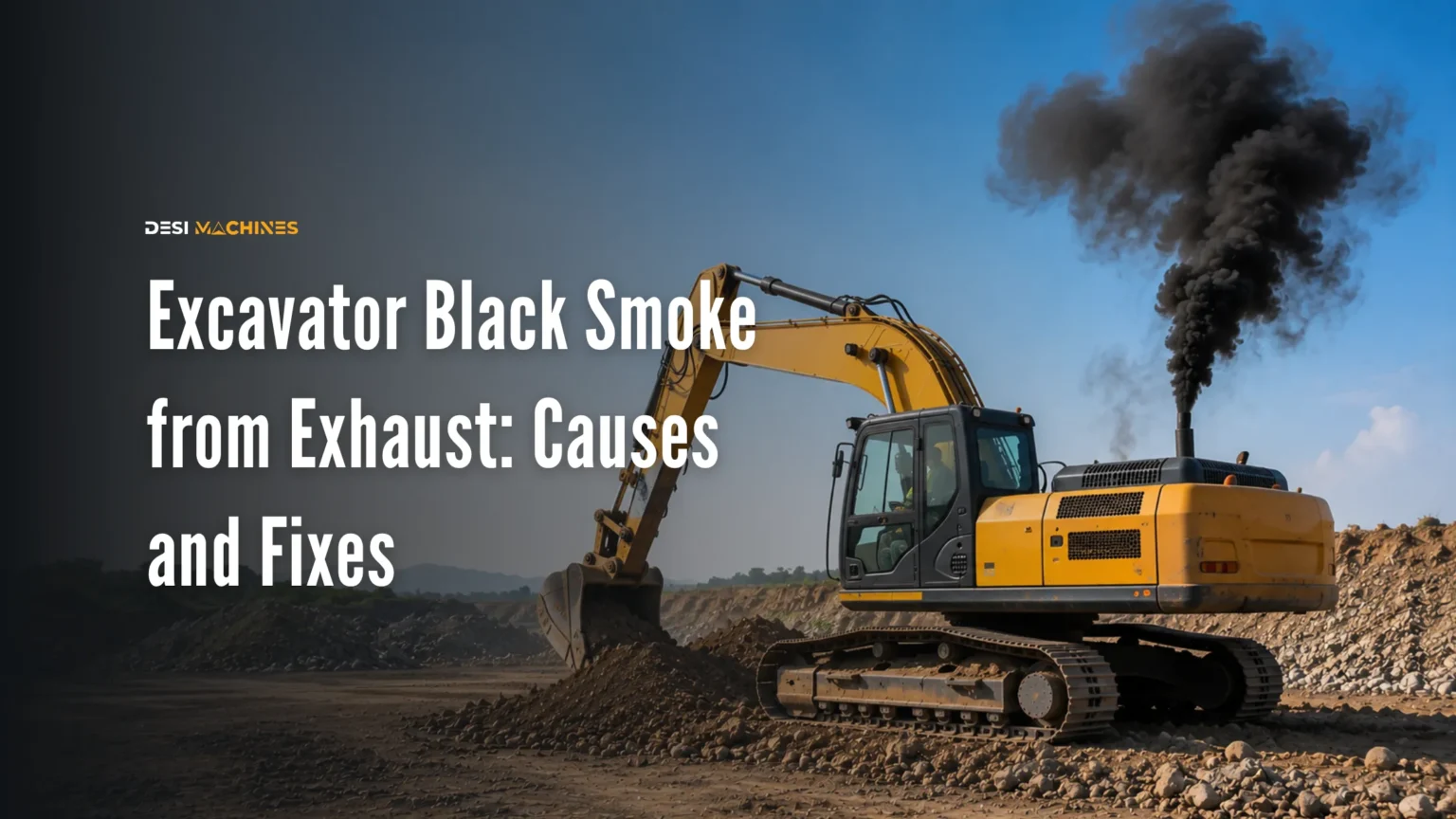
Black smoke from an excavator exhaust is unburnt diesel leaving the engine as soot. It happens when the engine gets more fuel than it can burn with the air reaching it, so part of that diesel never lights and leaves the pipe black instead of becoming digging power. On most machines in India the reason is ordinary and cheap to put right: a dust-choked air filter, poor diesel, tired injectors, or an operator asking for more work than the engine size allows.
What does black smoke from an excavator mean?
It means the burn inside the cylinder is incomplete. A diesel engine needs a lot of air for every drop of fuel, and when that air falls short the leftover diesel turns into soot. Black smoke is therefore an air problem more often than a fuel problem, which is why the air filter is the first thing a good mechanic opens.
Three parts decide how much air the engine gets. The air filter is the paper element that cleans dust out of the air before it reaches the engine. The turbocharger is a small fan driven by exhaust gas that pushes extra air in under pressure. The injector is the nozzle that sprays diesel into the cylinder as a fine mist. If one of these stops doing its job, the fuel and air stop matching and you see it at the exhaust.
| Smoke colour | What it usually means | First thing to check |
|---|---|---|
| Black | Unburnt diesel: too little air or too much fuel | Air filter, then fuel quality |
| Blue or grey | Engine oil burning inside the cylinder | Oil level, turbo seals, engine wear |
| White, thin, on a cold morning | Diesel that has not lit yet because the engine is cold | Usually normal; should clear as it warms |
| White, thick, with a sweet smell | Coolant getting into the cylinder | Stop the machine, call the dealer |
| Light haze only under full load | Common on older machines pushed hard | Watch it; not an emergency on its own |
What are the common causes of black smoke in an excavator?
A choked air filter is the biggest single cause on Indian sites. Dry soil, crusher dust and haul roads that rarely see a water spray load an element up in a fraction of the hours it would last elsewhere. As it blocks, less air reaches the engine while the fuel stays the same, and the smoke builds slowly enough that the operator stops noticing.
Poor or mixed diesel comes next. Fuel bought loose, stored open, or drawn from the bottom of a tank where water and dirt settle will not atomise properly. The machine feels heavy, the exhaust darkens and the fuel filter blocks early.
Worn or dirty injectors cause the same problem from the other side. An injector should spray a fine mist; once the tip is carboned or worn it dribbles a coarse stream that burns slowly and leaves soot. A rough idle and an audible knock usually come with it.
A turbocharger not making full boost starves the engine of the extra air it was designed around, whether from a split hose, a loose clamp, a mud-packed intercooler or a worn turbo. The giveaway is a machine that feels fine at low revs and goes smoky and gutless the moment you ask for full power.
Then there is plain overloading. Too big a bucket for the class, or the engine held at full throttle against a load it cannot move (lugging, as operators call it), will make almost any healthy engine smoke. Nothing is faulty here; the machine is being asked for more than it has.
On higher-hour machines, wear does the rest. Valve clearances drift, compression falls and the engine loses its ability to burn cleanly. That is the one cause a filter change will not solve.
Can you keep working when the excavator is smoking black?
A light puff when you load the machine hard, clearing in a second or two, is not worth stopping work over on an older engine. Steady heavy black smoke is different.
An engine short of air runs hot, and sustained exhaust temperature is hard on the turbocharger and exhaust valves. Unburnt diesel also washes the oil film off the cylinder walls, increasing bore wear. You pay for the soot as well, because it is diesel you bought and did not turn into work. Our figures on excavator fuel consumption per hour and excavator maintenance cost show what that adds up to.
The rule most supervisors follow: if the smoke is steady rather than occasional, finish the task, then park the machine and open the air filter before starting the next one.
How do you fix black smoke on an excavator?
Work through it cheapest first. Most of the time you will not reach the bottom of the list.
Start with the air filter. Take out the outer element and hold it against the light; if it is grey and packed, replace it. Tap the dust out gently if you must run before a new one arrives, but never blow it clean with compressed air from outside, which pushes dirt through the paper and ruins the element. Leave the inner safety element alone unless you are fitting a new one.
Then check the diesel. Drain a little from the tank bottom into a clear bottle and let it stand: water settles out and dirt shows as a haze. Change the fuel filter if it is near its interval, and stop drawing from a drum that has been sitting open.
Next, follow the air path from the filter housing to the turbo and on to the engine, looking for a split hose, a loose clamp or an intercooler packed with mud and fluff. It is a five-minute inspection and it catches a surprising number of cases.
After that it becomes dealer work. Injector testing, turbocharger inspection and valve clearance adjustment need proper tools and the settings for your engine model, as does anything on the fuel pump.
One thing to avoid completely: do not let anyone turn the fuel up to make the machine feel stronger. Adding fuel to an engine already short of air makes the smoke worse and the temperature higher, and it will cost you a turbo or a piston long before it saves anything.
How do you stop black smoke coming back?
Most of it is filter discipline. Check the air filter daily on a dusty site instead of waiting for the hour-meter, keep a spare element in the cabin, and make sure the housing seals shut so dust cannot bypass it. The equipment service schedule guide sets out how the hour-based intervals fit together, and construction equipment spare parts covers what to keep on the shelf.
Fuel handling matters almost as much. Store diesel closed, let a delivery settle before drawing from it, and never scrape the last few litres off the bottom. Fuel losses and site security travel together, which our piece on diesel theft and idle hours goes into.
The last part is matching the machine to the job. An excavator smoking because it is undersized for the work will keep smoking whatever you service, so checking excavator engine power by size class against the material you are digging beats any additive. Routine oil work rounds it off: engine oil for construction equipment explains grade selection and excavator oil capacities tells you how much a change needs. Where the fault sits on the hydraulic side instead, start with hydraulic system maintenance.
What kind of engines do Indian excavators run?
Knowing what is under the bonnet helps, because the air path differs between a mini machine and a large one. Of the 294 excavators listed on DesiMachines, 293 publish full engine details and 127 of those state a turbocharged engine. Machines above the mini class are generally turbocharged and mostly intercooled, so they carry more air-side parts that can fail.
| Machine | Engine | Rated power | Displacement | Air system |
|---|---|---|---|---|
| Tata Hitachi NX 80 | Yanmar 4TN98S | 48 HP (36 kW) @ 2100 rpm | Not specified | 4-cylinder, water cooled |
| Volvo EC215 | VECV E494 (Tier 3) | 137 HP (102 kW) @ 2000 rpm | 3.8 L | Wastegate turbocharged, air-to-air intercooled |
| XCMG XE215i | Cummins 6BT5.9 | 141.4 HP (105.5 kW) @ 2000 rpm | 5.9 L | 6-cylinder turbocharged |
| SANY SY220C-9XL Sparc+ | Cummins 6BTAA 5.9 148C | 148 HP (110 kW) @ 2000 rpm | 5.88 L | Turbocharged, intercooled / aftercooled |
| Tata Hitachi ZAXIS 370LCH Ultra | Isuzu GH-6HK1X | 254 HP (190 kW) @ 1900 rpm | 7.7 L | Turbocharged, intercooled, direct injection |
| Tata Hitachi ZAXIS 890LCH | Isuzu AE-BWGTXWSA | 506 HP (377 kW) @ 1800 rpm | 15.68 L | Turbocharged, intercooled, common rail |
Emission stage matters too. Machines built to the newer BS-CEV emission norms run tighter fuel control and tolerate dirty diesel less well than an older Stage III engine, so fuel quality moves up the suspect list on a newer machine. The complete excavator guide and the mini excavator guide cover how the classes differ.
Buying second-hand? A machine that smokes black on a test dig deserves an engine inspection before money changes hands, and the used excavator buying guide lists the checks worth making. Related wear items sit in the excavator undercarriage guide.
The short version
Air filter first, diesel second, pipework from filter to engine third, dealer if none of that clears it. If the machine is running hot as well as smoking, work through excavator overheating: causes and checks alongside this page. Looking for a machine that suits the work you are actually doing? Browse the full excavator range and send an enquiry for pricing and availability in your state.
Black smoke is an engine fault. If the machine is also failing to hold the boom up with the levers centred, that is a hydraulic sealing fault instead, covered in our guide to excavator boom drift.
Prices, specifications and features are indicative, vary by variant, location and date, and should always be confirmed with the official OEM or authorised dealer before any purchase decision. DesiMachines is not liable for decisions taken on the basis of information that may have changed after publication.