Excavator
294 models
 Backhoe Loader
51 models
 Crane
68 models
 Concrete Mixer
79 models
 Wheel Loader
54 models
 Compactor / Roller
45 models
 Motor Grader
42 models

 Concrete Pump
66 models
 Skid Steer Loader
11 models


Rs 40,000 is the fee for Class I, the only civil class with no limit on the work you can take, under MJP contractor registration at Maharashtra Jeevan Pradhikaran. The rules set nine civil classes, from Class VII (works up to Rs 7 lakh, fee Rs 3,000) to Class I, plus five electrical-mechanical classes. Each class needs a bank solvency certificate, a three-year turnover and, from Class IV(a) upwards, proven water supply or sewerage work. Registration lasts three years and is applied for online at mjpregistration.in. Vendor enlistment for materials was cancelled on 1 April 2026.
A Class I applicant needs a solvency certificate of Rs 250 lakh, an average turnover of Rs 500 lakh over three years and Rs 750 lakh of work done in that time, at least half of it on water supply or sewerage. Those figures come from MJP’s own rules booklet, and they explain why most firms on its register sit much lower down.
Who runs MJP contractor registration?
Maharashtra Jeevan Pradhikaran (MJP) is the state’s water supply and sewerage authority. Its board approved its own registration rules at the 57th meeting on 22 April 1992; before that it relied on registrations with the state government, BMC, MSEB or MIDC. The booklet in use is the third edition, which carries the charges approved at the 81st board meeting on 17 September 1998.
Applications now go through the portal at mjpregistration.in, titled “Registration of Contractor & Plumber”. The list MJP published on 24 July 2026 shows 1,109 civil contractors and 109 electrical-mechanical contractors on the online register. Class IV is the largest group, with 331 firms, against 206 in Class I. The certificates on that list run for three years, for example from 29 April 2026 to 27 April 2029.
MJP contractor registration classes, limits and fees
The table below comes from the financial criteria in MJP’s rules for registration of contractors. All amounts are in Rs lakh except the fee. “Work done” is the column the booklet ties to water supply and sewerage related works, and “work in hand” is the estimated cost of work still to be done on contracts you hold.
| Civil class | Works up to | Solvency | Avg turnover, 3 years | Work done, 3 years | Work in hand | Fee | Sanctioned by |
|---|---|---|---|---|---|---|---|
| I | No limit | 250 | 500 | 750 | 750 | Rs 40,000 | Member Secretary |
| I(a) | 2,000 | 200 | 400 | 600 | 600 | Rs 35,000 | Member Secretary |
| II | 750 | 75 | 200 | 300 | 300 | Rs 30,000 | Member Secretary |
| III | 300 | 30 | 90 | 135 | 150 | Rs 25,000 | Regional Chief Engineer |
| IV | 150 | 15 | 60 | 90 | 80 | Rs 20,000 | Regional Chief Engineer |
| IV(a) | 90 | 9 | 40 | 60 | 60 | Rs 15,000 | Superintending Engineer |
| V | 50 | 5 | 25 | Not needed | 30 | Rs 10,000 | Superintending Engineer |
| VI | 15 | 2 | 7.5 | Not needed | 10 | Rs 5,000 | Superintending Engineer |
| VII | 7 | 1 | 1.5 | Not needed | 3 | Rs 3,000 | Executive Engineer |
Electrical and mechanical contractors, who handle pumps and panels, have five classes. Class A has no limit and costs Rs 15,000, with Rs 15 lakh solvency and Rs 50 lakh average turnover. Class B covers works up to Rs 50 lakh for Rs 10,000, Class C up to Rs 25 lakh for Rs 7,500, Class D up to Rs 10 lakh for Rs 5,000, and Class E up to Rs 2 lakh for Rs 1,000.
Half of the fee goes in with the application and is not refunded. The other half is paid only after approval. Miss the one-month deadline to answer the scrutiny remarks and the file is closed, with the first half forfeited. The 2016 checklist, issued with Circular No. 172 of 6 January 2016, also lists a Rs 100 application fee.
The water supply and sewerage test
This is the rule that separates MJP from a general PWD register. Applicants for civil Classes I to IV(a) must show that at least half of the required work done over the last three years was water supply or sewerage work. The alternative is one sizeable water supply or sewerage job worth more than the limit of the class two steps below the one you want. The booklet’s own example: a Class I applicant needs a single water supply or sewerage work of Rs 750 lakh, the Class II limit, completed within three years.
Electrical-mechanical Classes A, B and C follow the same pattern. A Class A applicant needs one electrical-mechanical job on a water or sewerage scheme worth Rs 25 lakh, the Class C limit. O&M and reform contracts count only for their capital expenditure, and sub-contract or supervision work does not count.
Private works count at half their value, need an architect’s certificate in Annexure D and must be inside Maharashtra. Our solvency certificate for tender guide explains how banks issue one. MJP’s format is Annexure B, and it is accepted for 12 months from the date of issue.
Documents, staff and machinery MJP asks for
The application goes in Annexure A with the checklist. The main papers are the solvency certificate, a works list in Annexure C backed by departmental certificates, an income tax clearance, a labour registration and an undertaking in Annexure F. Applicants from outside Maharashtra must file an original solvency certificate from a nationalised scheduled bank located in Maharashtra.
Staff minimums rise with the class. Classes I, I(a) and II need two graduate engineers, four diploma holders and six technical assistants or ITI holders with five years’ experience. Classes III and IV need one graduate or diploma holder and two ITI holders. Class V and below need one graduate or diploma holder and one ITI holder.
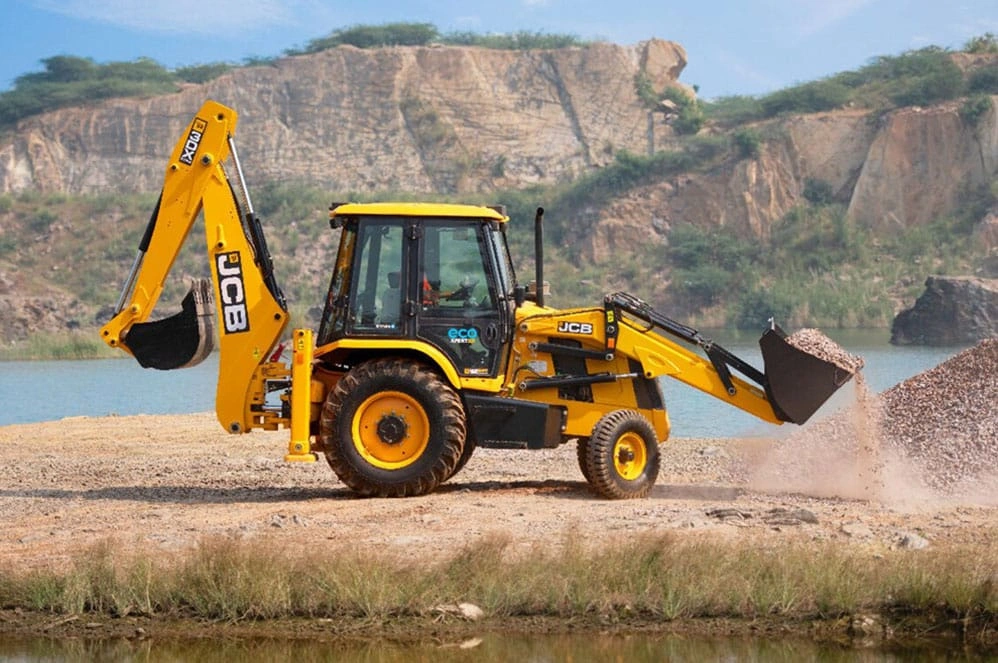
You must also list the machinery you own, with its condition and location, backed by a bill, challan or invoice. On pipeline work, that list usually starts with a backhoe for trenching, such as the JCB 3DX, at around Rs 29.5 to 32.6 lakh (indicative, as of Oct 2026). A 7.2-tonne excavator such as the Tata Hitachi EX 70 Prime handles deeper cuts for rising mains, at around Rs 32.3 to 35.7 lakh (indicative, as of Oct 2026). When you apply to move up a class, MJP asks what machinery you added since your first registration, so compare construction equipment finance before an upgrade.
Engineering graduates and diploma holders domiciled in Maharashtra can register directly in civil Class VI, or electrical Class D, within ten years of passing. They pay only half of the earnest money and security deposit normally due. ITI holders from the building maintenance or civil engineering assistance course can enter Class VII directly, with the same deposit relief.
How the online process works since August 2026
An office order of 13 August 2026 (No. 123, issued with the Member Secretary’s approval) set fixed timelines on the portal:
- You file the proposal online. The officer checks it and sends every deficiency at once in a single online Deficiency Memo.
- You have one month to fix the gaps. If you miss it, the system marks the file “Closed/Filed”.
- Within seven days, the officer asks the offices that issued your Annexure H work-done certificates for confidential reports.
- Every officer in the chain gets seven days. If nothing happens, the file is “Deemed to be Approved” at that level and moves on automatically.
- After final approval you pay the remaining 50% of the fee. The certificate is issued online with an e-sign within seven days, or the system generates one that needs no signature.
Renewal, upgrading and removal
Apply for renewal three months before expiry, with a fresh solvency certificate and the full document set. If MJP is slow, the Superintending Engineer can extend validity by 90 days.
Upgrading is not normally allowed within two years of registration. The yardsticks rise with each step: moving from Class IV to III needs Rs 150 lakh of work in hand and Rs 90 lakh average turnover, and Class II to I(a) needs Rs 600 lakh and Rs 400 lakh. You also need at least one sizeable work for MJP or another semi-government body above the value limit that rule sets.
The register is reviewed every year on 1 July. A firm that has not tendered for three years, or has won nothing from MJP or other semi-government bodies in five, is due to be struck off. An annual return is due each March in Annexure G.
Is MJP vendor registration still open?
No. MJP Circular No. 268, dated 1 April 2026, cancelled vendor enlistment for civil, electrical and mechanical materials. MJP’s reasons: most materials now have BIS standards, tenders carry full specifications, and a short approved list was limiting competition and pushing rates up.
Ongoing tenders no longer apply the “buy from MJP-approved vendors” clause, and new tenders must leave it out. Suppliers are now judged on each tender’s specifications. The vendor product rules still linked from the registration portal predate this circular.
Do you need MJP registration to bid?
On 31 October 2026, the Member Secretary (WSSD) listing on mahatenders.gov.in had ten live tenders and none was a civil works job. One was a Nagpur Circle tender for polyaluminium chloride, valued at Rs 1,42,45,875, with an EMD of Rs 4,27,400, a tender fee of Rs 5,900 plus Rs 500 processing, and 180 days’ bid validity. Its tenderer class read “Others”.
The certificate also carries weight outside MJP. Pune Municipal Corporation, for example, accepts an MJP registration for water supply and sewerage works, as our municipal corporation contractor registration guide explains. Maharashtra PWD contractor registration, by contrast, has stopped at Rs 1.50 crore since 2017. Other states run water works through their own departments; see PHED contractor registration. To see which water and sewerage jobs are open now, check live tenders and opportunities.
Checklist before you apply to MJP
- Pick the class from your three-year turnover and work in hand, not from the job sizes you hope to win.
- From Class IV(a) up, check that half your required work done is water supply or sewerage, or that one job clears the threshold.
- Get a solvency certificate less than 12 months old; from outside Maharashtra, it must be an original from a nationalised scheduled bank in the state.
- Line up work-done certificates in the Annexure H format; MJP verifies them with the issuing offices.
- Keep invoices for every machine you list, and engineers on the payroll to match the class.
- Note the renewal date and apply three months ahead. Then watch the open government tenders for your class.
Sources: MJP registration, upgrading and renewal rules, Circulars No. 172 (2016) and No. 268 (2026), office order No. 123 (2026) and the contractor list of 24 July 2026. Rules, fees, classes and tender terms change. Confirm the current position with MJP and the tender document itself before you apply or bid. Machine prices are indicative; confirm them with the dealer. DesiMachines is not liable for decisions taken on information that may have changed after publication.