Where do machines fit in brick making?
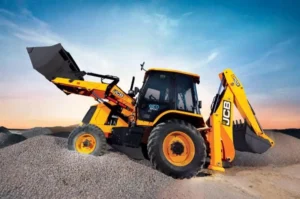
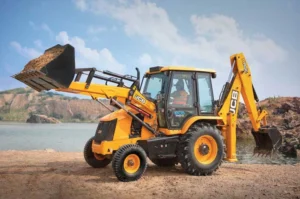
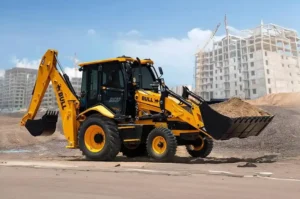
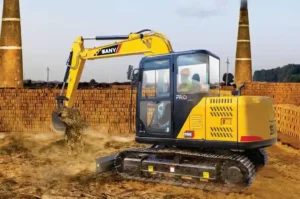
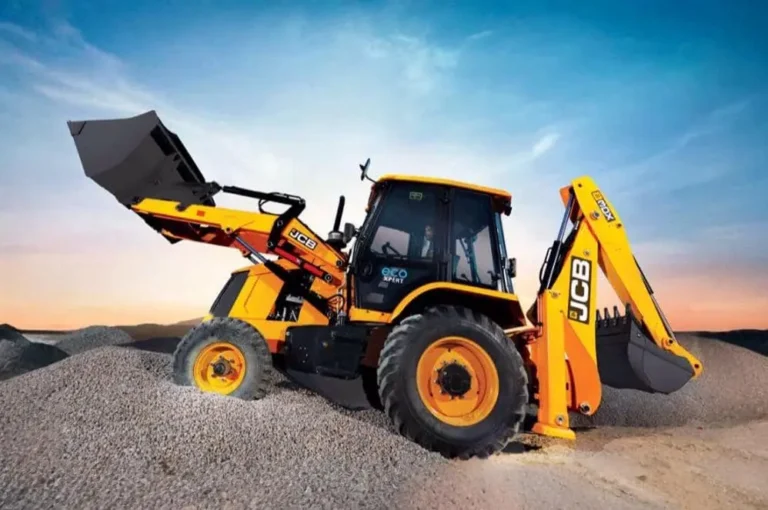
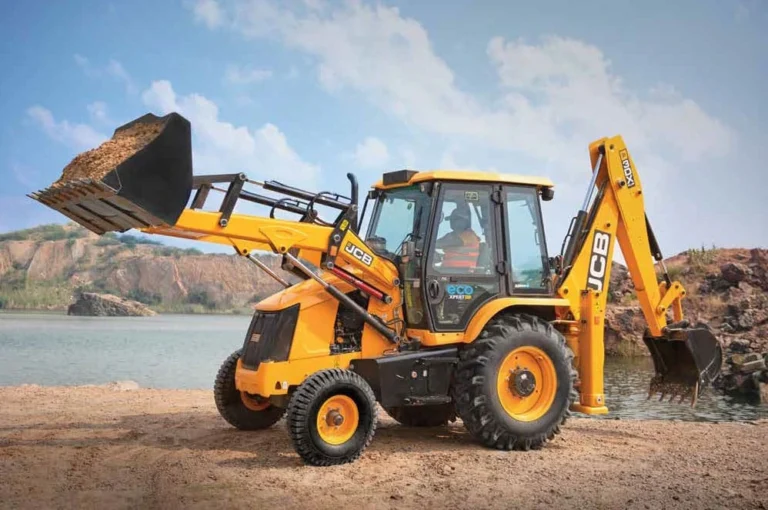
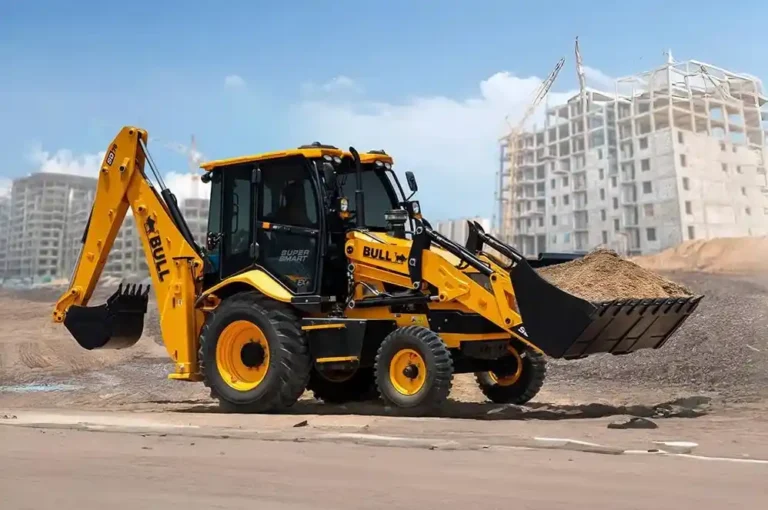
At most Indian brick kilns the machines work at the two ends of the job, while the middle is still done by hand. A backhoe loader or excavator digs the clay and loads it; a loader moves fuel and ash around the kiln. The bricks themselves are still mostly moulded and stacked by hand. CSIR-Central Building Research Institute, which trains kiln owners, counts the lack of machines for making green (unfired) bricks among the industry’s main problems.
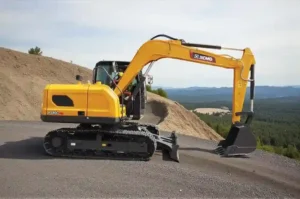
Brick earth is usually topsoil taken from the fields around the kiln, typically up to about 2 metres deep, and clay of the right kind is often found along rivers. That is a wide, shallow cut, well inside the reach of any backhoe loader. An excavator earns its place when the pit is large or the clay has to be loaded fast into many trolleys.
| Stage of work |
What happens |
Machines that do it |
| Clay digging |
Brick earth is dug from nearby fields or a riverside pit and carried to the kiln |
Backhoe loaders on most kilns; mini and small excavators for a bigger pit |
| Clay preparation |
The clay is soaked, mixed and left to temper so it moulds without cracking |
A loader moves the clay to the moulding ground; pug mills mix it at mechanised units |
| Moulding |
Green bricks are shaped by hand moulders or by a brick making machine |
Mostly by hand; brick making machines at larger units |
| Drying |
Green bricks dry in rows on a levelled yard before firing |
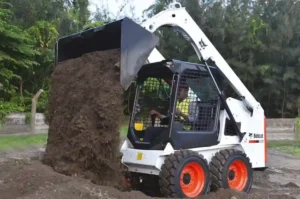
A backhoe loader levels the yard; a skid steer loader can clear the lanes between rows |
| Firing |
Dry bricks are stacked inside the kiln and fired with coal, firewood or farm residue |
Wheel loaders and skid steer loaders move coal and ash |
| Dispatch |
Fired bricks are unloaded and sent out to buyers |
Mostly by hand onto tractor-trolleys and trucks |
Pug mills, brick making machines, tractor-trolleys and trucks are not listed here. If you already own a tractor, the tractor-loader-backhoe guide explains how a TLB compares with a backhoe loader.
The kiln decides whether you may run at all. The environment ministry’s brick kiln standards of 22 February 2022, G.S.R. 143(E) (reproduced in a Central Pollution Control Board filing), allow a new kiln only as a zigzag kiln, a vertical shaft kiln or one fired with piped natural gas, and older kilns had to convert. Later notifications changed the conversion deadlines. The same rules ask for approval from the state mining department before soil is dug for bricks, the kiln’s ash to go back into brick making, paved roads for moving clay and bricks, and covered vehicles. What firing does to a red brick, and how one is tested, is set out in fly ash bricks vs red bricks.
Where are India’s brick kilns?
Most of them sit on the Indo-Gangetic plain. A study by IIT Gandhinagar and UrbanEmissions.Info (Space to Policy, 2024) mapped 30,638 kilns across five states of the plain from satellite images taken in early 2024, and checked each one by hand:
| State |
Kilns mapped |
Of which zigzag kilns |
| Uttar Pradesh |
17,335 |
5,952 |
| Bihar |
6,048 |
4,424 |
| West Bengal |
3,105 |
1,967 |
| Haryana |
2,079 |
1,948 |
| Punjab |
2,071 |
1,766 |
Read these as a floor, not a census. The Uttar Pradesh Pollution Control Board’s own field survey, which the study quotes, found 19,671 kilns in that state as of 2022. In Bihar and West Bengal the satellite count also came out below the field surveys in most districts. Zigzag kilns are thickest in Bihar and around Delhi. The older fixed chimney kilns are most common in Uttar Pradesh, especially in the east of the state.
Who sets the rules for brick kilns?
CSIR-CBRI calls brick making an unorganised industry. It is made of small owner-run kilns, with no handful of large companies to list. These are the bodies a kiln owner deals with instead. The list is alphabetical, not a ranking.
| Body |
What it does for a brick kiln |
| Central Pollution Control Board |
The national pollution board under the Water, Air and Environment (Protection) Acts; it reports to the National Green Tribunal on kilns and their emissions |
| Commission for Air Quality Management |
Sets kiln rules for Delhi-NCR and nearby areas; where its orders are stricter than the national deadlines, its orders prevail |
| CSIR-Central Building Research Institute, Roorkee |
Trains kiln owners to build and run high draught brick kilns, and in soil testing for green bricks |
| Ministry of Environment, Forest and Climate Change |
Issued the 2022 brick kiln standards and the later notifications that moved the conversion deadlines |
| State mining departments |
Give the approval needed to dig soil for brick making |
| State Pollution Control Boards |
Give a kiln its consent to establish and consent to operate, and may set stricter siting rules |
The roles above are from the 2022 standards and their 2023 amendment, the Central Pollution Control Board’s filing that reproduces them, and CSIR-CBRI’s own report of its kiln owners’ training.

 Excavator
294 models
 Backhoe Loader
51 models
 Crane
68 models
 Concrete Mixer
79 models
 Wheel Loader
54 models
 Compactor / Roller
45 models
 Motor Grader
42 models

 Concrete Pump
66 models
 Skid Steer Loader
11 models


 Most asked about
 ₹ 35-39 Lakhs
 ₹ 30-36 Lakhs


 ₹ 34-35 Lakhs